WeRide and Uber take their robotaxi partnership to Madrid
What happened
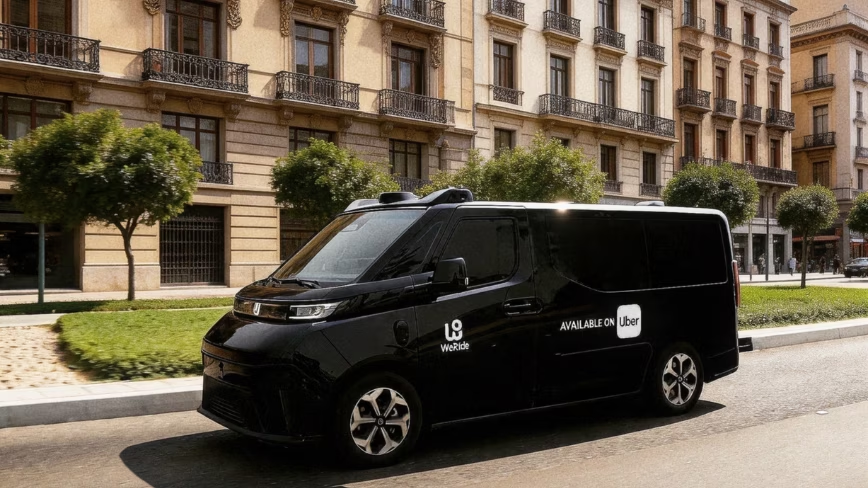
WeRide and Uber announced a joint robotaxi pilot launching in Madrid, marking Spain’s first commercial robotaxi service. Passengers will be able to hail autonomous rides through the Uber app, with operations planned to start later this year. This expands WeRide and Uber’s robotaxi footprint in Europe, adding Madrid to the growing list of cities testing autonomous ride-hailing services.
Why it matters
This move pushes autonomous vehicle deployments deeper into European urban markets, signaling increased confidence in robotaxi safety and user acceptance. By integrating the pilot with Uber’s existing app, the partnership applies real operational data from ride requests, routing, and passenger experience to grow autonomous service viability. For Uber, it leverages robotaxis to reduce reliance on human drivers, potentially lowering costs as the technology matures. For WeRide, it demonstrates progress scaling its autonomous driving tech internationally and managing complex urban traffic in dense European cities.
The launch also ratchets pressure on regulators to finalize frameworks around commercial robotaxi operations, balancing public safety with innovation incentives. For local operators and human drivers, autonomous vehicles may introduce competitive pressure on fares and driver availability. Investors and transport planners should watch how robotic fleets impact urban mobility economics and infrastructure demands in European cities.
What to watch next
The operational performance and safety record of the Madrid pilot will be a key indicator for the feasibility of robotaxis in cities with similar traffic patterns. Watch for updates on regulatory approvals, ride volume metrics, and rider feedback once the service goes live. Also, observe if Uber expands this model to other Spanish cities or introduces new features such as dynamic pricing or fleet size adjustments based on demand.
Finally, assess how the Madrid project affects local labor markets for drivers and the competitive dynamics Uber faces among mobility providers. Robotaxi pilots like this one will test how fast autonomous fleets can scale beyond limited geofenced zones to broader urban coverage, shaping the future of mobility in Europe.
AI Quick Briefs Editorial Desk