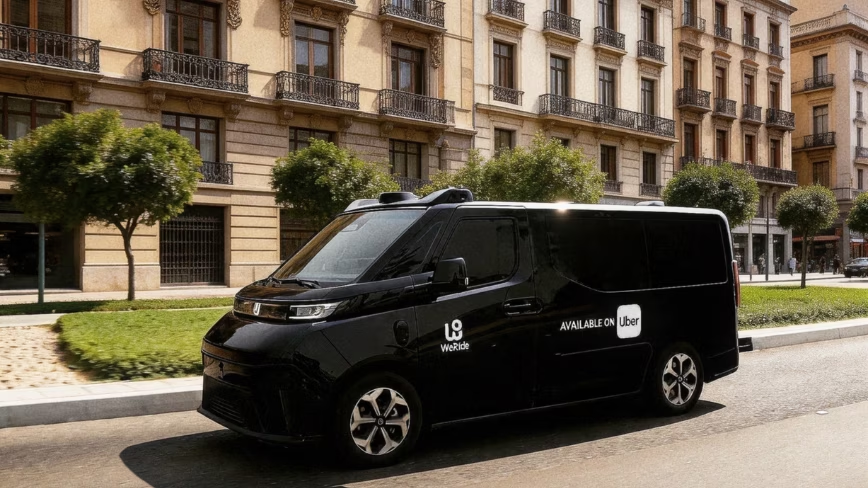
Uber picks Munich for its next robotaxi push, with Autobrains and Nvidia
What happened
Uber is launching its next robotaxi trial in Munich, Germany, partnering with Autobrains for software and Nvidia for computing power. Unlike many autonomous vehicle efforts, Uber’s approach avoids building custom sensor suites or specialized vehicles. Instead, it will leverage existing automotive infrastructure alongside less sensor-heavy autonomy technology. Munich’s status as Germany’s automotive hub plays a key role in Uber’s strategy to scale driverless taxis, especially on European streets where regulations and urban layouts differ from U.S. markets.
Why it matters
Uber’s Munich choice signals a practical shift in autonomous vehicle deployment. Custom sensor arrays and heavily modified cars have driven up costs and slowed scaling for robotaxis worldwide. By using a lighter sensor setup and focusing on software and AI improvements, Uber is betting on a more cost-effective method that fits existing European vehicles and infrastructure. This approach could pressure competitors to prioritize integration simplicity and cost reduction over flashy hardware. For operators, investors, and regulators, it changes the economics and regulatory considerations of rolling out robotaxis across complex city environments with varied traffic laws and road designs.
What to watch next
Monitor how quickly Uber’s Munich tests scale beyond controlled environments and how well the lighter sensor stack copes with real-world complexity. Tracking partnerships with established automotive tech providers like Autobrains and Nvidia is also key since ecosystem alignment may become a necessity for autonomous fleets. Regulators’ responses in Germany and similar European markets will indicate if lighter sensor approaches speed or slow broader adoption. For operators eyeing robotaxi investments, Uber’s results in Munich could reset expectations for cost, reliability, and infrastructure dependency.
AI Quick Briefs Editorial Desk