Utility companies are promising to spare us from AI’s energy bill

What happened
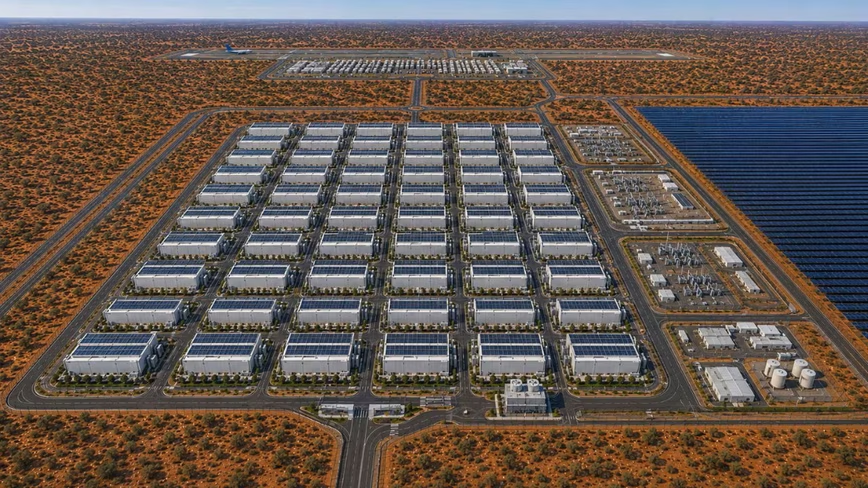
Nearly 200 utility companies and data center operators in the US have signed a commitment called the “rate payer protection pledge.” The pledge, announced in March under former President Donald Trump’s administration, aims to prevent AI-driven data centers from increasing electricity costs for average consumers. This move comes as the AI industry ramps up power use, especially with growing demand for training and running large AI models.
Why it matters
AI workloads require massive, energy-hungry data centers. This surge is sparking concern that electricity bills for regular consumers could rise, as utilities expand infrastructure or pass increased operational costs onto ratepayers. The pledge attempts to prevent that by promising to keep household electricity prices stable despite AI growth.
However, the commitment so far has done little to reduce doubts among experts and consumers. It puts pressure on utilities to find ways to handle growing AI energy demand without simply raising rates. That could push innovation in energy efficiency or renewable energy investments. But it also raises questions about how utilities will balance network costs with the rapid scale-up of AI computing needs.
What to watch next
Monitor how utilities implement this pledge in practice. Will they restrict new data center growth, prioritize energy-efficient tech, or absorb higher costs? Their approach will influence AI deployment economics and who ultimately pays for AI’s power appetite. Regulators and consumers will also watch closely to see if promised protections actually prevent electricity price hikes.
How this plays out could shape where AI companies locate data centers and how aggressively they pursue compute-intensive projects. For builders and operators betting on AI’s next wave, power supply and pricing risk remain critical factors that this pledge only partially addresses.
AI Quick Briefs Editorial Desk