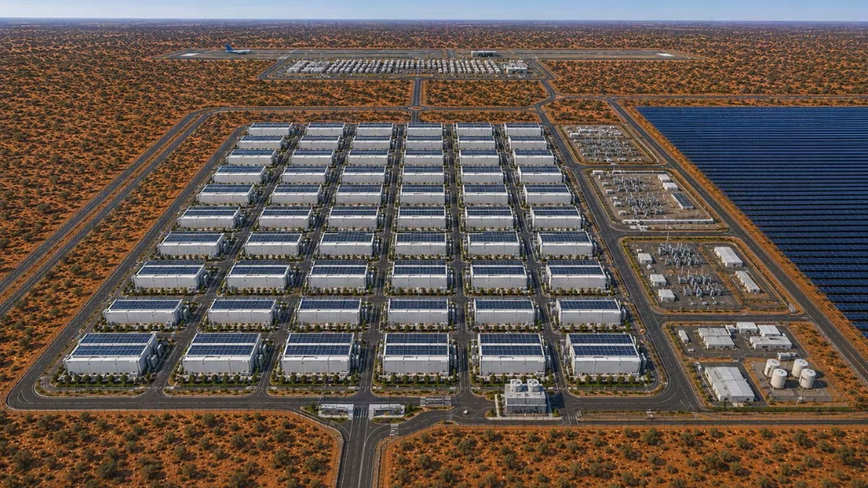
Nvidia supplier Wistron opens $700m Texas factory to build Grace Blackwell superchips
The business move
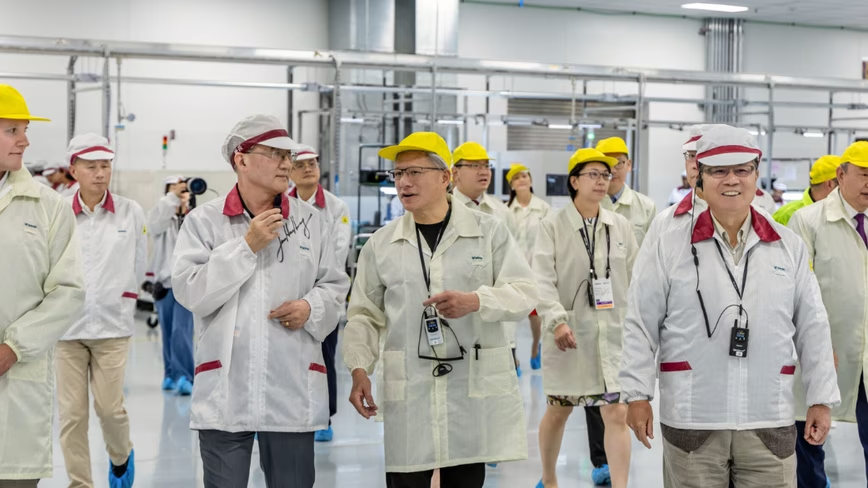
Wistron, a Taiwanese company that builds server hardware for Nvidia, has opened its first factory in the United States. The $700 million facility is located in Fort Worth, Texas, and has started assembling Nvidia’s GB300 Grace Blackwell Ultra superchips. Nvidia marked the plant’s grand opening on July 21, highlighting it as the initial production site for these advanced chips.
Why it matters
This factory signals a shift in semiconductor manufacturing and supply chain strategy for key AI hardware. By establishing production on American soil, Nvidia and Wistron reduce their reliance on overseas manufacturing hubs, which have faced disruptions and geopolitical risks. The Grace Blackwell chips are designed for high-performance AI workloads in data centers, so securing a stable, local source can lower supply risks for Nvidia’s enterprise and cloud customers.
This move also reflects growing pressure on the semiconductor industry to diversify geographically amid global supply challenges. The U.S. has been pushing for more domestic chip manufacturing to strengthen tech infrastructure and reduce vulnerability to international trade tensions. For operators running AI infrastructure, access to these chips produced domestically could mean steadier availability and potentially faster deployment cycles.
Who gains and who gets squeezed
Nvidia strengthens its position by tightening control over its supply of critical server chips designed for AI and data center performance. Data center operators and cloud providers stand to benefit from more predictable hardware supply and possibly faster support due to the onshore facility. Wistron gains a significant foothold in the U.S. manufacturing market, expanding beyond contract manufacturing in Asia.
Conversely, overseas chip assembly providers could face increased competition and pressure as major customers like Nvidia promote domestic alternatives. Companies that rely heavily on international semiconductor supply chains may also face tighter market dynamics and pricing pressures as more production shifts stateside.
What to watch next
Watch for how this factory scales production and whether Nvidia expands onshore manufacturing for other chip lines. Tracking the impact on supply chain reliability and pricing for AI data center hardware will be telling. Also pay attention to other semiconductor manufacturers and contractors potentially following this trend of investing in U.S.-based facilities. Finally, policymakers and investors should monitor how this affects global chip supply concentration and U.S.-China tech competition.
AI Quick Briefs Editorial Desk