The Pentagon calls this Chinese firm a military company. Its lidar runs US robotaxis anyway
The business move
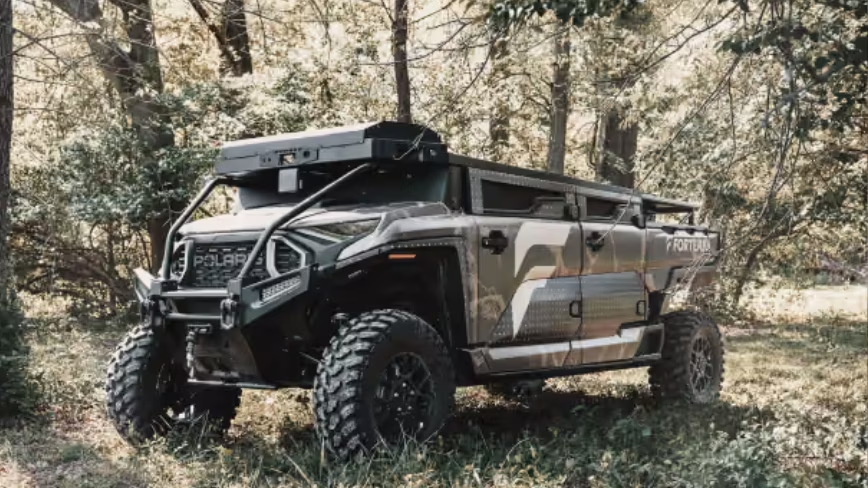
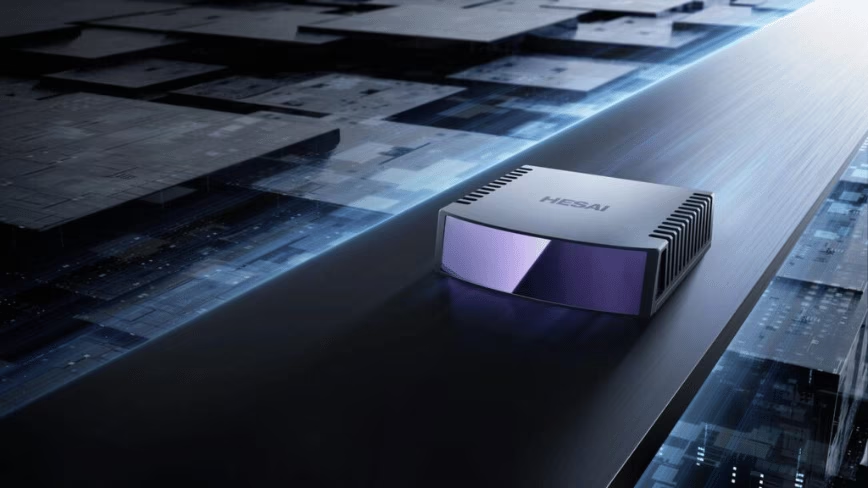
A Chinese lidar company named Hesai, blacklisted by the US Department of Defense as a Chinese military company, is still supplying sensor technology to American robotaxis, trucks, and airport autonomous systems. Nvidia counts Hesai among its partners. Despite being on a Pentagon blacklist, Hesai’s lidar sensors remain widely used in US self-driving vehicles, quietly powering critical perception functions.
Why it matters
Hesai’s ongoing business illustrates how challenging it is to fully block Chinese tech firms with controversial ties from critical US AI and autonomous vehicle supply chains. Their lidar sensors are a key part of how self-driving machines perceive their surroundings. The US government’s blacklisting places pressure on operators, regulators, and partners like Nvidia to reconsider vendor risk exposure. This situation raises questions about supply chain security and creates friction between military concerns and commercial tech adoption, especially when US companies rely on chips and components integrated with blacklisted foreign entities.
Who gains and who gets squeezed
Hesai gains by maintaining access to the lucrative US autonomous vehicle market despite official restrictions. Nvidia benefits indirectly by integrating Hesai’s lidar into its autonomous systems ecosystem. US self-driving companies get cheaper, reliable sensors but face increased geopolitical and compliance risk. Meanwhile, regulators, fleet operators, and investors in US autonomous tech are squeezed to balance innovation speed and supply chain security. The Pentagon’s blacklist makes procurement and partnership decisions more complicated, threatening to slow adoption or force costly redesigns if companies move away from blacklisted suppliers.
What to watch next
Watch for potential changes in US export controls or more aggressive enforcement that could disrupt widely adopted sensor supply chains. Monitor how companies like Nvidia navigate the tension between blacklisted partners and the need for advanced autonomous sensors. Also track any moves by US self-driving fleet operators to replace or parallel-source lidar technology to avoid regulatory and reputational risks. The evolving interplay between national security policy and commercial AI hardware procurement will increasingly shape autonomous vehicle deployment strategies.
AI Quick Briefs Editorial Desk