Synthetic Sciences Releases OpenScience: An Open-Source, Model-Agnostic AI Workbench for Machine Learning, …
What it does
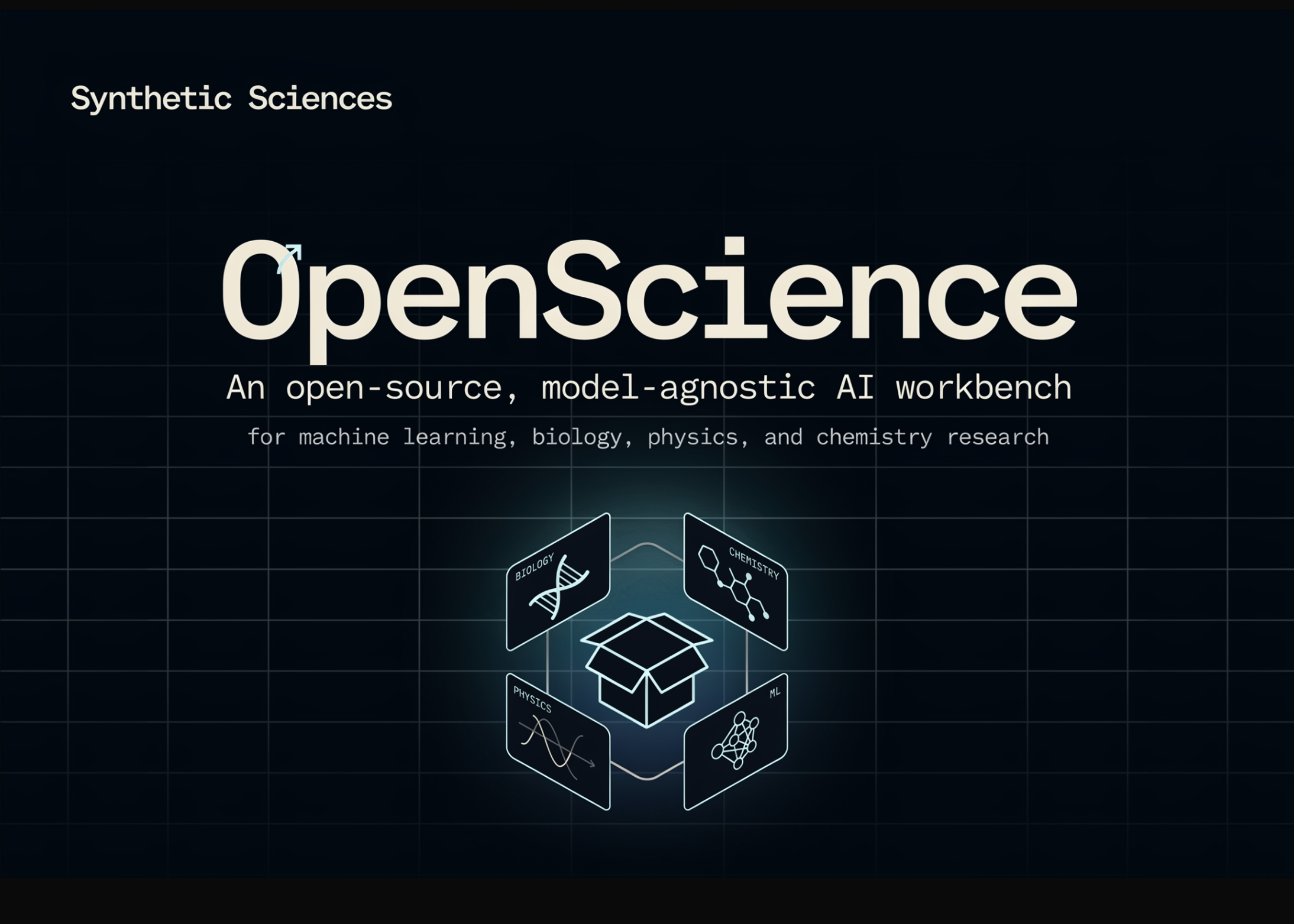
Synthetic Sciences has launched OpenScience, an open-source AI workbench distributed under the Apache-2.0 license. It is designed to facilitate research workflows across machine learning, biology, physics, and chemistry. OpenScience works independently of any one AI model, meaning it can integrate with any frontier or open-weight model through your existing API keys. The platform includes more than 250 editable skills and connects to queryable scientific databases. Importantly, it runs entirely on users’ own infrastructure, avoiding cloud dependencies.
Why it matters
OpenScience puts control back into the hands of researchers and developers who need flexible, customizable AI tooling for complex scientific domains. By allowing the use of any AI model via personal API keys, it sidesteps model lock-in and vendor constraints common in current AI platforms. The open-source nature and local deployment mean organizations can maintain control over data privacy, security, and compute resources. This is especially valuable for institutions in biology and chemistry where sensitive data and reproducibility are critical. Offering hundreds of predefined, editable AI skills combined with database querying lowers the barrier for iterative experimentation, speeding up research cycles.
Who it is for
The platform targets scientific researchers and teams who need an integrated AI workbench capable of managing machine learning and domain-specific tasks in physics, chemistry, and biology. It suits technically capable operators who prefer open-source tooling and deploy AI on premises or in private cloud environments. Developers integrating AI into scientific workflows will find OpenScience useful for building custom models, pipelines, and interactive data queries without getting locked into proprietary AI stacks. It also appeals to organizations focused on data governance and infrastructure control.
The catch
While OpenScience is model-agnostic, using your own API keys means ongoing costs and complexity depend heavily on external AI providers. Running the full loop on your own infrastructure demands operational expertise in AI deployment and hardware maintenance. The size of the prebuilt skill library may require customization to fit highly specialized research needs. Adoption may be hindered for users expecting turnkey cloud solutions, as OpenScience emphasizes flexibility and control over ease of use.
What to watch next
Adoption among research institutions will reveal whether open-source, model-agnostic workbenches can compete with cloud-centric AI platforms for scientific applications. Watch for new integrations with emerging large open-weight models and expanded skill sets targeting cutting-edge scientific problems. The project’s evolution may pressure proprietary AI platform vendors to offer more open, flexible options and better support on-premise deployments. Growth in community contributions around domain-specific databases and AI skills will indicate how well the platform scales in diverse scientific fields.
AI Quick Briefs Editorial Desk