OpenAI’s Deployment Simulation Extends Pre-Deployment Risk Assessment to Agentic Coding Through Simulated T…
What changed
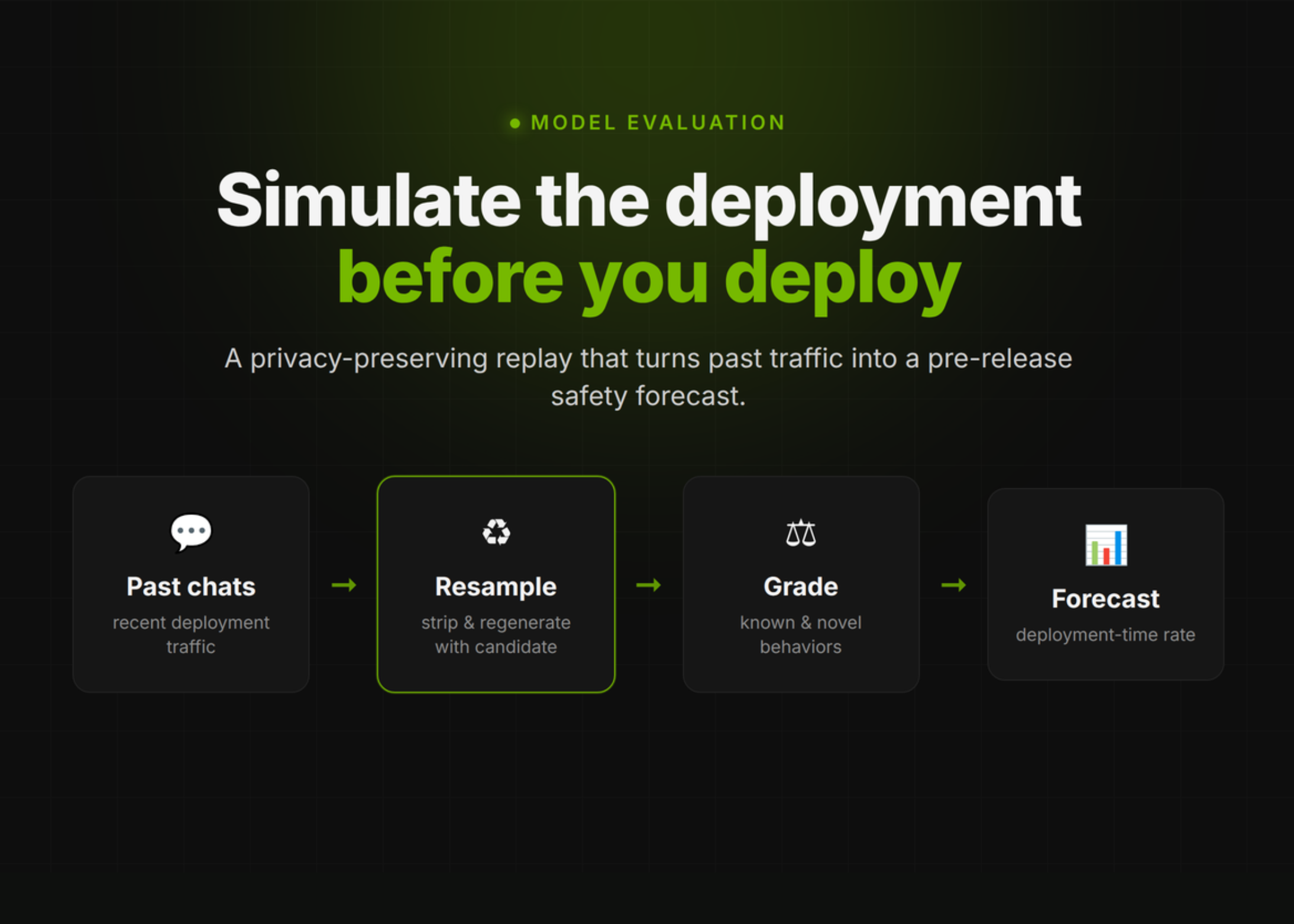
OpenAI launched Deployment Simulation on June 16, 2026, to extend pre-release risk assessment beyond static model tests. This system replays real past conversations through a candidate model to simulate how it would behave in the wild before public deployment. It adds a new layer of evaluation by simulating the model’s use of tools during agentic coding tasks, essentially mimicking how the AI interacts with external APIs or plugins in real scenarios.
Why builders should care
This simulation approach tightens control over risky behaviors by estimating deployment-time issues more realistically. Traditional testing often misses how models behave once live and interacting dynamically with tools. Deployment Simulation grades model completions based on past data, offering a median 1.5x multiplicative error in predicting undesired behaviors. That level of accuracy pressures builders to rethink pre-launch validation, moving beyond static benchmarks to risk assessments that better approximate real-world usage, especially for agentic AI systems that actively call external functions.
The practical takeaway
For developers and AI operators, this means you get earlier warnings of potential harmful or erroneous outputs in complex environments where models act autonomously with tools. Integrating Deployment Simulation could reduce costly post-release failures and improve safety guardrails by catching risks before scaling. However, its error margin still requires cautious interpretation, and it doesn’t eliminate the need for continuous monitoring after deployment. While it improves confidence in model safety under more realistic conditions, it is not a silver bullet.
What to watch next
Expect OpenAI and others to refine simulation accuracy and expand it to cover a broader range of tool types and behaviors. Watch how this approach influences regulatory expectations and how it integrates with operational workflows around risk management. For builders, tracking how deployment simulations adapt to new agentic capabilities in coding and tool use will be critical as AI systems grow more autonomous and complex.
AI Quick Briefs Editorial Desk