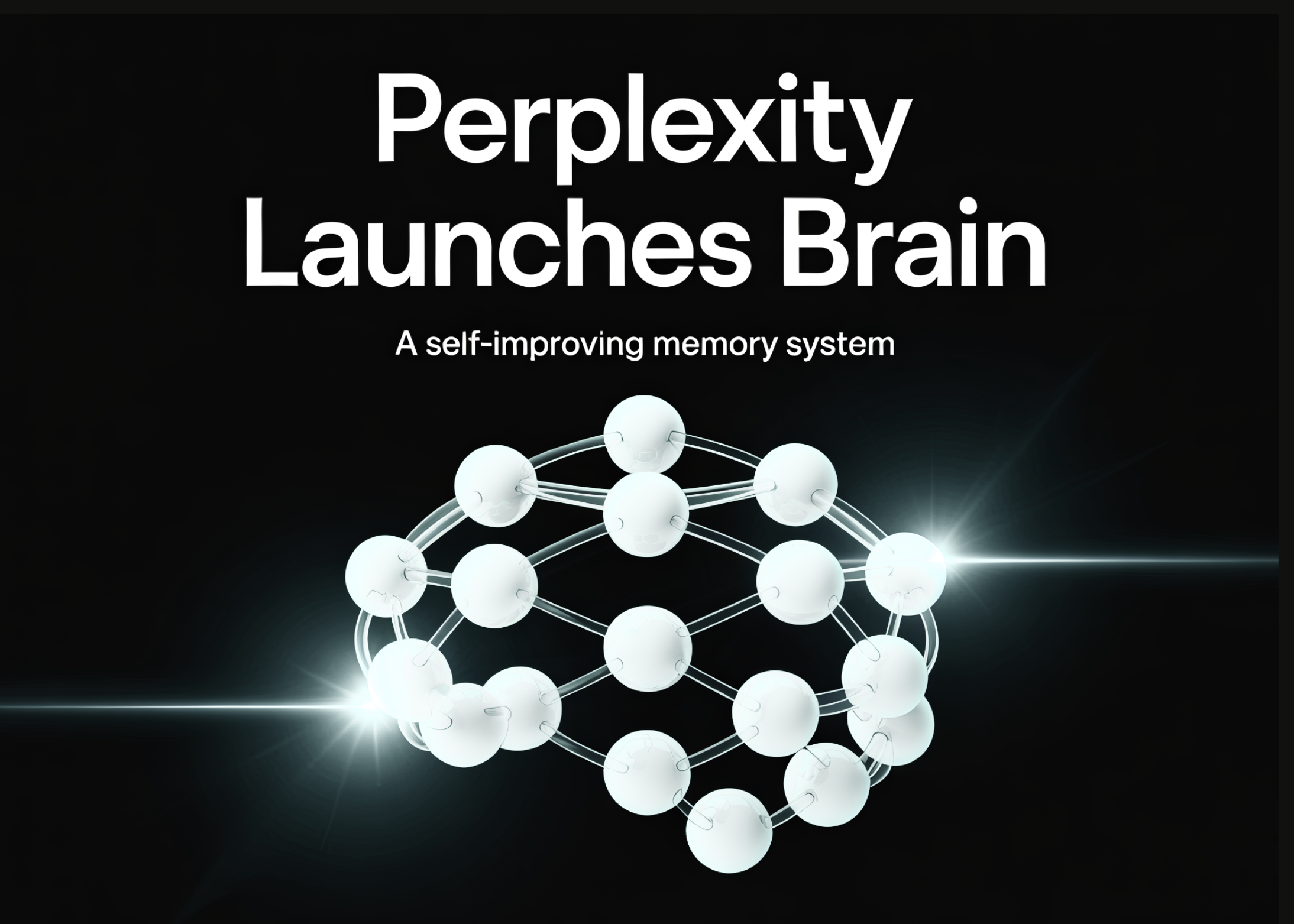
Perplexity Launches Brain, a Self-Improving Memory System That Builds a Context Graph of an Agent’s Work an…
What changed
Perplexity has introduced Brain, a new memory system for its Computer agent that improves itself by learning from its own work history. Unlike typical AI memories that store user interactions, Brain records and builds a context graph of the agent’s operational data—what worked, what failed, and what fixes were applied. It processes this graph overnight to refine its understanding and adjust future responses. Early results show improvements in accuracy, recall, and operational cost.
Why builders should care
This approach shifts focus from remembering users to remembering the agent’s own experience, creating a feedback loop that strengthens the AI’s decision-making over time without extra human input. For developers and operators of AI systems, this means potentially less manual tuning and fewer errors slipping through. The context graph offers a traceable record of agent actions, making debugging and optimization more transparent. Builders aiming to improve agent reliability and reduce ongoing maintenance costs could gain a practical advantage here.
The practical takeaway
Brain’s memory system acts as a self-correcting mechanism that allows AI to get smarter overnight. Operators can expect AI agents that gradually adapt based on past successes and failures rather than just static training data or user profiles. This reduces the need for repeated retraining or external supervision while improving response accuracy, which could translate into lower service costs and better user experiences over time. However, it also raises questions about how well the memory graph scales and handles novel tasks without retraining.
What to watch next
Watch for how Perplexity’s Brain memory scales in larger or more complex deployments and whether competitors adopt similar self-improving memory systems. It will be important to see how transparent and controllable the overnight learning process is for operators who need to audit AI decisions. Also, monitoring any trade-offs on performance speed or resources due to maintaining and processing the context graph will reveal how practical this approach is for real-world applications.
AI Quick Briefs Editorial Desk