OpenAI Releases LifeSciBench, a 750-Task Benchmark Grading AI Models on Real Life-Science Research With Exp…
What it does
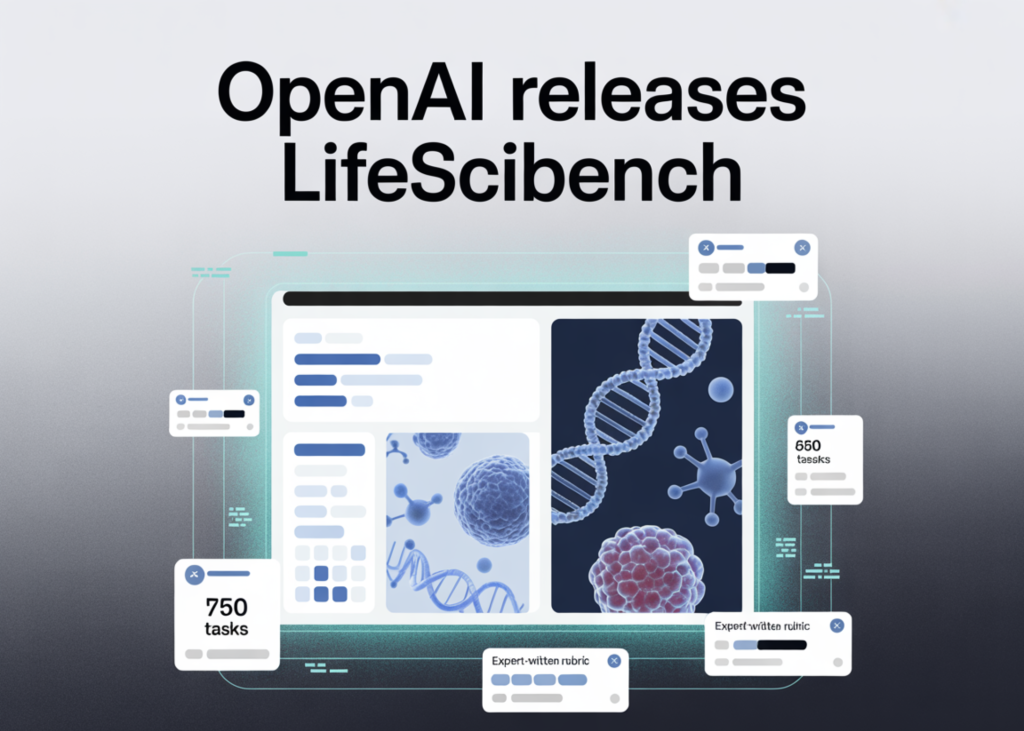
OpenAI launched LifeSciBench, a benchmark designed to test AI models on real-world life science research tasks. It includes 750 tasks covering seven biological domains and seven related workflows. The benchmark was created by 173 PhD scientists using a rigorous rubric with 19,020 criteria, focusing on reasoning and decision-making rather than just recall of information. The top performer so far, GPT-Rosalind, passes only 36.1% of the tasks, showing there is significant room for improvement.
Why it matters
LifeSciBench raises the standard for evaluating AI in life sciences by emphasizing nuanced expert judgment over simple fact regurgitation. Models must demonstrate understanding and sound reasoning to score well, better reflecting real research challenges. For AI developers and life science operators, this means current models are still rough tools rather than ready solvers for complex scientific questions. This benchmark pressures AI builders to improve the quality, reliability, and applicability of models in critical areas like drug discovery, genomics, and biology.
Who it is for
LifeSciBench targets AI researchers, life science companies, and enterprises looking to integrate AI into their experimental workflows. Builders need the benchmark to identify model weaknesses and prioritize improvements that matter in practical research settings. Operators gain a clearer picture of current AI capabilities and limitations in life sciences, helping them avoid overreliance on models that fail complex reasoning or operational tasks.
The catch
Even the best model scores below 40%, signaling early-stage maturity rather than readiness for production use in life science research. Artifacts, exact output demands, and in-app operational calls remain hard challenges for AI models. This gap means life science teams should treat current AI as a complementary assistant rather than a replacement for expert judgment.
What to watch next
Watch for iterations on LifeSciBench and improvements in model performance, especially in reasoning and decision-making tasks. Advances that push scores significantly higher will signal progress toward reliable AI tools in life sciences. The benchmark will also set a baseline for comparing emerging specialized AI models aimed at research, drug design, and biomedical data interpretation.
AI Quick Briefs Editorial Desk