NVIDIA SkillSpector Guide: Scanning AI Skills for Security Risks with Static Analysis and SARIF Reports
What changed
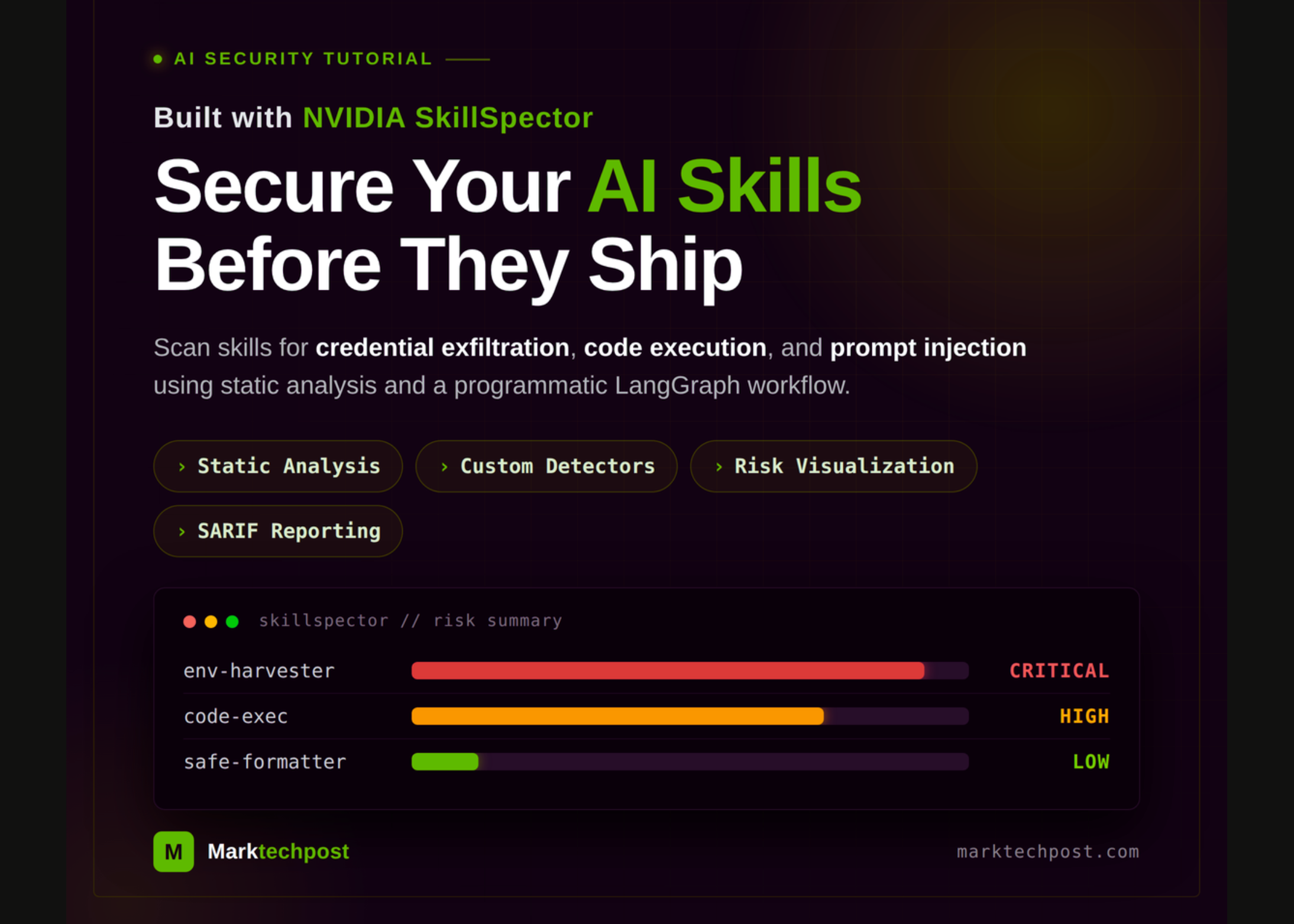
NVIDIA released a detailed guide for SkillSpector, their static analysis tool aimed at scanning AI skills for security risks. The tutorial walks through building a test corpus of both safe and deliberately vulnerable AI skills, then running them through SkillSpector’s LangGraph workflow. Operators are shown how to organize risk scores and manage findings programmatically using pandas, as well as visualize the distribution of severity and risk categories. The workflow ends with exporting results in SARIF format, registering a custom analyzer, and optionally adding a semantic pass powered by a large language model.
Why builders should care
AI skills, like any software, carry security risks that can cause failures, misuse, or exploitation. SkillSpector lets developers catch these risks before deployment by scanning code statically—meaning without running it. The ability to automate risk scoring and export results in SARIF, a widely adopted static analysis format, simplifies integrating security checks directly into CI/CD pipelines. Adding a semantic pass with an LLM extends traditional static analysis by helping interpret complex code patterns and context, improving threat detection accuracy.
The practical takeaway
SkillSpector gives teams a concrete way to harden AI skills before they go live. Instead of manual audits or reactive fixes, builders can embed automated, programmatic security scans into their workflows. Outputs in SARIF allow standardization and easier triage with existing developer tools. The guide’s use of pandas for data handling and visualization offers an approach for turning raw scan data into actionable insights. Adding language model semantic analysis opens new ways to catch subtle vulnerabilities while keeping scanning fast and scalable.
What to watch next
Expect growing adoption of static analysis tools tailored specifically for AI skill and agent development. Integration of LLMs into security tooling could become a norm for more nuanced code evaluation. Watch for SkillSpector updates that expand vulnerability coverage or offer tighter integration with GPU-accelerated ML pipelines. Developers should also prepare for potential regulatory or compliance requirements mandating such pre-deployment AI safety scans.
AI Quick Briefs Editorial Desk