Google built a 99 dollar AI health coach. Whoop responded with real doctors.
What happened
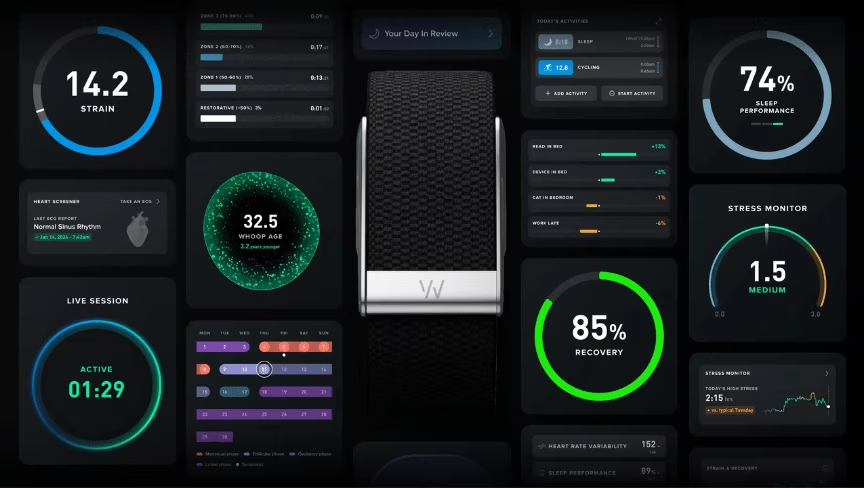
Google released a $99 screenless fitness tracker paired with an AI-driven health coach subscription at $9.99 per month, powered by its Gemini AI. The device focuses on collecting and interpreting health data through artificial intelligence without a traditional display. One day later, Whoop responded by announcing it will offer on-demand video consultations with licensed clinicians through its app, combining wearable data with expert human oversight.
Why it matters
Google’s approach bets on artificial intelligence to deliver personalized health insights and coaching at a lower entry cost. This puts pressure on the health wearables space to automate health advice using AI rather than relying solely on human experts. Whoop’s counter move to integrate live clinicians reasserts the value of professional medical input alongside data tracking. The competition exposes a key divide: cheaper AI-driven guidance versus pricier human-led care. Buyers now must weigh cost savings against trust and accuracy. Investors will watch which model drives sustained user engagement and monetization, and regulators may scrutinize the safety claims from automated health coaching without direct human oversight.
What changes in practice
Founders and product teams in health tech will need to decide whether to prioritize AI-driven scaling or invest in integrating licensed professionals into their offerings. Builders should closely evaluate how AI models like Gemini interpret health data and balance that with compliance risks tied to medical advice. For buyers, Google’s cheaper AI coach promises lower subscription costs but shifts risk to the user to judge accuracy without real-time human validation. Whoop’s clinician on-demand model raises subscription price and support complexity but offers greater trust and possibly better user outcomes. Investors must assess which approach will retain customers long term, as wearable data alone is often insufficient for health decision-making. For security teams and regulators, automated AI health advice heightens risks around inaccurate recommendations, impacting compliance and liability. Live clinician access also demands strong telehealth privacy and data controls versus purely algorithmic solutions. Small businesses developing health wearables should prepare for tighter scrutiny on how well AI interprets sensitive biometric data and consider partnerships combining AI with licensed medical staff.
Who should pay attention
Health wearable companies and startups focused on AI coaching will want to track this duel between automated and human-assisted models because it signals where competition and innovation are heading. Founders weighing options to scale health insights cheaply or invest in clinical partnerships must understand these diverging paths. Buyers of health tracking subscriptions should watch for differences in service quality, especially if automated coaching becomes more mainstream but still lacks clinical validation. Investors should focus on user retention metrics that highlight trust and outcomes, not just AI novelty. Regulators and telehealth compliance officers bear watching how claims around AI health advice evolve to guard against misdiagnosis or user harm. Small businesses developing or integrating biometric AI services face practical challenges balancing cost, compliance, and user trust shaped by this competition.
What to watch next
Keep an eye on adoption rates and churn for Google’s AI-only model versus Whoop’s clinician-driven service. Metrics showing how users respond to AI coaching accuracy compared to expert consultations will clarify which approach retains customers better. Any regulatory actions or warnings related to AI health advice could affect product roadmaps industry-wide. Watch for new health tech startups adopting hybrid solutions combining AI with human clinicians, as that may become the baseline expectation. Updates on product integrations, pricing shifts, or expanded clinical services from either company will signal how aggressively this competition drives change.
AI Quick Briefs Editorial Desk