Getting Started with GitHub Agentic Workflows
What changed
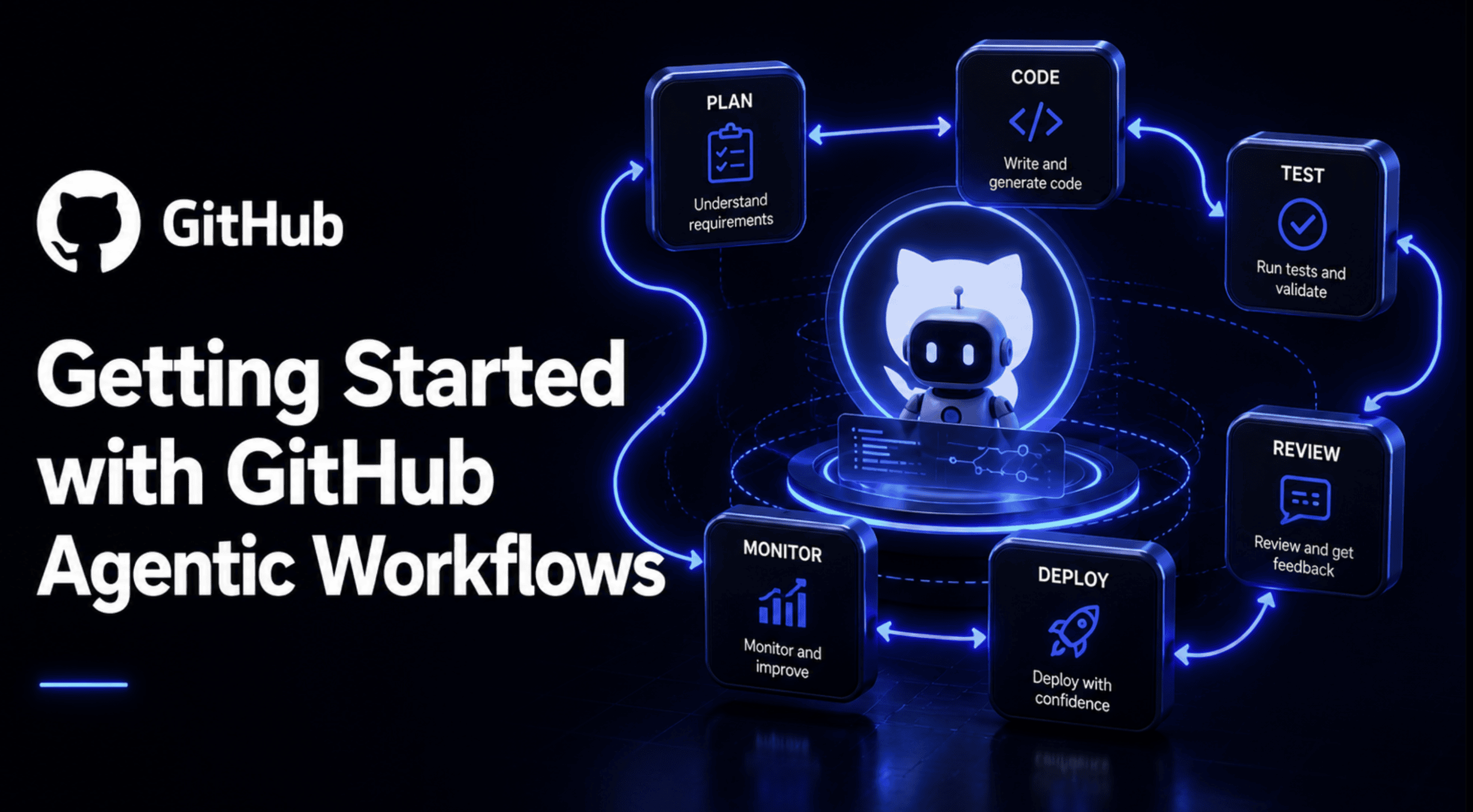
GitHub launched Agentic Workflows in public preview, introducing a way for developers to automate complex tasks using AI agents directly within GitHub’s ecosystem. These workflows allow AI agents to perform multi-step operations, make decisions, and interact with repositories and external systems. The goal is to simplify automation beyond simple scripts or actions by embedding AI agents that act autonomously on behalf of developers.
Why builders should care
Agentic Workflows change how software development teams automate and orchestrate their processes. Instead of relying solely on static scripts or restricted automation platforms, developers can involve AI agents capable of managing branching logic, context awareness, and decision-making within their workflows. This reduces manual oversight, accelerates development cycles, and supports more adaptive, scalable automation inside GitHub itself. Builders investing time into Agentic Workflows can potentially cut down repetitive tasks and better integrate AI’s reasoning power into day-to-day operations.
The practical takeaway
For developers and engineering teams, Agentic Workflows offer a new automation paradigm directly integrated with GitHub repositories. This means fewer toolchain switches and less infrastructure overhead when building complex pipelines involving AI-driven decision steps. Teams can prototype or extend functionality without heavy coding, relying on agentic behavior to handle conditional steps or fetch and process information autonomously. However, since the feature is in public preview, expect iterative improvements and watch for limitations in customization or stability as usage grows.
What to watch next
Watch for GitHub’s updates on workflow capabilities, integrations with popular CI/CD tools, and agent performance improvements. Also monitor how teams adopt agentic workflows for tasks beyond traditional development—such as security audits, code reviews, or project management. GitHub’s support for community extensions will be key to widespread adoption, as well as any pricing or usage changes that affect operational costs. Finally, note how GitHub balances agent autonomy with security and auditability inside repositories.
AI Quick Briefs Editorial Desk