Designing a Schema-Guided Invoice Intelligence Pipeline with lift-pdf for Accounts-Payable Extraction, Vali…
What changed
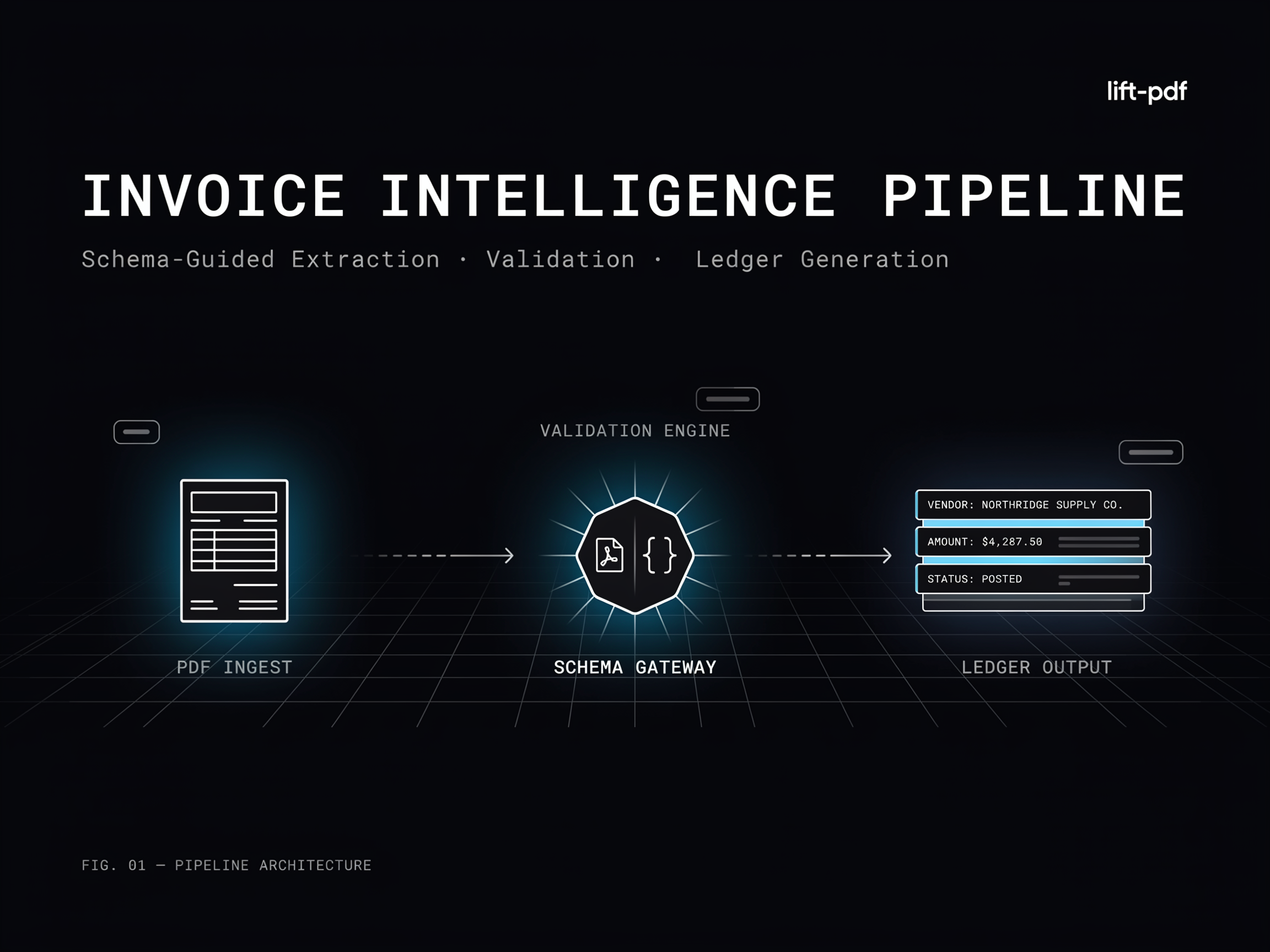
A new approach to automating accounts-payable has emerged using lift-pdf, a tool that integrates synthetic invoice PDF generation with schema-guided document understanding. Instead of treating invoice parsing as a basic OCR task, this method focuses on extracting, validating, and structuring invoice data according to a predefined JSON schema. This pipeline generates realistic synthetic invoices for controlled testing and ensures the extracted information from PDFs matches specific fields like vendor names, invoice numbers, and line items accurately.
Why builders should care
Traditional invoice processing often struggles with variability in document layouts and error-prone OCR outputs. This schema-guided approach forces clarity on what data matters and how it should be structured, reducing guesswork and improving reliability. It directly addresses the patchwork nature of many accounts-payable systems by combining data extraction, validation against set rules, and ledger generation into a unified flow. For builders, this signals a shift toward document intelligence models that learn document structure, not just text. It simplifies downstream automation and auditing since the data aligns strictly with a business-defined schema.
The practical takeaway
Operators and developers facing invoice workflow challenges can adopt this method to boost accuracy and confidence in extracted data. Generating synthetic invoices in testing provides controlled inputs to iterate and validate the pipeline without waiting for messy real documents. Schema guidance reduces post-processing cleanup and manual correction by catching invalid entries early. The output JSON format integrates smoothly with accounting systems for ledger posting, closing the loop from invoice receipt to bookkeeping. This approach can cut operational costs, reduce error rates, and speed audits by formalizing how invoices are parsed and validated.
What to watch next
The next step is monitoring how schema-guided pipelines like this cope with diverse vendor formats and real-world noise, especially at scale. Adoption by mid-to-large enterprises with complex accounts-payable workflows will reveal practical limits and opportunities for improvement. Look for lift-pdf or similar tools expanding support for more document types and tighter integration with ERP or invoice management platforms. Pay attention to the extent this method influences the design of future document AI solutions prioritizing structure and validation over pure OCR extraction.
AI Quick Briefs Editorial Desk