Choosing the Right AI Agent Memory Strategy: A Decision-Tree Approach
What changed
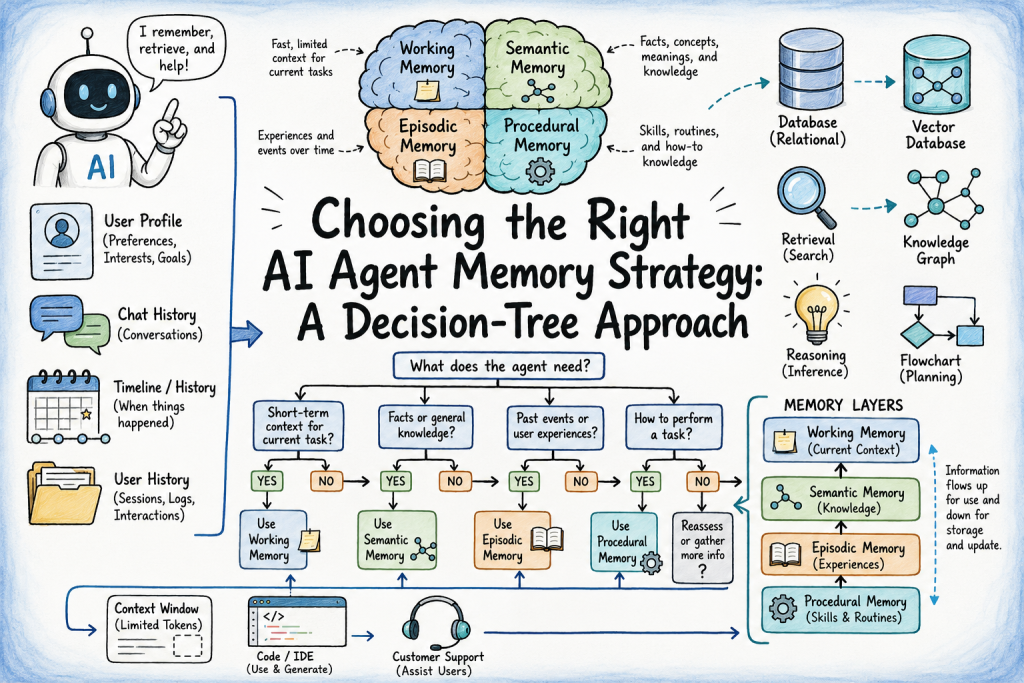
A new approach simplifies choosing memory strategies for AI agents by framing the decision as a step-by-step tree. Instead of random trial or complex guesswork, this method guides operators and developers through questions about use case needs, memory persistence, and interaction style. The approach clarifies when to use short-term memory, long-term memory, or no memory at all.
Why builders should care
Memory in AI agents affects performance, cost, and user experience. Using the wrong strategy risks bloated resource use or poor context retention. The decision-tree approach forces concrete thinking about how agents handle information: whether context is fleeting or ongoing, if data privacy is a concern, or if the agent needs to adapt over days or minutes. This practical lens helps builders avoid costly trial-and-error cycles and technical debt.
The practical takeaway
The decision tree works like a diagnostic tool. It starts by asking if the AI agent needs any memory or if it can operate statelessly. If memory is needed, the next questions cover how long it must remember data and whether to store it on device or server side. The process distinguishes memory types such as ephemeral, episodic, or semantic, matching them to real-world agent goals. Operators get clear guidance on when to invest in persistent databases versus transient caches, balancing speed, cost, and compliance.
What to watch next
Expect more tools and frameworks to embed decision-guided workflows for AI memory design, making agent development more consistent and scalable. As regulations on AI data handling tighten, the memory strategy will become a compliance linchpin, especially for consumer-focused apps. Builders should also watch for integrations that automate these decision trees within AI platforms to streamline memory management choices without coding guesswork.
AI Quick Briefs Editorial Desk