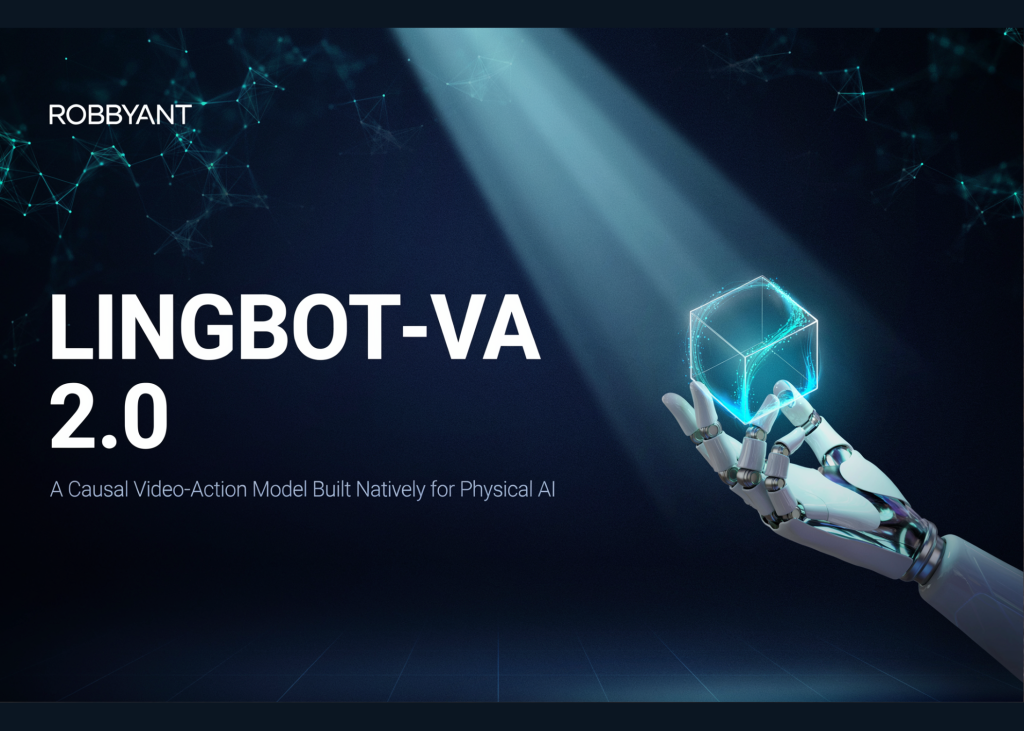
Ant Group’s Robbyant Unveils LingBot-VA 2.0: A Causal Video-Action Model Built Natively for Physical AI
What it does
Ant Group’s Robbyant released LingBot-VA 2.0, a new video-action model designed for Physical AI applications. Unlike models adapted from video generation systems, LingBot-VA 2.0 is built from the ground up for embodied interaction with the physical world. It combines causal modeling to predict future states before actions execute and re-anchors itself constantly based on real-time observations. The model processes video streams with sparse mixture-of-experts architecture and uses a semantic visual-action tokenizer to link visuals and actions efficiently. It supports high-frequency asynchronous control at 225 Hz, making it suitable for real-world robotics and automation tasks requiring fast feedback loops.
Why it matters
LingBot-VA 2.0 targets a longstanding pain point in AI for robotics: most video-action models rely on adapting video generation techniques, which compromises responsiveness and predictive accuracy. By focusing on causality and embodiment natively, this model tightens integration between perception and action. Its forward-looking state predictions allow robots to anticipate outcomes rather than just react, potentially reducing latency and errors in dynamic environments. The 225 Hz control rate also means faster, more precise command execution—crucial for physical robots navigating unpredictable or fast-moving scenarios. For operators, this could lower costs and increase reliability in deploying Physical AI systems, from assembly lines to autonomous drones.
Who it is for
LingBot-VA 2.0 directly serves developers and engineers building next-gen robotics, automation platforms, and physical AI systems. Its design suits those needing tight integration of sensory input and control output with real-time prediction capabilities. Founders aiming to enhance physical automation workflows or improve machine responsiveness can leverage this model to meet stringent operational demands. Investors eyeing Physical AI hardware and software startups should note that LingBot-VA 2.0 sets a higher bar for foundational capabilities in the sector.
The catch
The technical report reveals some inconsistencies in the model’s reported performance numbers, raising questions about reproducibility or benchmarking standards. While the architecture’s components are well explained, real-world deployment details remain sparse. This suggests that while the model advances conceptually, significant validation and integration work lies ahead before widespread adoption. Operators should be cautious about overestimating readiness based solely on the paper.
What to watch next
Keep an eye on follow-up releases showing LingBot-VA 2.0’s performance on physical robots and industrial workloads. Track whether Robbyant or Ant Group open source components or offer APIs, which would accelerate adoption among builders. Also watch for competitors adapting similar causal and high-frequency control designs for robotics—any moves will signal whether this new approach redefines standards for Physical AI models.
AI Quick Briefs Editorial Desk