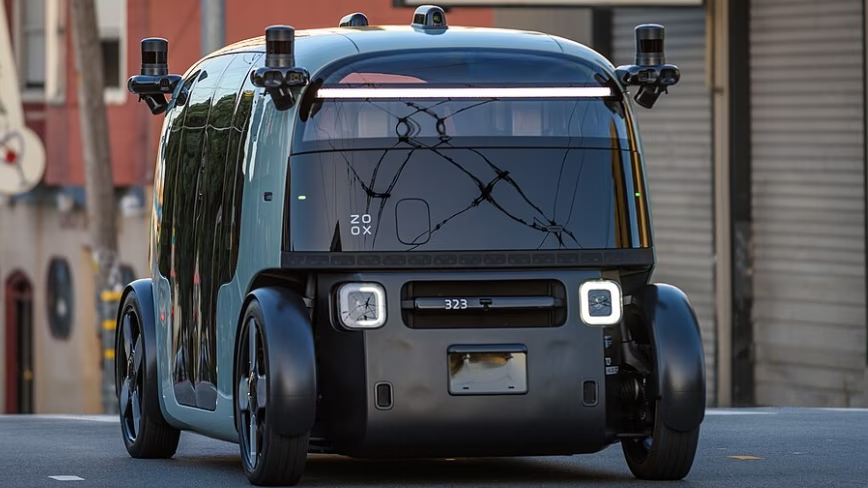
Amazon’s Zoox recalls 105 robotaxis after one drove into heavy smoke at an active fire scene
What happened
Amazon’s Zoox recalled software updates in 105 of its robotaxis after one unoccupied vehicle drove into heavy smoke at an active fire scene in Las Vegas on June 20. The smoke cloud was dense and the emergency area was not blocked off with traffic cones or other physical barriers. The robotaxi entered the fire zone, detected the smoke late, braked hard, and tried to steer away before stopping. No injuries were reported, but the incident revealed that the car’s autonomous system struggled to interpret ambiguous, obstructed environments created by natural hazards and emergency response activity.
Why it matters
This recall exposes clear limits in current autonomous vehicle software when facing unpredictable, real-world emergency conditions. Robotaxis depend heavily on sensors and AI models to identify hazards and adjust their behavior. But smoke obscured sensor input and the lack of physical markers confused the system’s decision-making. For builders and operators, this incident raises the bar on safety testing and scenario planning. It forces companies to tighten controls for emergency zones, potentially requiring integration with first responder communications or more adaptive perception systems. For regulators and the public, it impacts trust and readiness for autonomous fleets in complex urban conditions. Overall, it signals that robotaxi deployment must proceed cautiously and with improved risk management around emergency scenes.
What to watch next
The next focus should be on how Zoox and other autonomous vehicle developers update their sensor fusion algorithms and environmental awareness to better handle occlusions like smoke. Look for moves toward more conservative operational boundaries near active incidents and increased collaboration between robotaxi fleets and first responders to share live scene data. Regulatory agencies could tighten requirements for autonomous vehicle behavior in emergency zones, possibly mandating fail-safe protocols or manual intervention triggers. Investors and operators should expect longer testing cycles and potentially higher compliance costs as the industry addresses this exposure. How fast and effectively Zoox adapts will be a key signal of whether autonomous vehicles can scale safely in high-risk urban environments.
AI Quick Briefs Editorial Desk