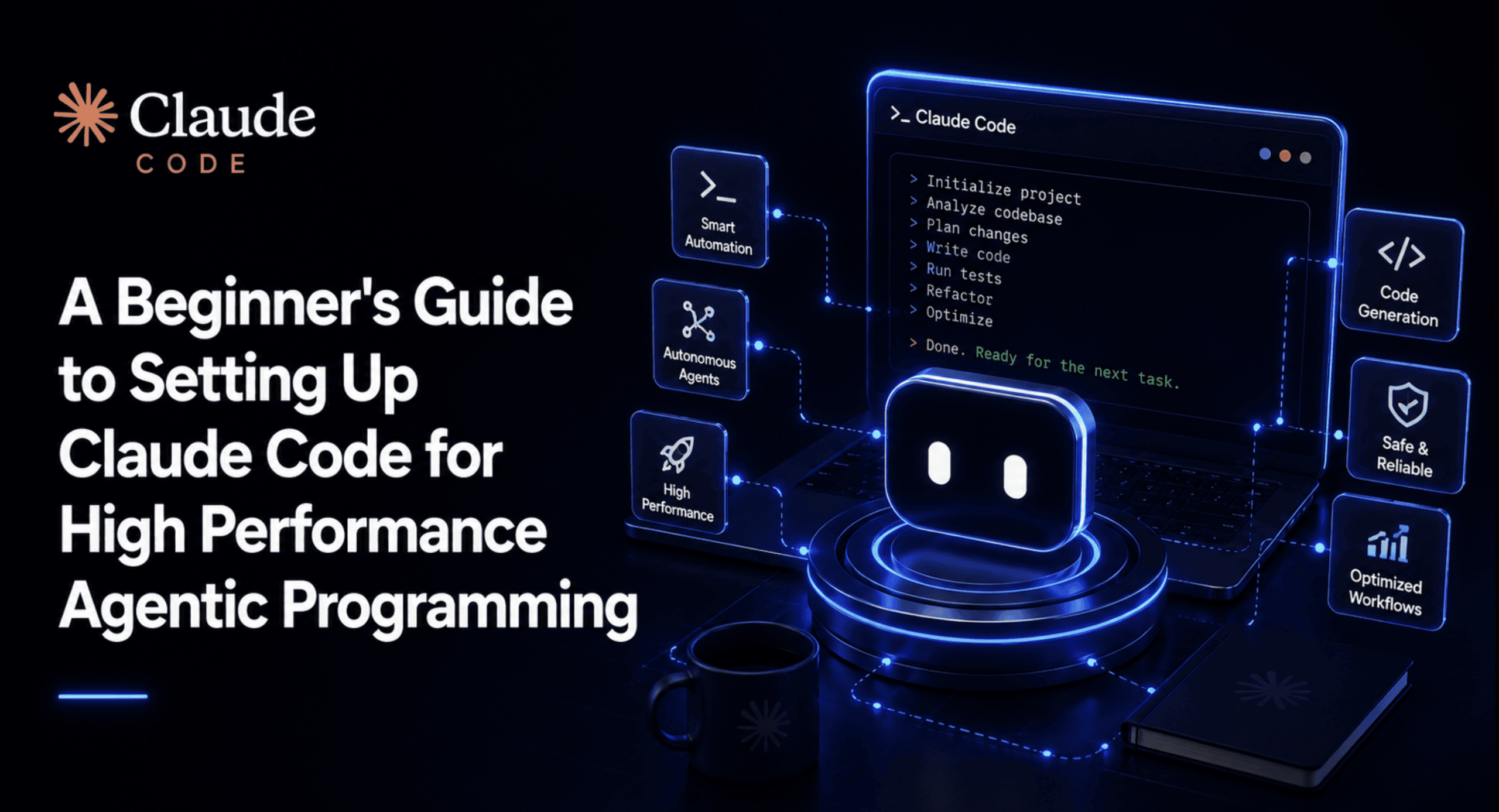
A Beginner’s Guide to Setting Up Claude Code for High Performance Agentic Programming
What changed
Setting up Claude Code for agentic programming at high performance requires more than just installing the software. The real difference lies in configuring permissions, establishing reliable hooks, and adopting command habits that support sustained multi-step workflows. This guide details how to move from a fresh install to a durable setup that consistently performs under the demands of real-world agentic tasks. It addresses the overlooked gaps in default setups which can cause fragile or limited agent behavior.
Why builders should care
Builders designing autonomous agents or complex AI workflows face challenges beyond model capabilities. Without proper permissions and hooks, agents lack the control and feedback loops needed for robust task execution. This guide exposes how naive setups undermine reliability and scalability, forcing operators to repeatedly troubleshoot or simplify projects. Investing time in configuration now will save effort downstream by preventing brittle agent failures and enabling more sophisticated, efficient operations.
The practical takeaway
High-performance agentic programming on Claude Code depends on deliberate setup choices. Granting the right permissions means the agent can autonomously access necessary resources and services. Establishing hooks connects AI outputs to executable actions, far beyond passive text generation. Adopting consistent command habits reduces errors and improves prompt clarity, making workflows predictable and easier to scale. Together, these components transform Claude Code from a proof of concept into a stable foundation for real multi-step automation.
What to watch next
Expect emerging tools and frameworks that simplify the configuration of permissions and hooks for AI agents. Integration kits or orchestration platforms may arise to package these best practices, lowering the barrier to durable agentic setups. Operators should track how Claude Code evolves in handling more complex permissions natively or through third-party extensions. Also, watch for community-driven repositories of common command patterns and hooks that standardize high-reliability agent development.
AI Quick Briefs Editorial Desk