Nvidia Broadens Physical AI Push With Robotics, Edge AI Updates

What changed
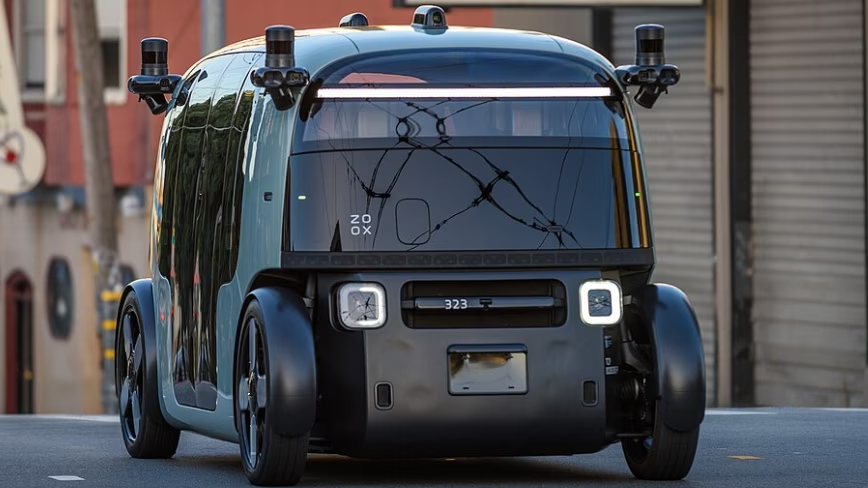
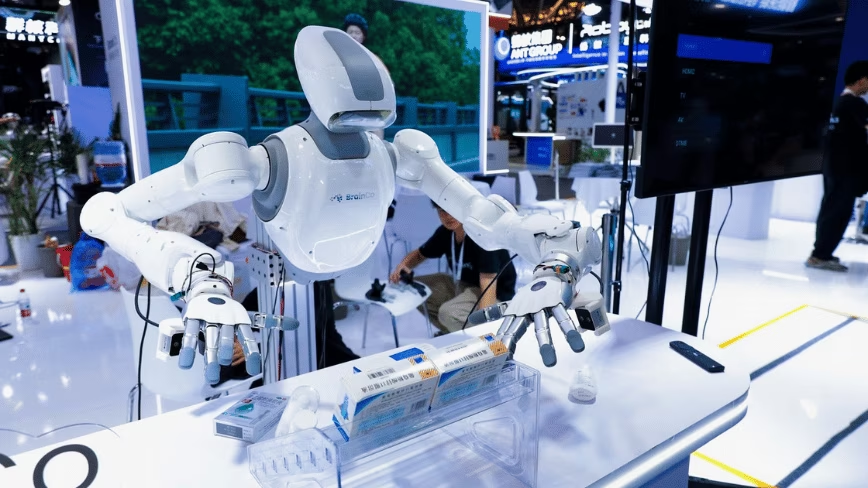
Nvidia is expanding its physical AI ecosystem with new updates covering robotics, edge AI hardware, foundational models, software frameworks, developer tools, and industrial partnerships. The company is integrating advances in its suite of AI capabilities to improve performance in real-world physical environments, not just in data centers or cloud settings. This includes ramping up its GPU and AI chip offerings designed for edge devices running robots and smart machinery, along with enhancements to software like Isaac ROS and Omniverse for simulation and development. Nvidia’s latest moves also deepen collaborations with industrial partners to deploy AI in manufacturing, logistics, and other physical domains.
Why builders should care
For developers and engineers working on robotics and edge AI, Nvidia’s comprehensive stack targets key roadblocks: running complex AI tasks reliably on constrained hardware outside data centers, building simulation environments that accelerate testing, and integrating foundational models that understand physical contexts. This reduces development friction and operational risk when deploying robots or AI-driven systems in factories, warehouses, or retail locations. The updated toolset makes it easier to prototype, train, and run AI workloads at the device level, which lowers latency and cuts costs tied to cloud dependencies.
The practical takeaway
Organizations building AI-powered physical systems can expect faster integration cycles and more robust edge performance thanks to Nvidia’s tighter ecosystem. This pressures competitors to match end-to-end solutions that combine chips, software, and industrial know-how rather than selling hardware or AI models in isolation. For adopters, it means potential cost savings on compute and cloud usage while gaining better AI reliability in real environments. Businesses reliant on AI for robotics or edge automation can move from proof-of-concept to production with fewer integration hurdles and clearer paths for scaling.
What to watch next
The rate of adoption of Nvidia’s physical AI platform by industrial sectors will be telling. Watch for announcements of scale deployments in manufacturing, supply chain automation, and autonomous systems. It will also be important to track how well competing chipmakers and software vendors respond, especially those targeting niche robotics or edge AI markets. Lastly, observe Nvidia’s continued development of foundational AI models tuned for physical intelligence, since these will drive differentiation in AI capabilities on edge devices over the coming years.
AI Quick Briefs Editorial Desk