How Nvidia’s ASPIRE framework accelerates robot programming with self-improving AI

What changed
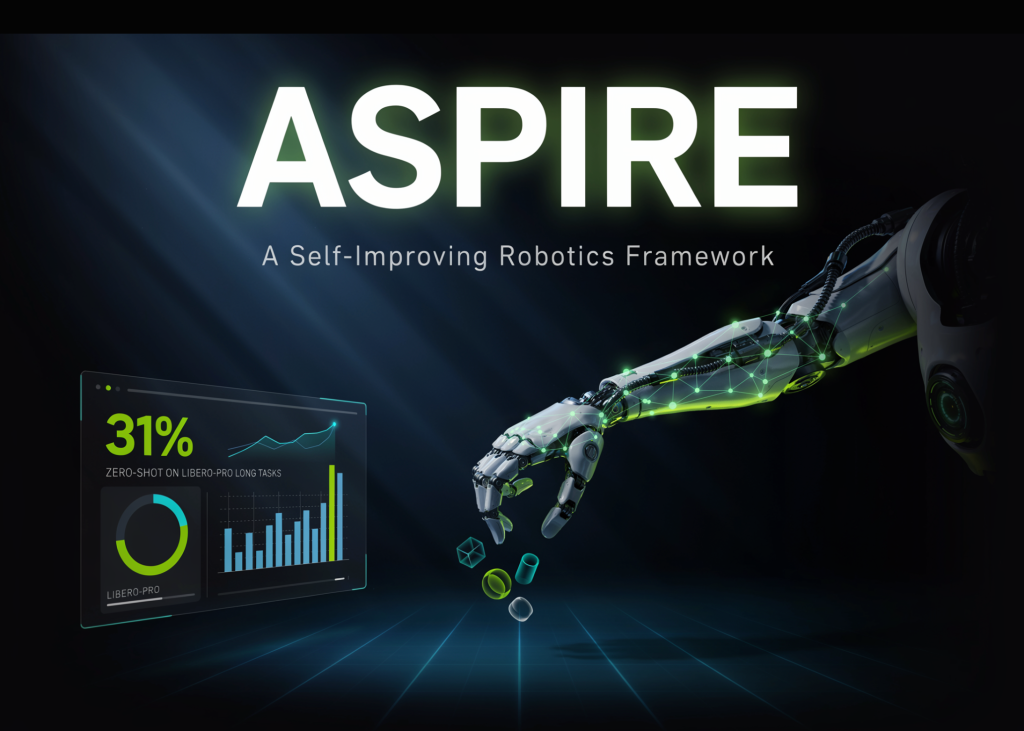
Nvidia introduced ASPIRE, a new AI framework designed to automate and improve robot programming through self-improving models. ASPIRE employs an iterative process where the AI refines its own code and operational strategies by analyzing past performance data. This approach cuts down both the development time and the token usage typically required by AI-driven robotics applications.
Why builders should care
Robotics development has long struggled with high costs and complexity, especially when deploying AI at scale. By reducing token costs and deployment friction, ASPIRE makes it more practical to embed AI into real-world robots. Builders can now focus less on costly trial-and-error programming and more on tuning high-level tasks. The self-improving nature means continuous optimization happens without manual intervention, easing maintenance and scaling.
The practical takeaway
Operators and developers will find ASPIRE lowers the barrier to bringing intelligent robotics to market by cutting programming overhead. This means faster iteration cycles and lower compute expenses, which are major cost drivers in AI implementations. It also signals a shift in AI tooling toward frameworks that autonomously improve, reducing the need for ongoing human debugging and tuning in robotic systems.
What to watch next
The main question is how well ASPIRE adapts across different robot types and real-world environments beyond Nvidia’s initial tests. Adoption could pressure competitors to develop similar self-improving frameworks, potentially shifting the economics of AI-powered robotics. Watch for case studies showing ASPIRE’s impact on deployment scale, cost reductions, and robot performance over time.
AI Quick Briefs Editorial Desk