Japan’s Turing takes AMD money and AMD chips to loosen Nvidia’s grip
The business move
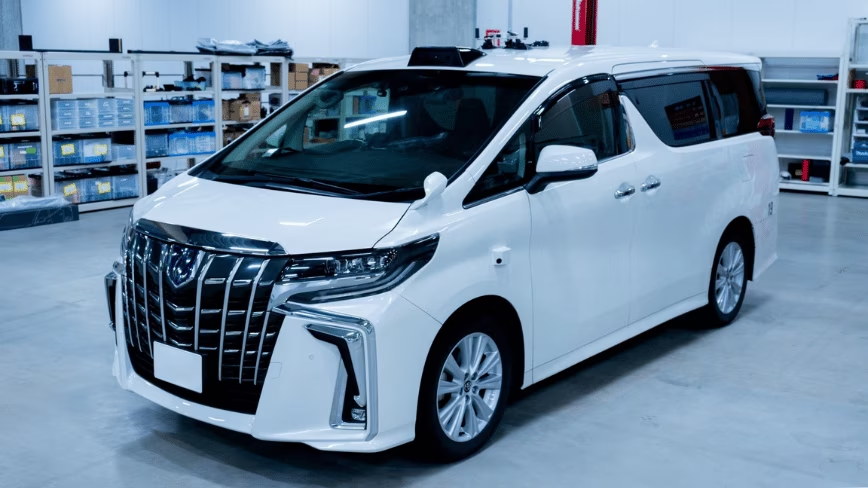
Turing Inc., a Tokyo-based startup focused on self-driving software, has secured an investment from AMD Ventures and started deploying its AI workloads on AMD chips. This breaks away from the established norm of Nvidia dominating the hardware powering nearly every autonomous vehicle project worldwide. By adopting AMD’s processors, Turing aims to embed its self-driving technology into consumer vehicles and robotaxis, challenging Nvidia’s market hold.
Why it matters
Nvidia’s chips have been the default choice for autonomous vehicle AI due to their performance and mature software ecosystem. A credible competitor like Turing switching to AMD hardware can create pressure on Nvidia to adjust pricing, improve architecture, or innovate faster. For Turing, leveraging AMD’s technology may lower costs, diversify supply risks, and attract different types of investors focused on expanding the AI chip landscape. This also signals a potential shift in where critical compute happens in the self-driving stack, which could affect development roadmaps and deployment strategies industry-wide.
Who gains and who gets squeezed
AMD gains a presence in self-driving vehicle AI, a lucrative and fast-growing market segment where it has struggled to gain ground against Nvidia. Investors in AMD-backed startups like Turing may see new growth vectors beyond traditional PC and server markets. Nvidia faces increased competition amid concerns over hardware shortages and high prices. Automakers and robotaxi operators could benefit from more hardware options that lower dependency on a single vendor and enable price competition. However, incumbents using Nvidia tech might face integration or redevelopment investments if switching to alternative chips becomes necessary.
What to watch next
Monitor whether Turing’s shift causes other startups or automakers to explore AMD hardware seriously. Watch for announcements on partnerships or performance benchmarks comparing AMD and Nvidia AI chips in real driving conditions. Investors should track AMD Ventures’ portfolio moves in automotive AI to gauge if this strategy broadens. Nvidia’s response in terms of product pricing, software openness, or strategic alliances will reveal if their dominance is cracking or reinforcing. Finally, note any regulatory, supply chain, or software ecosystem effects that arise from this hardware diversification.
AI Quick Briefs Editorial Desk