Meet WebBrain: An Open-Source, Local-First AI Browser Agent That Reads Pages and Automates Tasks in Chrome …
What it does
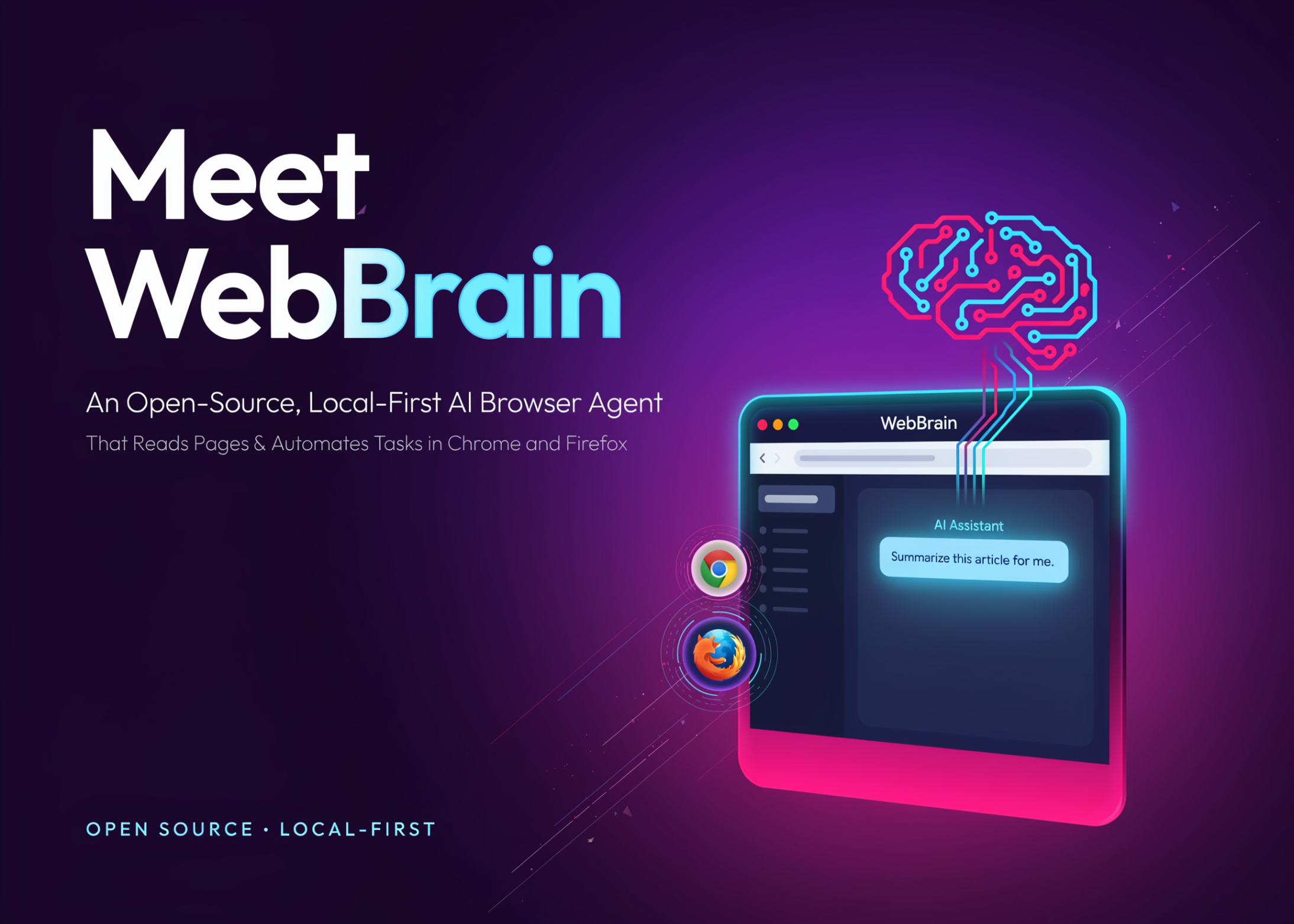
WebBrain is an open-source AI browser agent that runs in Chrome and Firefox to read web pages, extract data, and automate complex tasks. It offers two main modes: Ask, which lets users query page content, and Act, which executes multi-step workflows automatically. It supports local-first operation through local models like llama.cpp or Ollama, giving users control over AI processing for privacy reasons. Alternatively, WebBrain can connect to any cloud-based AI API, making it flexible for different needs.
Why it matters
WebBrain puts AI browsing and automation power directly in users’ hands without sending data to external servers by default. Local-first design weakens risks around data privacy and reliance on cloud providers. That matters for builders and operators handling sensitive workflows or simply wanting fast, reliable automation free from network bottlenecks. It also pressures proprietary agents tied to specific platforms to open up or lose ground among privacy-conscious users.
Who it is for
WebBrain serves developers, power users, and operators who need AI-assisted research, data extraction, and task automation in their browser environments. Building on open-source licenses and freedom to run locally appeals to privacy-focused businesses and independent builders. It is also relevant for teams who want an AI agent that integrates into their existing Chrome or Firefox workflows without heavy infrastructure changes.
The catch
Running models locally means users bear the cost of computing overhead on their machines and must manage model setups themselves. The quality and speed will depend on local hardware capabilities and model choice. Cloud API users surrender some privacy but gain ease of use. WebBrain’s automation relies on scripts and workflows that require initial configuration, which may slow adoption for non-technical users who want out-of-the-box solutions.
What to watch next
Tracking how WebBrain grows its ecosystem of reusable task scripts and AI model integrations will indicate its staying power. Seeing which local models gain traction inside the agent could shift developer preferences on privacy vs. convenience tradeoffs. Watch for adoption by privacy-focused companies or individuals driving demand for local AI assistants. Also note if mainstream browser vendors or large AI firms respond with competing local-first agents.
AI Quick Briefs Editorial Desk