Meta AI Releases Brain2Qwerty v2: A Non-Invasive MEG Brain-to-Text Pipeline Decoding Typed Sentences at 61%…
What it does
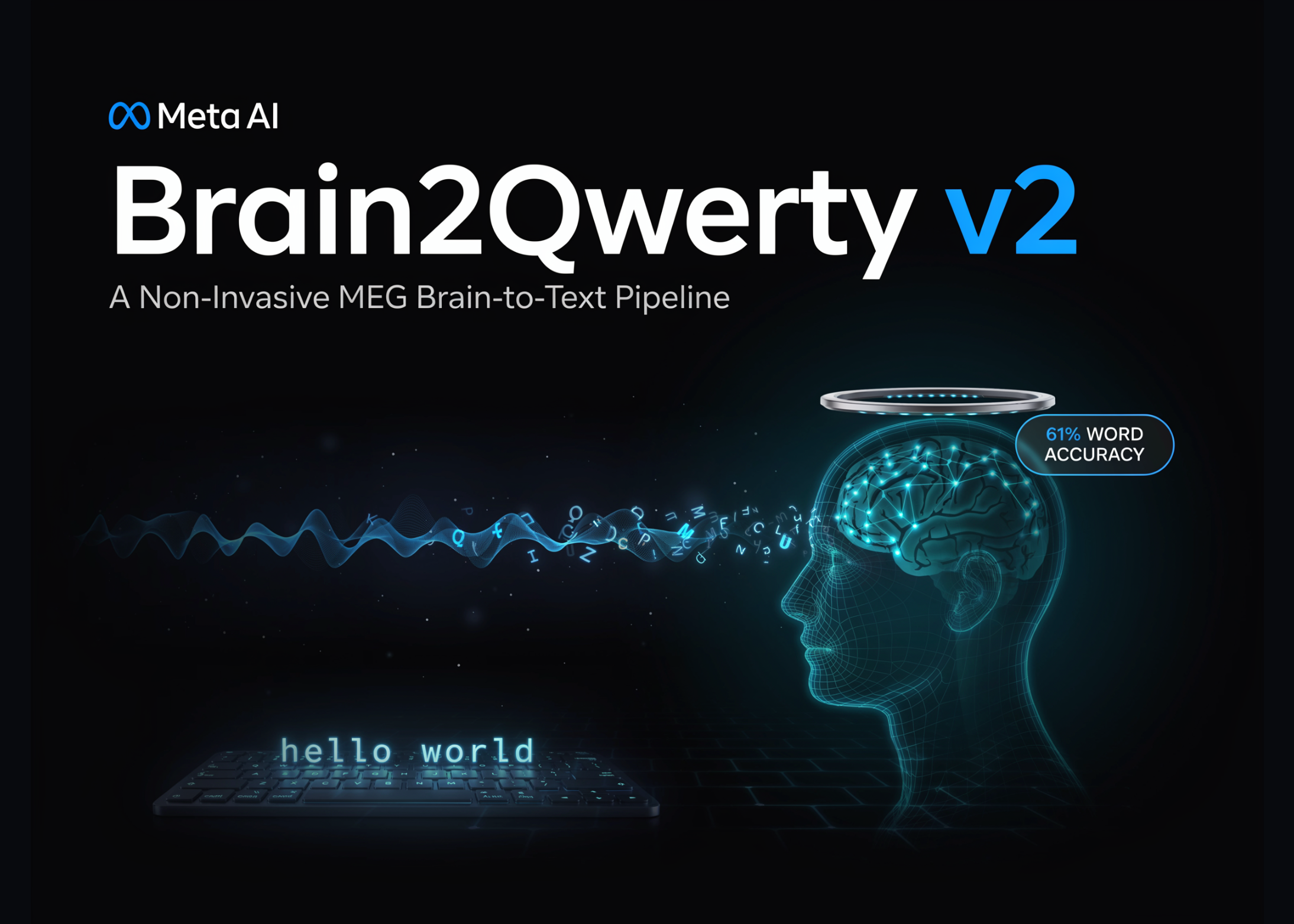
Meta AI launched Brain2Qwerty version 2, a brain-to-text system that interprets brain signals and converts them into typed sentences. The technology uses magnetoencephalography (MEG), a non-invasive way to measure brain activity by detecting magnetic fields produced by neural activity. Brain2Qwerty v2 achieves about 61 percent word accuracy in decoding the text a person intends to type, marking a significant improvement over earlier versions. Meta also released the training code openly, enabling researchers and developers to build on their methods.
Why it matters
Decoding typed sentences directly from brain signals could eventually bypass physical keyboards or screens, opening new possibilities for communication, accessibility, and human-computer interaction. Using MEG means the device does not need implants, easing adoption and lowering health risks. A 61 percent word accuracy rate means the output is understandable on average but still far from perfect. This level of accuracy pressures AI and neurotechnology builders to improve signal processing and decoding models to reach usability for real-time text input. Open training code accelerates the field by allowing others to test, adapt, or enhance this approach, possibly reducing development costs and mitigating duplicative research.
Who it is for
Researchers in neural interfaces and AI can leverage Brain2Qwerty v2’s dataset and code to push brain-computer interface technology further. Accessibility technology developers may find a future path toward assistive communication tools for people with motor impairments who cannot use traditional input devices. Developers working on hands-free computing or augmented reality can anticipate integration opportunities. Meanwhile, investors tracking neurotech startups can identify emerging benchmarks and technology readiness signals.
The catch
MEG devices are expensive, bulky, and not widely available outside specialized labs, which means Brain2Qwerty is still far from consumer-level use. The 61 percent word accuracy rate means frequent errors that require correction or context to resolve. Moving from controlled test conditions to real-world environments with noisier signals and more varied vocabulary will be the next tough challenge. Users or businesses considering brain-computer text input must weigh current system complexity and error rates against expected productivity or accessibility gains.
What to watch next
Expect a focus on improving decoding accuracy and reducing MEG hardware constraints. Advances may come from combining MEG with other sensing methods or new machine learning models trained on larger, more diverse datasets. Watch for startups or labs licensing or extending Meta’s public code toward commercial assistive tech or hands-free input products. Monitoring regulatory and safety developments around non-invasive brain reading is relevant as the technology inches toward practical deployment. The gap between lab-based demos and reliable, user-friendly brain-to-text applications will narrow but remains significant for now.
AI Quick Briefs Editorial Desk