PyGraphistry Implementation Workflow for Interactive Graph Intelligence Pipelines in Security Analytics and…
What changed
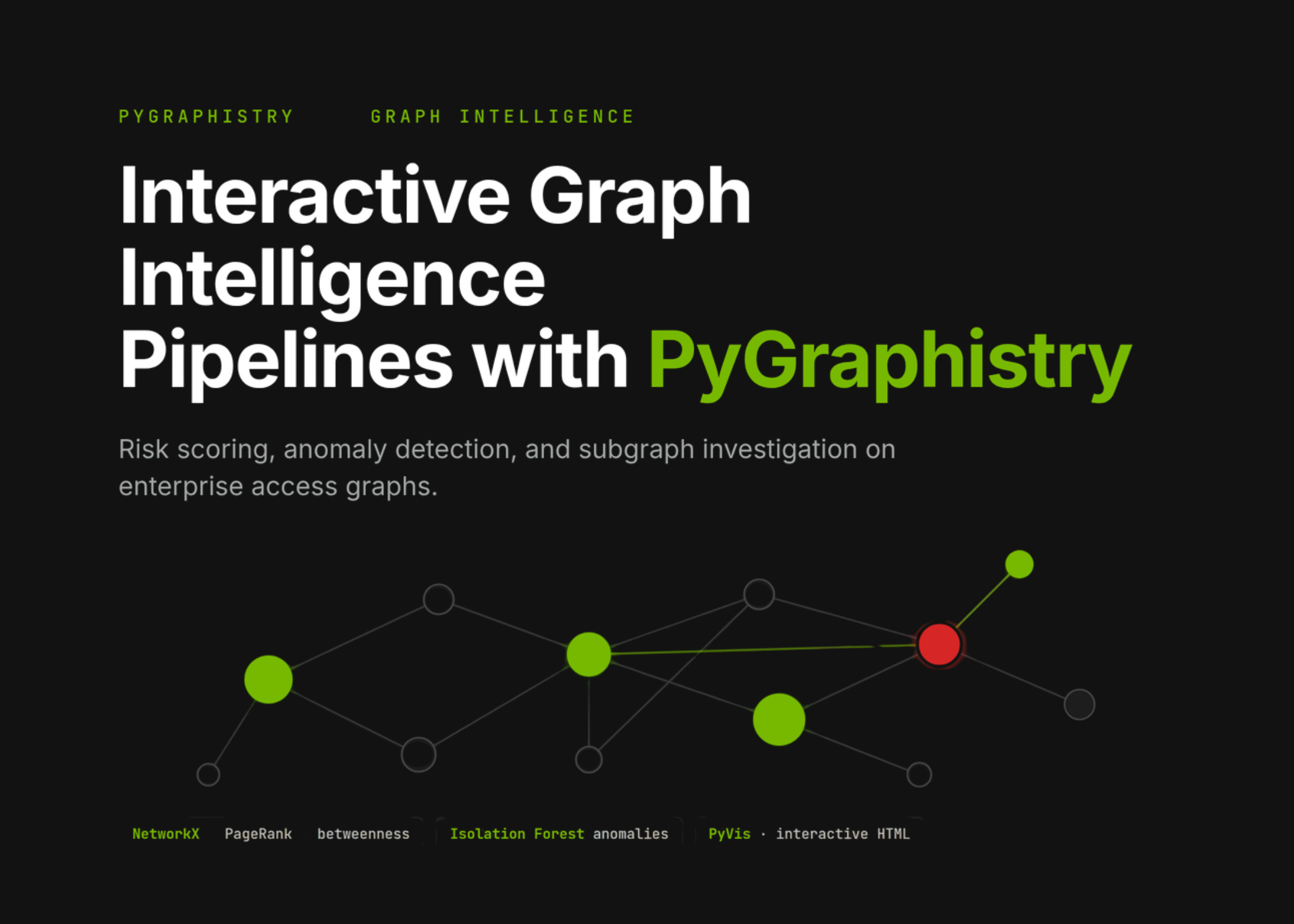
PyGraphistry published a ready-to-run workflow designed for interactive graph analytics on enterprise access data within a Colab environment. The process starts by generating a synthetic dataset representing users, devices, IP addresses, services, roles, and geographic locations. These entities are transformed into graph nodes and edges. The data enrichment includes adding risk scores, graph centrality metrics, community detection results, anomaly scores from Isolation Forest, and dimensionality-reduced embeddings using UMAP. The final output binds this enriched graph to PyGraphistry for visual analysis, alongside producing local PyVis visualizations tailored to full network, ego network, and high-risk perspectives.
Why builders should care
Security analysts and data engineers working with access logs or enterprise security telemetry can use this workflow to accelerate interactive exploration of user-device relationships and risk patterns. The integration of machine learning (Isolation Forest) to flag anomalies with classic graph algorithms like centrality and community detection supports more nuanced threat hunts. Running completely in Colab removes setup friction, making it easier to prototype and share investigations before scaling to production systems. The layered views ensure analysts can pivot from overarching network insights down to critical high-risk actors or close-knit ego networks, aiding both rapid triage and deeper root cause analysis.
The practical takeaway
Operators gain a reusable template for building graph intelligence pipelines that blend graph analytics with anomaly detection and data visualization. This workflow compresses multiple technical steps—data synthesis, graph construction, feature enrichment, anomaly scoring, and UI binding—into a single accessible package. The approach reduces the time spent on data wrangling and analytics integration, freeing security teams to focus on interpretation and response. Since PyGraphistry and PyVis both support interactive exploration, security teams can better visualize complex relationships that static dashboards struggle to reveal, potentially catching threats earlier or justifying quicker mitigation steps.
What to watch next
Watch for commercial tools or open-source projects that extend this template with real enterprise datasets and more complex enrichment like behavioral biometrics or real-time streaming integration. The combination of graph-based risk scoring with machine learning anomaly detection will drive tighter fusion between security analytics and AI operations centers. How well PyGraphistry scales to larger, noisier enterprise graphs and whether similar workflows enter established SIEM or XDR platforms will determine adoption outside research and pilot phases.
AI Quick Briefs Editorial Desk


