How to Design an OpenHarness Style Agent Runtime with Tools, Memory, Permissions, Skills, and Multi-Agent C…
What changed
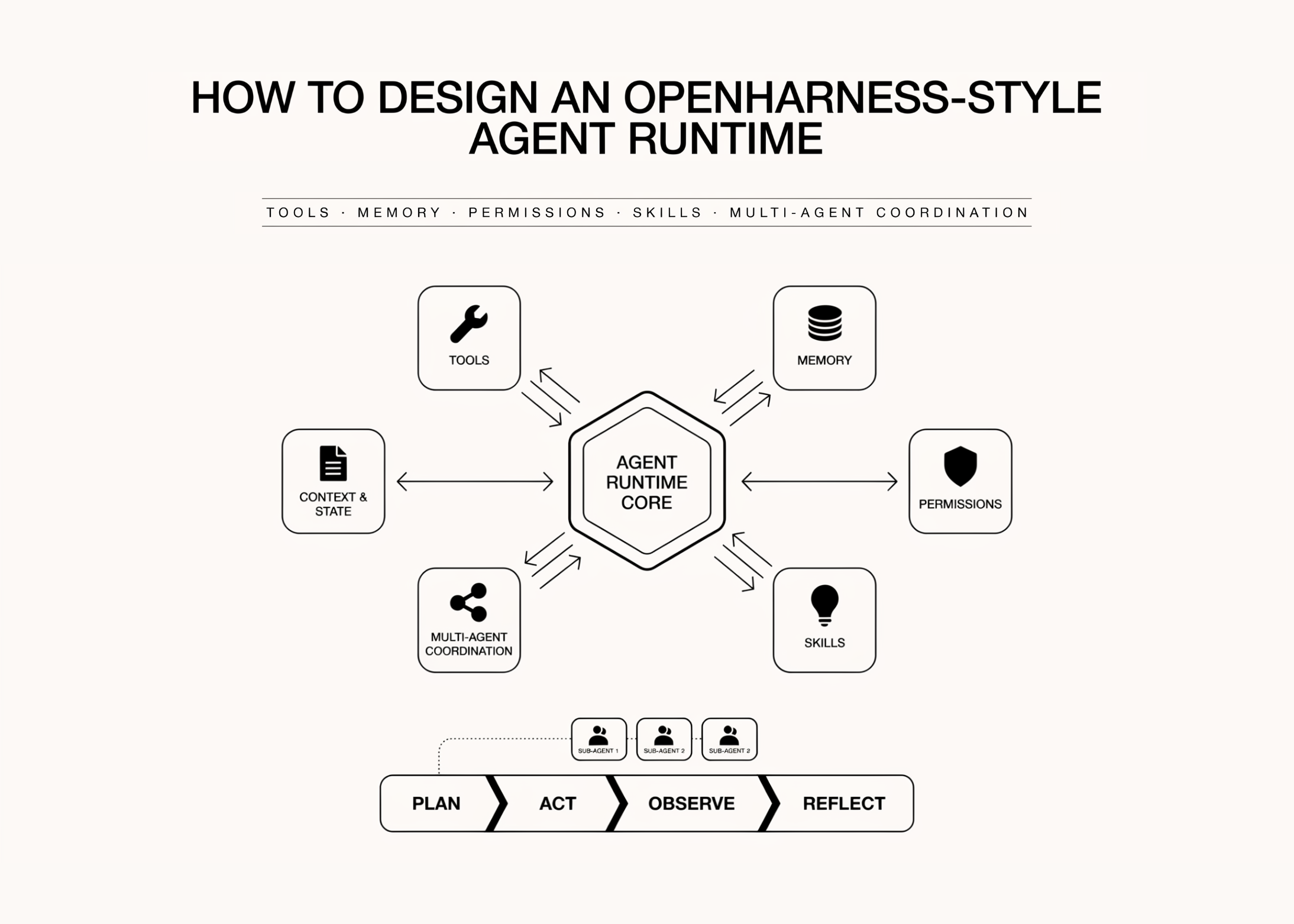
A new tutorial breaks down how to build an OpenHarness style agent runtime from the ground up. Instead of relying on pre-built frameworks, it reconstructs essential features like tool use, typed schemas, permissions, lifecycle hooks, memory, retry logic, cost tracking, and multi-agent coordination. The project reveals the entire control flow, exposing the inner mechanics rather than treating the system as a black box. Everything is runnable locally without API keys or complex infrastructure.
Why builders should care
This hands-on dissection matters because most agent frameworks obscure critical details behind abstractions. For developers creating custom autonomous agents or tool-using AI systems, understanding how to orchestrate tools, manage permissions, and handle memory can avoid costly trial and error. It also shows how to implement retry and cost controls, essential for real-world deployments with budget constraints. The multi-agent coordination example highlights designing systems where multiple agents interact reliably, an often overlooked complexity.
The practical takeaway
Operators get a transparent, step-by-step blueprint for assembling an agent system that balances flexibility with control. Learning typed tool schemas and lifecycle hooks equips builders to validate and extend tool integrations. Permissions tuned by design mitigate security risks from unchecked external calls. Memory and context compaction improve efficiency and keep agents responsive. Tracking costs arms teams to adjust usage before surprises hit budgets. Delivering all this as runnable code strengthens iterative development without cloud lock-in.
What to watch next
Focus on how the open implementation evolves to support more complex tools and agents in production workflows. Look for whether these building blocks get packaged into reusable libraries or inspire new frameworks emphasizing transparency and composability. Watch for community contributions expanding multi-agent coordination patterns or integrating with popular LLM APIs while maintaining the self-hostable ethos. This approach could pressure existing opaque agent platforms to open up around control and cost visibility.
AI Quick Briefs Editorial Desk