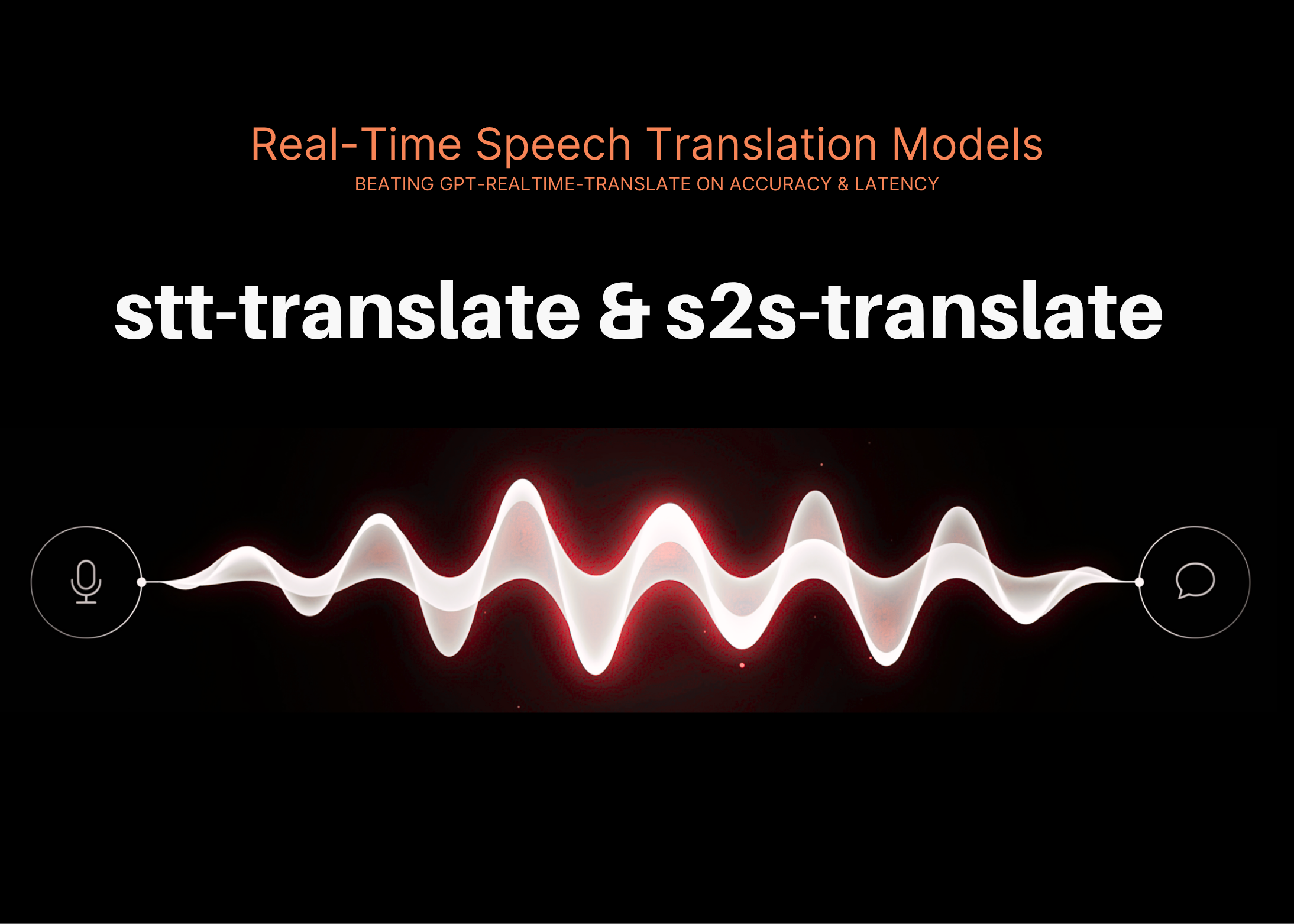
Gradium Launches stt-translate and s2s-translate, Real-Time Speech Translation Models Beating gpt-realtime-…
What it does
Gradium introduced two real-time speech translation models named stt-translate and s2s-translate. These models support English, French, German, Spanish, and Portuguese across 20 different language pairs. Unlike traditional three-stage cascaded systems that separate transcription, translation, and speech synthesis, Gradium collapses the first two into a single pass of transcription and translation, followed by a text-to-speech (TTS) step. The entire pipeline runs over one duplex WebSocket connection, streamlining data flow and interaction.
Why it matters
By combining transcription and translation into one step, Gradium reduces latency and complexity. This approach delivers better accuracy and lower delay compared to alternatives like gpt-realtime-translate and gemini-3.5-live-translate. The models also allow users to select output voices and even clone voices, which adds customizable personalization to real-time translation applications. For businesses or developers integrating real-time speech tools, this efficiency gain means faster response times and less infrastructure hassle, improving cross-language communication with higher fidelity.
Who it is for
The new models suit anyone implementing real-time multilingual speech interfaces: call centers, live event downstreaming, conferencing platforms, or app developers needing low-latency, accurate translation. Voice cloning caters to enterprises looking to maintain brand voice consistency or improve accessibility with familiar speech tones. Operators can deploy these models to accelerate international reach without increasing cloud compute or system complexity.
The catch
Collapsing transcription and translation could challenge fine-grained error correction that cascaded models allow since errors propagate differently in combined pipelines. While improved on reported benchmarks, accuracy still depends on language pair and domain, meaning heavy customization or domain tuning might be needed to match expert human translators. The models currently cover only five languages, so global operators needing wider language support will remain dependent on other platforms or wait for expansions.
What to watch next
Tracking Gradium’s model performance across new languages and real-world deployments will reveal if this combined approach scales broadly. Observing pricing models and API accessibility will clarify business viability for small operators versus enterprises. Competitor responses, especially from providers relying on multi-stage cascaded models, will show whether efficiency gains prompt a shift in real-time speech translation architectures industry-wide. Voice cloning adoption and user acceptance will offer insight into whether personalized translation voice outputs become standard or niche.
AI Quick Briefs Editorial Desk