The next humanoid robot might not look human at all

What happened
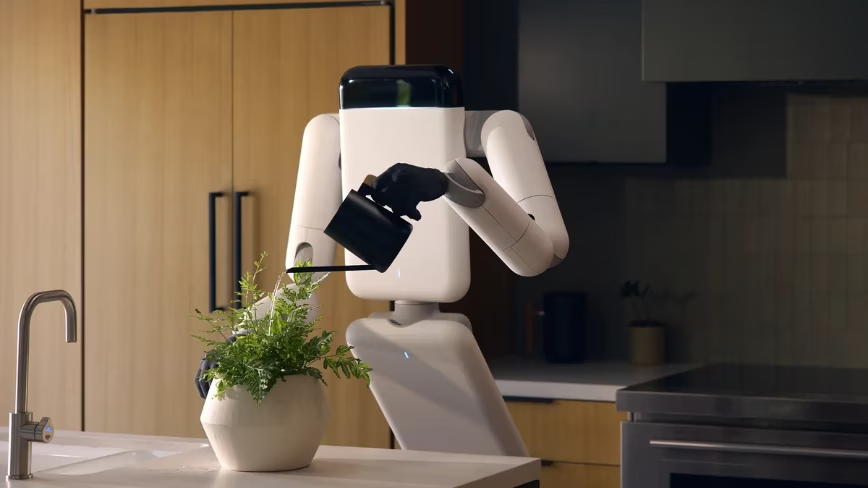
Genesis AI, a French startup backed by former Google CEO Eric Schmidt, introduced a new humanoid robot named Eno. Unlike typical humanoid robots designed to mimic human appearance, Eno does not have a head or legs and can fold down like a deck chair while sitting on a wheeled base. The design focuses on “human capability” rather than human form. Genesis AI aims for Eno to be a fully general-purpose robot capable of various tasks rather than focusing on a specific function.
Why it matters
This shift challenges the traditional notion that humanoid robots must look like humans to be effective. By prioritizing capability over appearance, Genesis AI reduces complexity and potentially cuts development costs, which has direct implications for operational efficiency and scalability. Builders and businesses can expect more practical, adaptable robots that fit different environments without the need for human-like limbs or heads. This could accelerate adoption in sectors where mobility and multifunctionality matter more than human resemblance, such as logistics or facility maintenance.
What to watch next
The key indicator will be how versatile and reliable Eno proves in real-world settings. Watch for announcements about commercial deployments, partnerships, or integrations with existing AI and automation systems. Its success or failure will pressure competitors to rethink design priorities and could influence the next wave of humanoid robot development. Also monitor how customers respond, especially whether a nonhuman form factor affects ease of use, safety perceptions, or task efficiency in practical applications.
AI Quick Briefs Editorial Desk