The Roadmap to Becoming an LLM Engineer in 2026
What changed
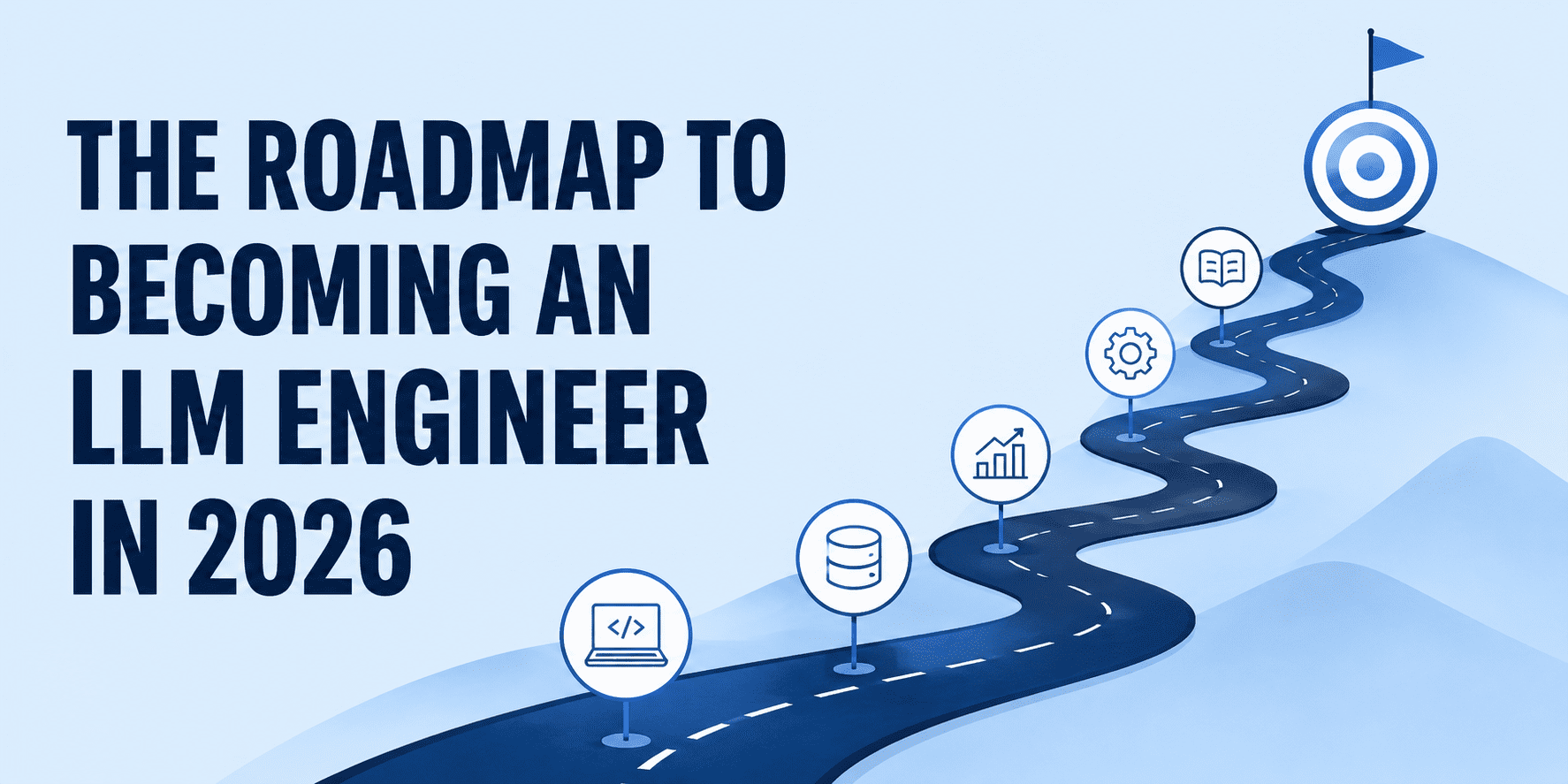
The role of LLM engineer is taking shape as a distinct career path by 2026, separating beyond traditional machine learning practitioners. This shift demands a hybrid skill set that spans deep understanding of large language models, software engineering, and product delivery. The roadmap outlines clear stages: from mastering fundamental ML concepts to specializing in LLM architecture, training, fine-tuning, scaling, and deploying applications powered by these models.
Why builders should care
Companies pushing LLM-based products need more than data scientists tinkering in labs. Experienced operators who understand the full lifecycle of LLM solutions—data management, prompt engineering, model optimization, infrastructure scaling, and real-world integration—drive products from prototype to live services. The roadmap signals that technical skills alone won’t cut it; deep familiarity with LLM workflows and deployment challenges will shape who successfully builds competitive AI applications.
The practical takeaway
Aspiring LLM engineers should structure their learning around a stepwise progression. Begin with strong foundations in data structures, ML frameworks, and basic NLP. Then focus on LLM-specific topics such as transformer architectures, tokenization, and pretraining techniques. After this, gain hands-on experience with fine-tuning models, prompt engineering, and safety tuning. Finally, get comfortable with deployment issues—latency, cost, scaling, and monitoring in production environments. The roadmap reduces guesswork by breaking down what skills correlate with stages of real-world LLM product delivery.
What to watch next
Keep an eye on education platforms and companies that start packaging LLM engineering training within practical bootcamps or developer ecosystems. Platforms that can accelerate the transition from ML background to production-ready LLM operator will get an adoption edge. Additionally, watch if new tools emerge to automate or simplify parts of the LLM engineering lifecycle, lowering the barrier to entry. The landscape in 2026 will reward those who not only build smart models but also ship and maintain them reliably at scale.
AI Quick Briefs Editorial Desk