Taiwan shows off robot patrol dogs that could guard its South China Sea islands
What happened
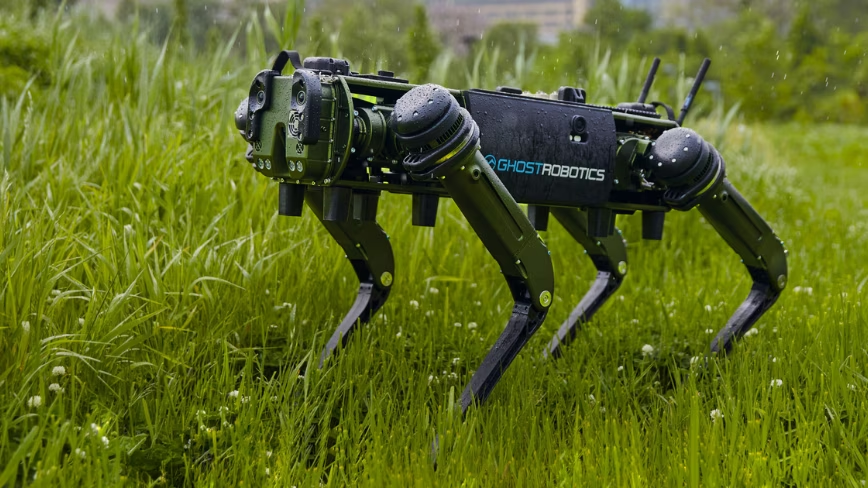
Taiwan’s main weapons-development institute unveiled three models of four-legged robot patrol dogs designed for security roles on remote South China Sea islands. One of the robots is armed, reflecting a shift toward stronger autonomous perimeter defense where human coast guard presence is limited. The demonstration aimed to show how these robots could monitor outposts that are difficult to staff with regular personnel.
Why it matters
Taiwan faces persistent challenges maintaining a physical presence on strategic but distant islands amid regional tensions. Deploying robotic sentries reduces the need for constant human patrols, which are costly and limited by fatigue and manpower shortages. Armed robotic dogs extend surveillance capability and introduce new tactical options for rapid response in contested areas. For defense operators, it signifies a move toward leveraging robotics to maintain extended situational awareness and control without continuous human risk or deployment.
What to watch next
Observe how Taiwan integrates these robot dogs into actual defense routines and whether they are scaled beyond demonstration to operational status. Their effectiveness in real-world conditions, including terrain navigation and threat detection, will determine deployment scope. Also track how neighboring powers respond, as robot sentries could intensify pressures in this already sensitive maritime region. On the technology front, look for further advances in robotic autonomy and armament that could influence military robotics globally.
AI Quick Briefs Editorial Desk