Prompt Engineering vs Loop Engineering vs Graph Engineering: What Changes at Each Layer
Quick take
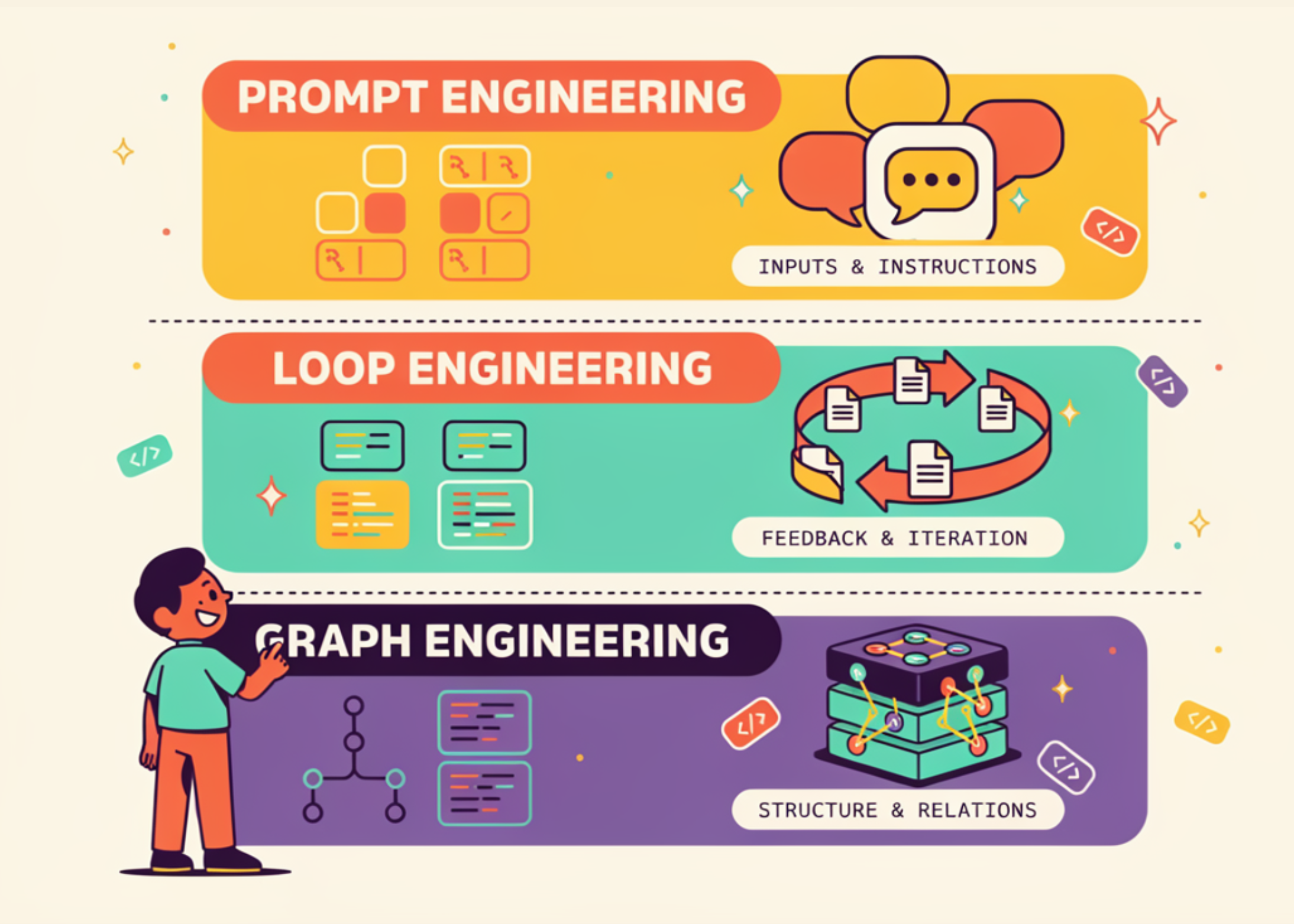
Prompt engineering, loop engineering, and graph engineering are three AI engineering layers gaining attention in job descriptions and developer dialogue. Prompt engineering is the oldest and most established approach, focusing on crafting inputs to guide large language models for desired outputs. Loop engineering surfaced in late 2025 and grew into a central topic through mid-2026, concentrating on iterative feedback loops to refine model responses continuously. Graph engineering entered the conversation about six weeks after loop engineering, emphasizing the structuring of AI workflows and data dependencies as interconnected graphs. These terms are often used interchangeably, but they represent distinct techniques rather than competing approaches.
Why it matters
Understanding the differences clarifies what type of AI expertise a project demands and where operational efforts should focus. Prompt engineering stresses the upfront design of queries and commands for AI, making it critical for initial model interaction. Loop engineering introduces ongoing refinement, transforming AI outputs into more reliable results by feeding outputs back into the system for adjustment, which is key for complex, adaptive applications. Graph engineering shifts attention to the architecture of the AI system itself, mapping out tasks, dependencies, and data flow visually and programmatically, enabling more scalable and maintainable AI solutions. Mixing these concepts risks misaligning resources or hiring the wrong skills, slowing down project delivery and inflating costs.
AI Quick Briefs Editorial Desk