7 Machine Learning Algorithms That Still Matter
Quick take
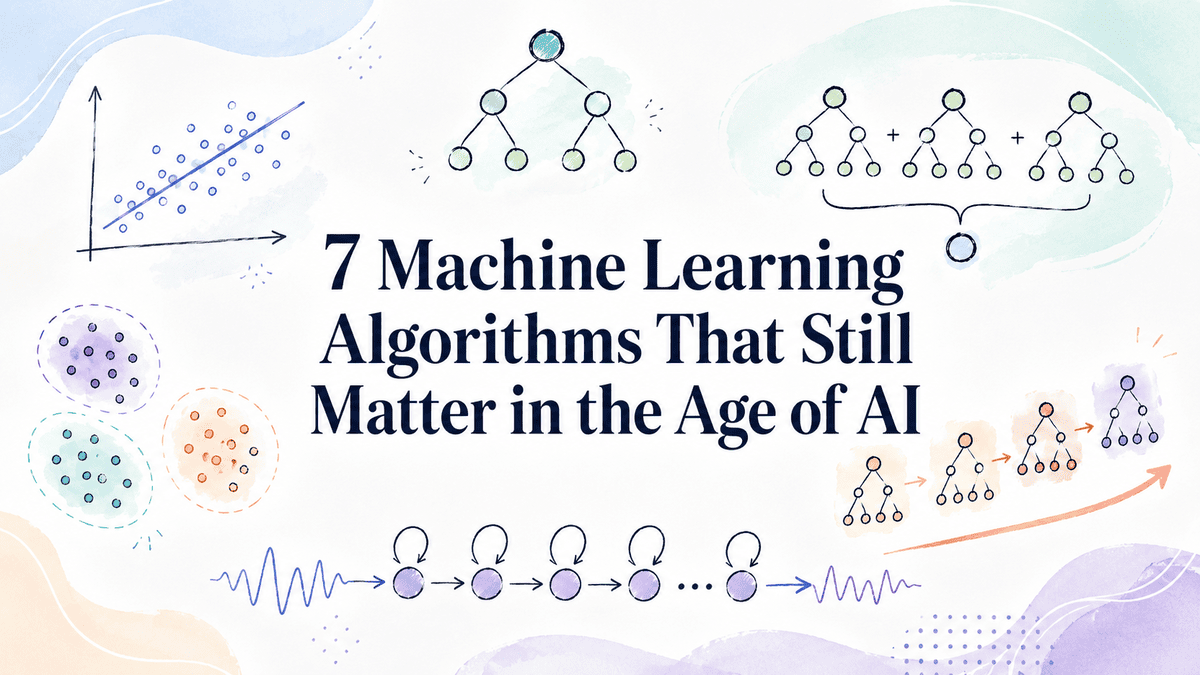
Machine learning has exploded with the rise of large language models and generative AI, but several classic algorithms remain essential for practitioners. These foundational approaches are often faster, require less data, and offer simpler interpretations compared to the latest neural networks. The seven algorithms to keep on hand include decision trees, random forests, support vector machines, k-nearest neighbors, naive Bayes, logistic regression, and k-means clustering. Each serves a specific purpose, from classification and regression to clustering, making them reliable tools for real-world problems.
The practical value is clear. These algorithms help data scientists and engineers avoid jumping straight to complex models that demand extensive compute and data. For example, decision trees provide transparent rule-based outcomes that business users can understand. Random forests and support vector machines strike a good balance between performance and interpretability in many classification tasks. K-means allows quick grouping of unstructured data to identify natural segments. Logistic regression remains a cornerstone for binary classification problems where probabilities matter. Naive Bayes offers a lightweight alternative for text classification or spam detection, especially with small datasets.
The article also includes simple Python code examples demonstrating how to implement each method efficiently. This makes it easier for builders and operators to experiment and incorporate these algorithms into workflows before moving on to big, resource-hungry models. Knowing these tools strengthens problem-solving skills and reduces reliance on brute-force approaches. Businesses gain transparency and speed, while technical teams can iterate faster with smaller data and fewer computing costs.
Mastering these classic machine learning methods exposes unnecessary complexity in many AI projects and forces a disciplined approach to choosing solutions. They still matter because they pressure teams to optimize effort and deliver results without over-engineering. For anyone building AI-driven products, these algorithms are a necessary starting point before scaling up to advanced models like LLMs.
AI Quick Briefs Editorial Desk