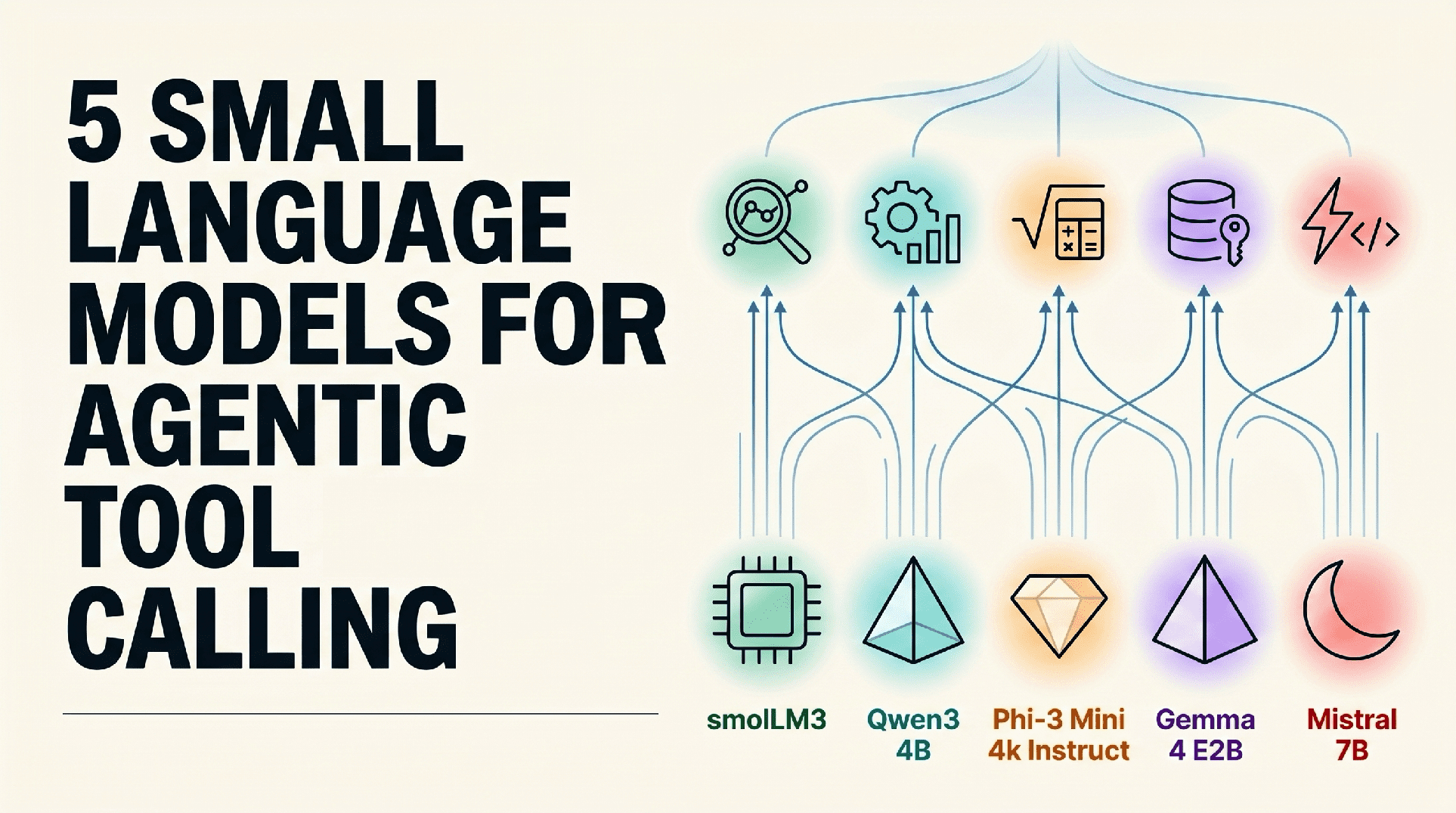
5 Small Language Models for Agentic Tool Calling
Quick take
Five small language models have emerged with a key shared feature: they support structured tool calling while keeping the model size compact and the weights open. This combination is relatively rare, as many large models with agentic capabilities tend to require hefty, closed weights.
The models offer developers and builders lightweight options for embedding structured tool use within agent workflows. This means essential AI functions like chaining commands, calling APIs, or interacting with external tools can be managed by smaller, efficient models without sacrificing openness and extensibility. The models bridge an important gap between minimalist large language models and monolithic agent platforms.
Why it matters
Structured tool calling capability is crucial for reliable orchestration of tasks by AI agents. Smaller models that support this in open-weight form lower the barrier for developers and operators to build or customize agents for their use cases without locking into proprietary systems or massive infrastructure.
This shift accelerates experimentation with automated workflows governed by intelligent agents in resource-constrained environments. Businesses and builders benefit from faster deployments and lower compute costs while maintaining control over AI behavior and integrations. It also pressures bigger closed models to open up or optimize for more modular agent control.
Tracking these five models gives insight into how the AI ecosystem is decentralizing power away from monolithic, expensive platforms toward modular, open, customizable agent architectures that fit diverse operational needs.
AI Quick Briefs Editorial Desk