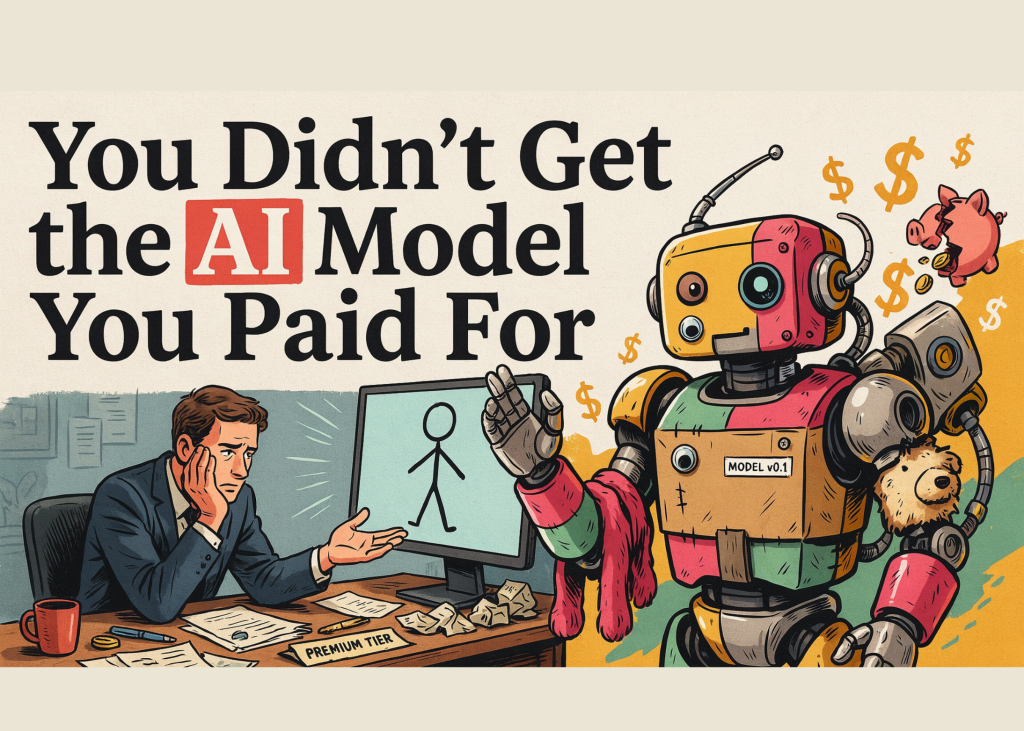
You Didn’t Get the AI Model You Paid For
What changed
Calling an AI model by name no longer guarantees the exact model will generate the output. In some cases, requests routed through APIs are silently reassigned to different underlying models based on content classification. For example, passing model: “claude-fable-5” can return completions from “claude-opus-4-8” without any errors or retries. This happens because requests matching sensitive categories are diverted to models using distinct weights optimized for safety or compliance. The API response may include these different model IDs, but the original model name is what the client requested.
Why builders should care
This model substitution changes expectations around predictability, cost, and performance. Builders relying on a particular model’s behavior could experience unexpected differences in output quality, response times, or token usage. It also obscures cost transparency since different underlying models may have varying pricing and efficiency. Furthermore, silent rerouting raises trust issues for teams needing strict model guarantees for compliance, auditing, or user experience consistency. Understanding this operational detail helps avoid surprises in production deployments.
The practical takeaway
When calling AI APIs, assume the named model is a best-faith request, not a contract guaranteeing specific inference weights. Always check the returned model name in the response to verify which model actually processed the request. Monitor output quality, latency, and token counts closely to detect shifts caused by rerouting. Budget accordingly, as cost per token can differ between models even if the UI or code requests a specific one. Finally, prepare users and stakeholders for variability stemming from safety filters or content classification that can force background model changes.
What to watch next
Model providers may increase transparency or provide clearer contract terms about fallback behaviors and model substitution. Pricing and rate limits could evolve to reflect these internal routing policies more explicitly. Builders should expect more nuanced API responses with additional metadata explaining why reroutes happen and what trade-offs apply. Monitoring tooling and observability around model identity and behavior will become a critical part of production AI operations. Regulatory scrutiny could also target these practices as compliance requirements tighten around usage guarantees and user rights.
AI Quick Briefs Editorial Desk