will.i.am taught 75 college students to build AI agents. The tech industry spent the same semester firing 7…
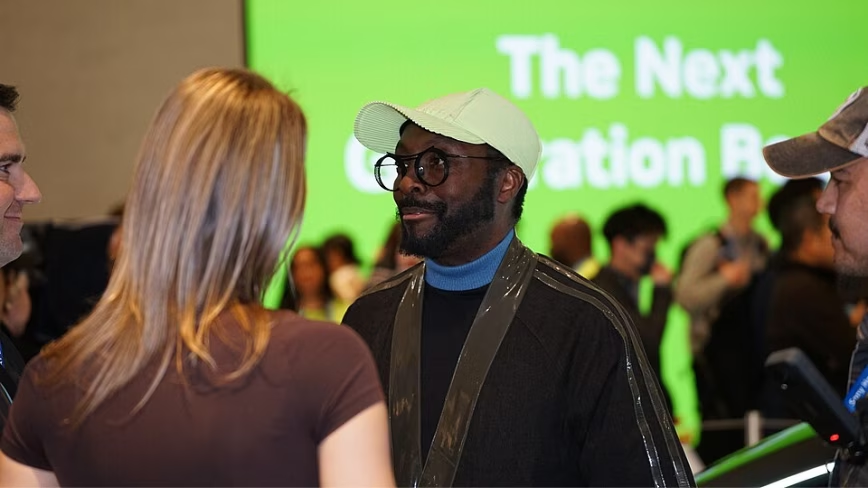
The tech industry cut more than 73,000 jobs in the first four months of 2026, marking one of the largest waves of layoffs in recent years. Meanwhile, in a striking contrast, will.i.am, known as the hip-hop artist and Black Eyed Peas co-founder, spent that same semester teaching 75 college students how to build AI agents. These AI agents are software tools designed to complete tasks automatically by understanding and interacting with their environment. In this case, the students learned to create AI programs that can perform jobs traditionally done by human workers who are now being let go.
This situation highlights a critical shift in tech and employment. While companies downsize due to automation and AI integration, education efforts are accelerating to prepare the next generation with skills in AI development and deployment. If businesses are cutting jobs because AI can do them more efficiently, then knowing how to create and manage these AI agents becomes a valuable skill set. This means that students learning these technologies may have better job prospects in a rapidly changing job market.
The rise of AI agents reflects broader trends in artificial intelligence, where machines are not only assisting humans but taking over entire roles. AI agents can handle tasks like customer service, content creation, scheduling, and data analysis, often operating 24/7 without needing breaks. The problem many workers face is how to stay relevant while AI advances and replaces certain types of work. Education programs that focus on AI agent creation address this challenge by equipping people with the knowledge to build, control, and improve these systems rather than be replaced by them.
What this signals is a clear message about the future of work: adaptation is crucial. Teaching students how to develop AI agents blends creativity and technical skills, giving them direct involvement in shaping the tools that change the workforce. This approach encourages a proactive stance toward AI rather than passive displacement. The next watch points include how educational institutions respond to AI-driven job shifts and how industries balance workforce cuts with training initiatives. There is also the question of ethical AI usage and the societal impact of widespread automation.
— AI Quick Briefs Editorial Desk