Vučić flew to Beijing for a $1.1bn Chinese investment, while Belgrade burned
What happened
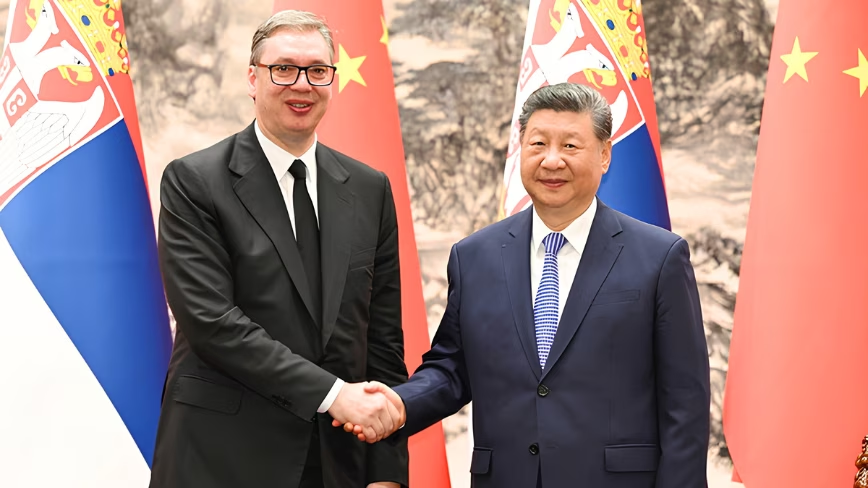
Serbian President Aleksandar Vučić traveled to Beijing to secure a $1.1 billion Chinese investment package focused on artificial intelligence, robotics, and electric vehicle production. The deal coincided with massive protests in Belgrade, where around 34,000 people demanded early elections and government accountability. Despite the political unrest, Serbia took a clear step to deepen its strategic ties with China in the tech and industrial sectors.
Why it matters
This investment signals China’s growing influence over Serbia’s high-tech infrastructure and manufacturing capabilities. The funding targets AI, robotics, and electric vehicles—sectors central to future economic competitiveness. For investors and operators, the deal could drive rapid industrial modernization but also increases dependency on Chinese technology and capital. The timing undercuts European Union pressure, exposing Brussels’s limited capacity to influence Serbia’s political and economic direction during unrest.
What to watch next
Serbia’s political instability may complicate execution of these projects, affecting timelines and local business conditions. Watch for how Serbia balances Chinese investments with EU accession ambitions and how Brussels reacts strategically. Monitor deployments in AI and robotics production clusters to gauge if these translate into tangible industrial growth or create local tensions. Investors and regional partners should track risks tied to political volatility against the boost from fresh Chinese capital.
AI Quick Briefs Editorial Desk