Unconventional AI releases its first model, built on an oscillator architecture its founder says could cut …
What it does
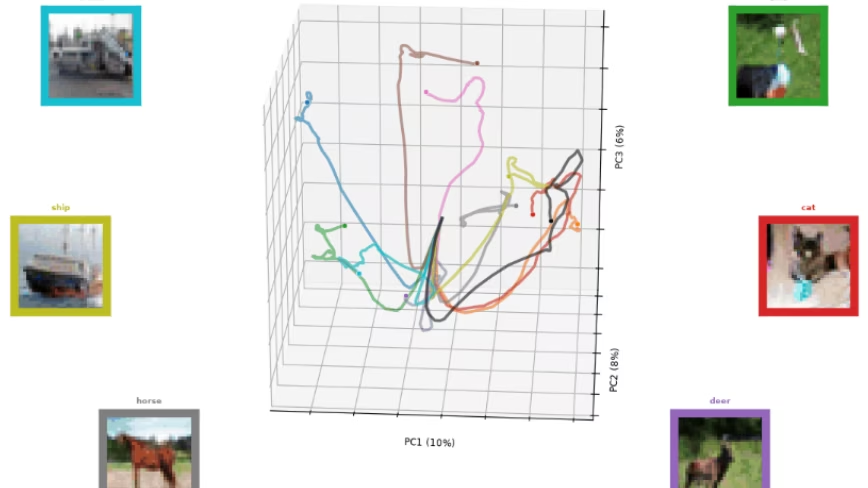
Unconventional AI has launched its first AI model, Un-0, an image generation system. Unlike current models that run on standard computing hardware, Un-0 operates on an oscillator-based processor architecture. This new design aims to produce image outputs at a quality level comparable to top diffusion models, such as Stable Diffusion.
Why it matters
The key innovation is the underlying oscillator architecture, which Unconventional AI’s founder Naveen Rao claims can reduce power consumption by a factor of 1,000. For operators running AI workloads, this implies a potential massive cut in energy costs and thermal demands. Lower power requirements also open doors for deploying high-quality AI models in resource-constrained environments, like edge devices or mobile setups, where traditional GPUs used for diffusion models are often impractical.
Who it is for
This model will interest AI startups, hardware designers, and enterprises looking to optimize AI inference costs without trading off output quality. It may also attract investors and operators in sectors sensitive to energy use, such as datacenters aiming to meet sustainability targets or companies planning AI integration on edge hardware.
The catch
Un-0 currently lives mainly in a research context, and the ambitious power savings come from hardware-level innovation that differs fundamentally from standard AI chips. Widespread adoption depends on the oscillator chip becoming commercially available and scalable. Until then, the tech is a proof of concept rather than an off-the-shelf product ready to disrupt existing AI compute stacks.
What to watch next
Monitor productization efforts around oscillator-based AI chips and how Unconventional AI moves from research to deployment. Watch for partnerships or investments linking this approach to hardware manufacturers or cloud providers aiming to cut energy use on AI workloads. Progress in benchmarking Un-0 against mainstream models at scale will determine if this architecture can shift cost structures in AI compute.
AI Quick Briefs Editorial Desk