Uber and Wayve to Launch London’s First AI Robotaxis

What happened
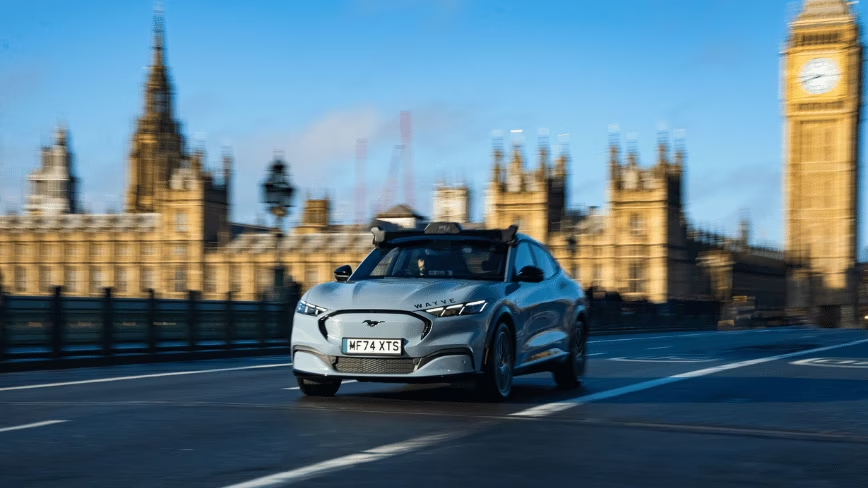
Uber and Wayve are launching London’s first AI-powered robotaxis. These autonomous vehicles will operate without human drivers, leveraging AI and machine learning for navigation and decision-making. The pilot will initially run in London with plans to expand to other global cities, including Tokyo. This marks a notable step in commercializing fully driverless urban transport outside specialized test sites.
Why it matters
Deploying AI robotaxis in a complex environment like London puts pressure on the industry to prove autonomous tech’s readiness in real-world, high-traffic conditions. For Uber, this extends its strategy beyond human drivers to fully automated fleets, potentially lowering operational costs and shifting city transport economics. This also challenges incumbents and regulators to adapt quickly to changing risks and service models, including liability and road safety standards. For investors and operators, it highlights a narrowing window to scale or lose ground in the competitive autonomous vehicle market.
What to watch next
Urban expansion plans will be key. How quickly and safely Uber and Wayve scale robotaxis beyond London will signal if the tech can sustain commercial viability in diverse international markets. Regulators’ responses in Tokyo and elsewhere will shape rollout speed and operational limits. Watch for customer adoption rates and cost comparisons with traditional ride-hailing, as these will influence profitability and future pricing models. Technical progress in AI perception and edge decision systems will also impact how effectively these robotaxis navigate city complexity and unexpected events.
AI Quick Briefs Editorial Desk