Tweaking Local Language Model Settings with Ollama
What changed
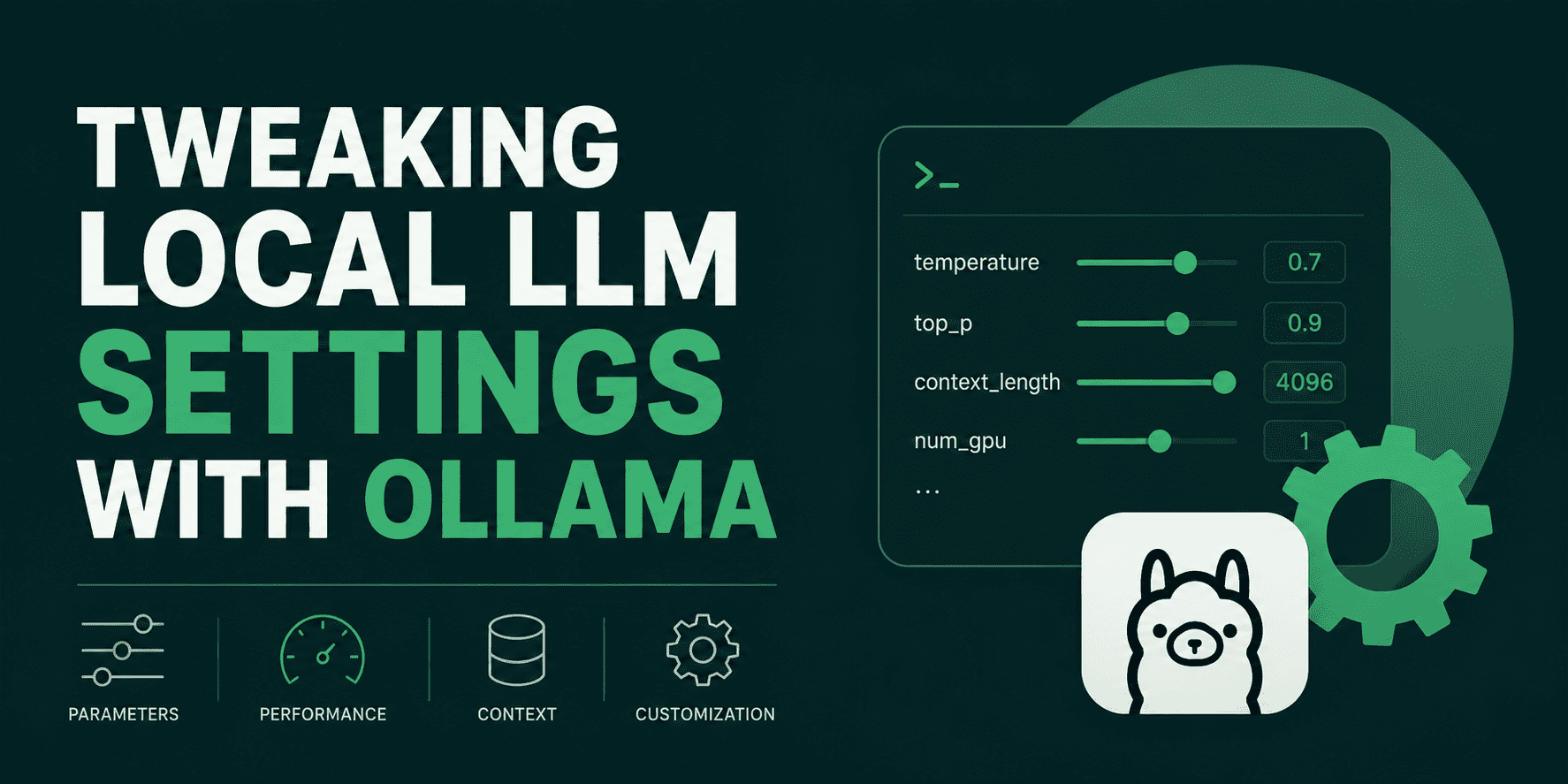
Ollama introduced a configuration engine that allows users to tweak local language model settings directly. This means users can modify core parameters such as temperature, context window size, and token limits on models running locally. The adjustment process is more granular and transparent than typical pre-set options in commercial LLM interfaces.
Why builders should care
Controlling local model parameters tightly can optimize both output quality and computational efficiency. Builders often struggle balancing creativity versus coherence or speed versus detail. Ollama’s openness in tuning lets developers shape model behavior to their specific task, whether generating concise code snippets or drafting longer, exploratory content. It removes some guesswork involved with black-box APIs and cloud-hosted models.
The practical takeaway
With Ollama’s configuration engine, operators gain direct access to settings that influence how aggressively the model explores language patterns or how much recent conversation history it retains during chats. This can reduce resource waste on irrelevant tokens and help prioritize precision versus variety. It also enables developers to better control predictability and response style without rebuilding or retraining models. For anyone running local LLMs, this adjustment layer tightens operational control and can lower costs by improving prompt efficiency.
What to watch next
Keep an eye on whether Ollama extends this configurability to larger or more complex models as well as integration with workflow automation. Watch for user feedback on how easy or effective these parameter tweaks actually are in practice. The usability and developer tools supporting local model fine-tuning will determine how broadly useful Ollama’s approach becomes, especially against the backdrop of rising concerns about data privacy and cloud cost inflation.
AI Quick Briefs Editorial Desk