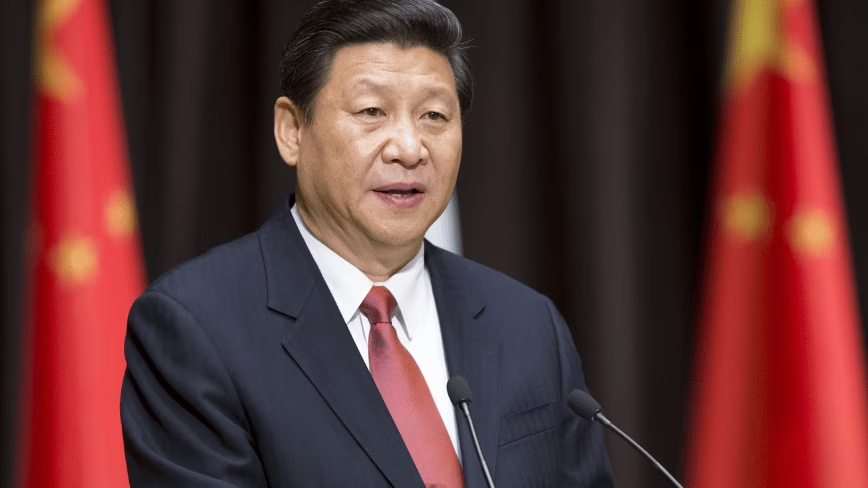
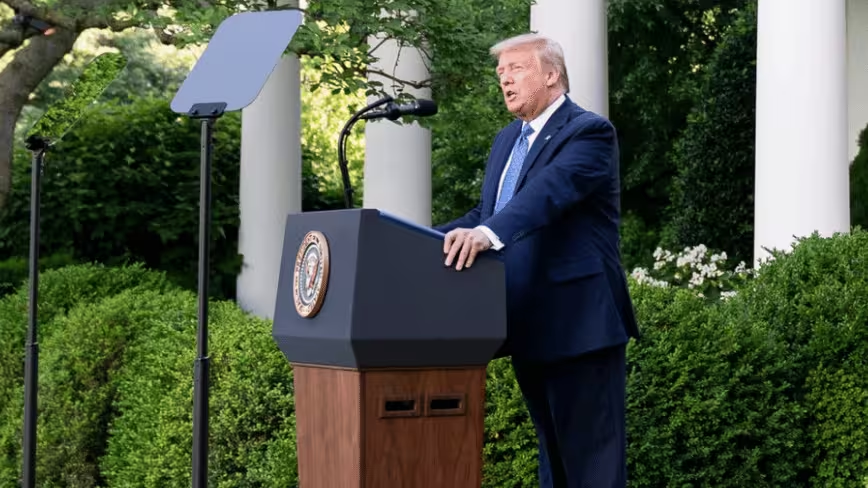
Trump leaves Beijing saying he and Xi talked AI guardrails. Nothing was signed.
What happened
Donald Trump left Beijing after a high-level meeting with Chinese President Xi Jinping, reporting that they discussed AI guardrails. When asked about details on Air Force One, Trump said the discussions involved “standard guardrails that we talk about all the time,” but no formal agreements or signed documents were delivered. Meanwhile, shipments of Nvidia’s H200 AI chips to ten approved Chinese buyers remain frozen, indicating ongoing export control tensions.
Why it matters
Talks on AI guardrails between the US and China show the two leading AI powers recognize the risks of unregulated AI development. However, without concrete agreements or enforcement mechanisms, this amounts to little more than dialogue. For AI operators, builders, and investors, the stalled Nvidia H200 deliveries signal that hardware access for advanced AI workloads in China will remain constrained, slowing local innovation and chip deployment. This tightens US leverage over China’s AI infrastructure but also complicates supply chains and market planning for both sides.
What to watch next
Whether talks on AI regulations progress beyond vague commitments will shape the global AI race and risk management. Watch for any policy moves that clarify guardrail standards or introduce formal multilateral enforcement. Nvidia’s export controls and US-China export friction will remain a key bottleneck for Chinese AI firms depending on cutting-edge chips. Investors and operators should track hardware availability shifts and how geopolitical tensions might force alternatives or delay AI projects.
AI Quick Briefs Editorial Desk