The recycling industry loses 40 per cent of its workers every year. A humanoid robot trained by VR headsets…
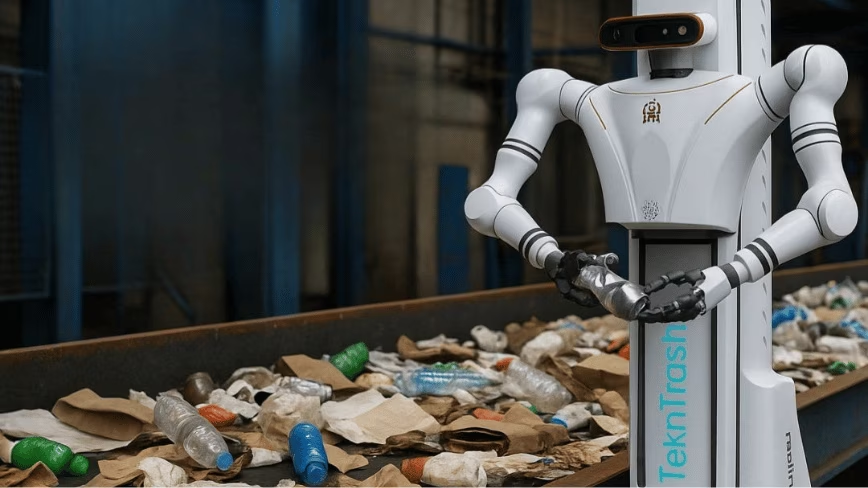
The recycling industry is facing a severe labor shortage, with a turnover rate of 40 per cent every year, and there is no easy fix through recruitment. Staffing waste sorting facilities is tough due to physical demands and safety concerns. Injuries and work-related illnesses occur at a rate 45 per cent higher than other sectors, and fatalities are eight times the national average. To address this, companies are turning to humanoid robots trained using virtual reality (VR) headsets. These robots are programmed to handle sorting tasks, easing the burden on human workers.
This shift matters because it directly tackles both safety and efficiency challenges in a sector critical to environmental sustainability. Recycling plays a key role in reducing waste and conserving resources, but labor shortages and high injury rates have made it difficult to keep facilities running smoothly. Robots trained with VR can be taught complex sorting patterns without exposing humans to hazardous conditions. This could reduce accidents and lower turnover by automating repetitive or dangerous parts of the job, leading to more consistent and reliable operations.
The background to this solution lies in the industry’s long-standing struggle with workforce instability and risk. Recycling centers require operators to stand for long hours handling diverse materials at fast speeds. Finding workers willing and able to maintain this pace has proven difficult. Meanwhile, advancements in robotics and VR training have opened new possibilities. VR headsets allow trainers to create immersive simulations that teach robots to recognize and sort various kinds of waste. Robots can perform these tasks steadily without fatigue, offering a practical response to labor shortages.
This development signals a broader trend where AI-powered machines learn through virtual environments to handle real-world jobs that are strenuous or dangerous for humans. It highlights how automation is becoming more accessible and specialized beyond traditional manufacturing roles. The next steps will likely involve refining robot dexterity and perception to handle more complicated waste streams. Keeping human workers involved in supervisory and maintenance roles will be important to balance technology and employment. Watching how recycling facilities implement these humanoid systems will show whether they can maintain safety, productivity, and environmental goals simultaneously.
— AI Quick Briefs Editorial Desk