Squeezed on land, Samsung wants to put data centres out to sea
What happened
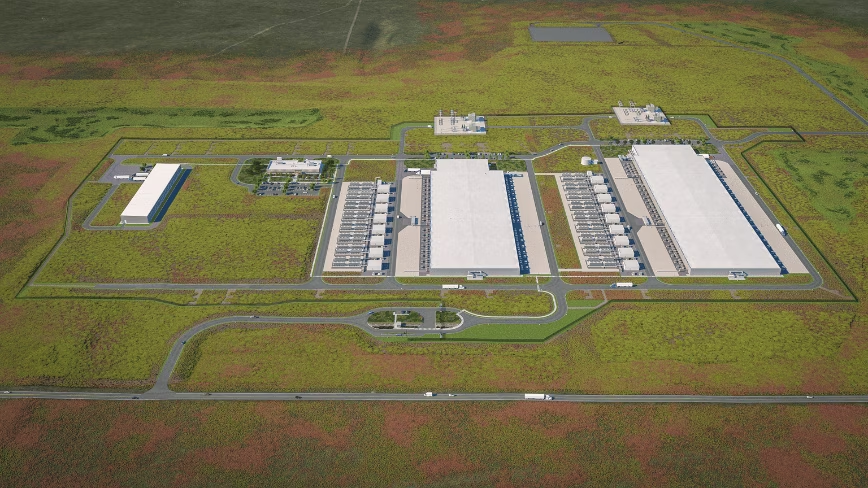
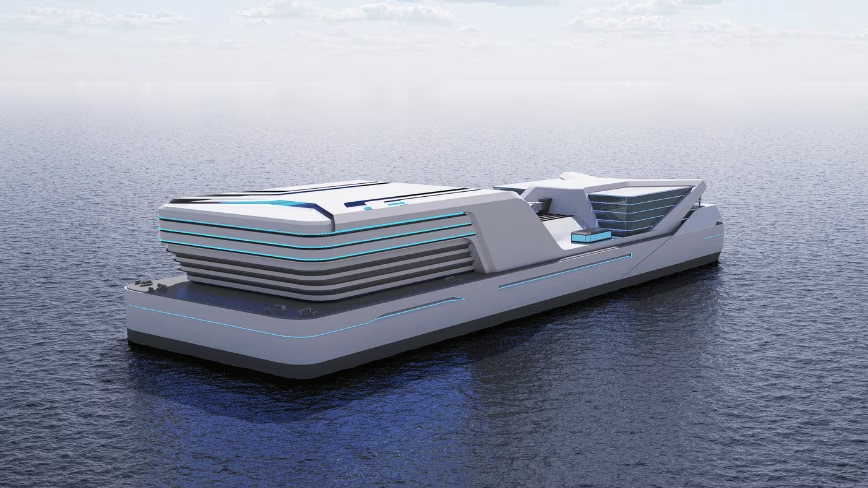
Samsung Heavy Industries plans to launch a floating data centre by 2028. Unlike traditional data centres built on land, this will be a purpose-built barge stationed off the coast. The design is new, not just retrofitting old ships. The move aims to bypass rising issues with land-based data centres, such as limited space, water availability, and community resistance.
Why it matters
Data centres require vast amounts of land and water for cooling, which increasingly clashes with urban development and environmental limits. Samsung’s offshore barge approach could loosen those constraints by relocating data infrastructure to the sea. This changes the equation for data centre siting, potentially reducing local opposition and easing water consumption pressures. Floating centres can also position close to coastal users, cutting network latency compared to distant inland facilities.
For operators, this model introduces a fresh deployment environment with unique technical and logistical challenges, including marine durability, power provisioning, and maintenance at sea. Investors and infrastructure providers will need to re-evaluate risk profiles for offshore data assets. Regulators could face new questions about maritime permits and environmental impact offshore.
What to watch next
The success of Samsung’s plan depends on resolving practical issues like reliable power and cooling on a floating platform, data security in a marine setting, and integration with coastal network infrastructure. Watch for details on the barge’s design, cost comparisons to land centres, and pilot projects or partnerships that test operational viability.
Other data centre operators may follow Samsung’s lead if this proves scalable and cost-effective. Regulatory frameworks and environmental assessments for offshore data centres will shape how quickly this approach gains traction. Finally, technology choices for robust, low-maintenance infrastructure at sea will matter for technical teams and investors alike.
AI Quick Briefs Editorial Desk