Seven million cameras on seven million faces: the smart glasses privacy crisis no one can stop
What happened
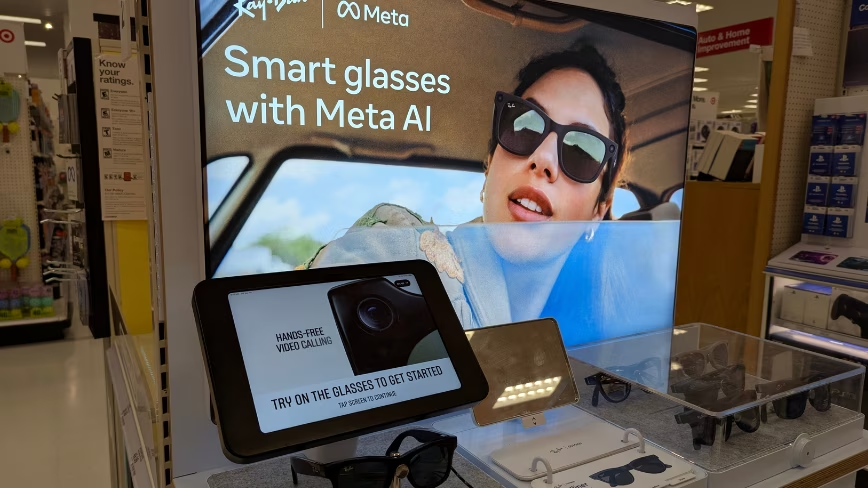
Meta’s Ray-Ban smart glasses carry tiny embedded cameras that record continuously without obvious visual cues. A woman shopping in London experienced this firsthand when a man wearing these glasses approached her indoors, asked her name, complimented her, and recorded everything unseen. The glasses blend fashion with surveillance technology, raising alarm over widespread privacy risks as millions of these devices go unregulated in public spaces.
The risk
The near-invisible cameras shift power over privacy from individuals to those who wield these devices. Unlike smartphones, which require deliberate action to record, smart glasses can capture intimate moments without consent or awareness. This turns everyday interactions into potential data points vulnerable to misuse. It weakens control over personal boundaries in both public and private settings, fast-tracking the normalization of unauthorized surveillance.
Why it matters
For operators, retailers, event organizers, and regulators, this development rewrites the rules of physical privacy. Businesses face increased liability if customers or employees are unknowingly recorded. Trust erodes as consumers grow wary of environments where recording devices fly under the radar. Regulators will need to clarify where recording is allowed, and how to enforce transparency and consent in public and semi-private venues.
Founders and investors in wearable tech encounter a material obstacle. Regulatory backlash, privacy lawsuits, and consumer resistance could rapidly increase costs and slow adoption. At the same time, the growing market signals a rush to monetize eyes-on AI data streams. The tension raises questions about how far surveillance tech will be allowed to embed itself in daily life before legal and social pushback sets hard limits.
Who should pay attention
Retailers and service operators need to anticipate privacy challenges and consider policies on smart glasses usage inside their establishments. Security teams should prepare for the inability to detect when recording is occurring, complicating confidentiality in sensitive environments. Legal teams should monitor emerging regulations that may require clearer signage or consent mechanisms for smart glasses recording.
Investors and founders in wearable AI tech must track how privacy debates shape market access and regulatory frameworks. Privacy-centric startups and advocacy groups will gain influence as demand rises for safeguards against covert recording. Regulators should consider the implications for data protection, personal rights, and enforceable transparency standards.
What to watch next
Watch for new privacy legislation addressing invisible recording devices in public and semi-private spaces. Regulators may require visible indicators on glasses, impose recording bans in certain venues, or mandate user consent notifications. Consumer attitudes will influence the market; pushback may slow smart glasses adoption or redirect development toward stronger privacy controls.
Keep an eye on legal cases involving unauthorized recordings through wearable tech. These will test liability and consent frameworks and shape future enforcement. Also, monitor competitors like Apple, Google, and Snap—their responses to Meta’s model and privacy backlash will determine which approaches get market traction.
AI Quick Briefs Editorial Desk