Scikit-LLM vs. Traditional Text Classifiers: When Should You Use an LLM?
Quick take
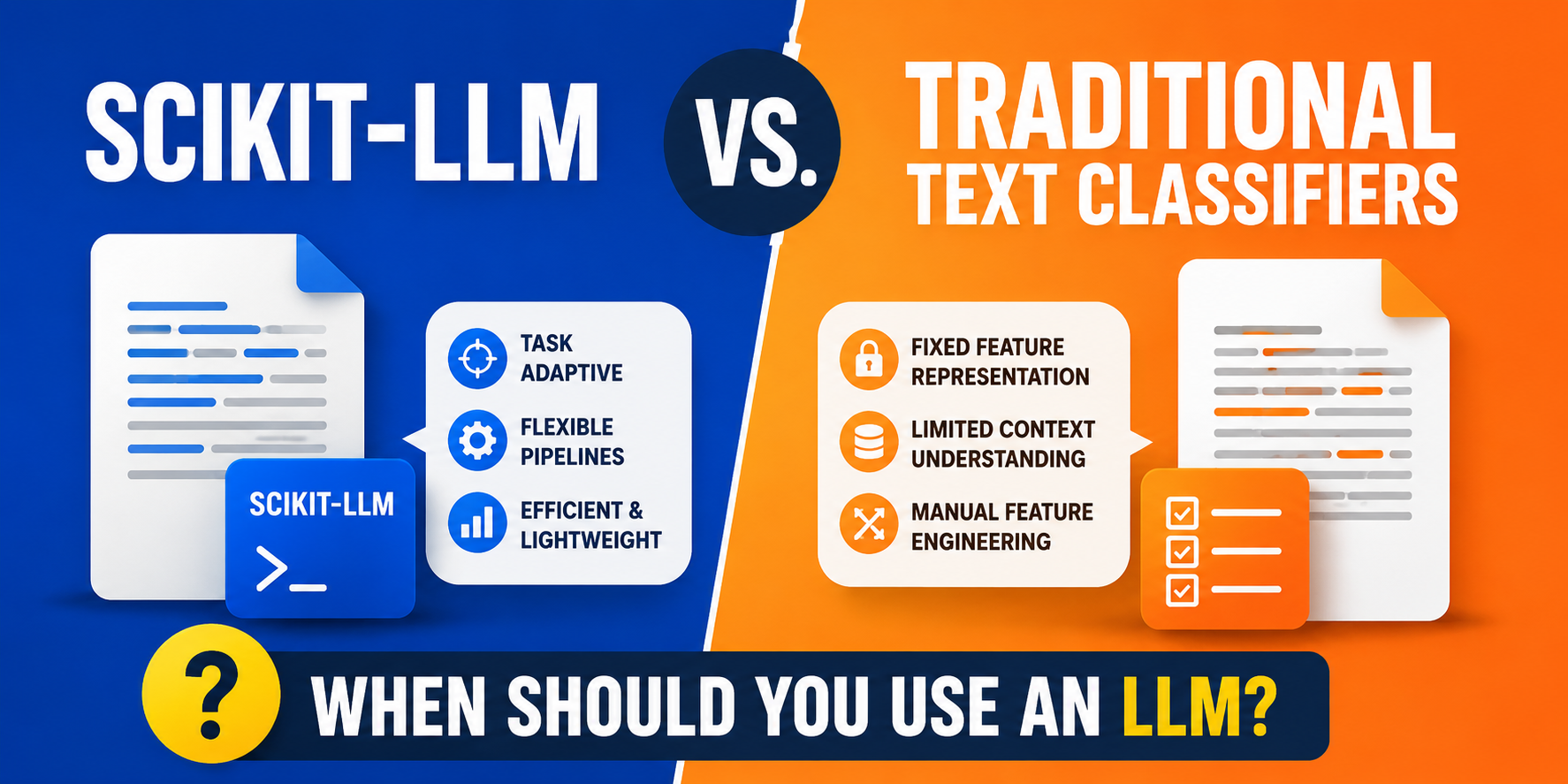
Generative AI models, specifically large language models (LLMs), are gradually replacing traditional machine learning classifiers for text classification tasks. Unlike classical classifiers that rely on handcrafted features and training on labeled datasets, LLMs work by predicting text sequences and understanding context on a much larger scale. New tools like Scikit-LLM bring LLM capabilities into familiar Python environments by combining transformers with scikit-learn-like workflows.
Why it matters
LLMs pressure operators to rethink their approach to text classification. They often deliver better accuracy without extensive feature engineering, reducing the time and expertise needed for model development. This shifts the cost from manual data preparation to computational resources and API usage fees. However, LLMs can be slower and more expensive per prediction, making traditional classifiers still attractive for projects requiring fast, low-cost inference or when labeled data is plentiful. Builders and decision-makers must weigh these trade-offs based on project scale, latency tolerance, and budget constraints.
AI adoption is no longer about just whether to use an LLM but about where its contextual strengths provide enough ROI over classical models. Leveraging tools like Scikit-LLM helps integrate LLMs into existing ML pipelines practically without starting from scratch, which can accelerate experimentation while controlling migration risks.
AI Quick Briefs Editorial Desk