Samsung Electronics crosses $1tn, joining TSMC, as the AI memory cycle pulls Korea into a record
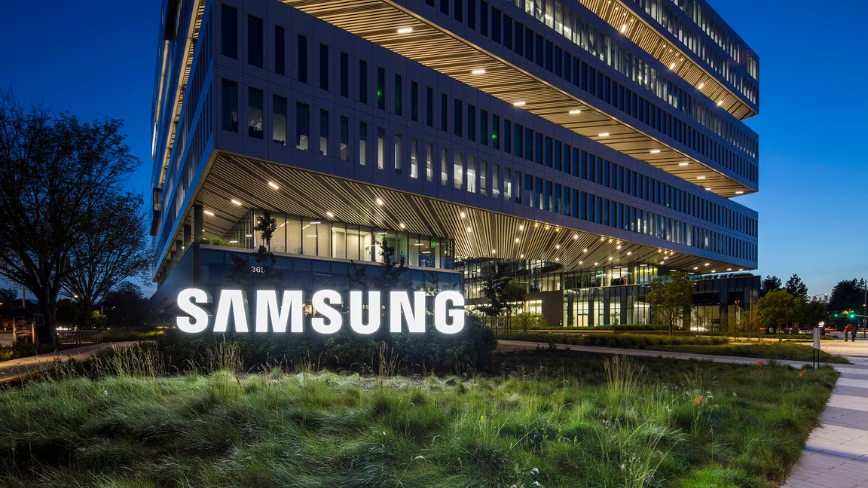
Samsung Electronics has reached a market valuation of over $1 trillion, joining Taiwan Semiconductor Manufacturing Company (TSMC) as one of the few chipmakers to hit this milestone. This achievement comes amid a surge in demand for artificial intelligence-related memory, which has also helped propel South Korea’s main stock index, the KOSPI, to break the 7,000 point mark for the first time. Together, Samsung and TSMC now represent 42% of the KOSPI index, highlighting their dominant role in driving the country’s economic momentum.
This milestone is significant because it underscores the critical role semiconductor companies play in enabling advances in AI technology. AI applications require massive amounts of data processing and storage, making cutting-edge memory chips essential. Samsung’s growth reflects the broader industry trend of investing heavily in specialized memory types optimized for AI workloads, such as high-bandwidth memory (HBM) and advanced DRAM chips. For developers and businesses, this means faster, more efficient AI systems becoming increasingly accessible, paving the way for innovations across sectors such as healthcare, autonomous vehicles, and cloud computing.
The recent surge in value did not happen overnight. The global AI boom demands more sophisticated chips capable of handling enormous datasets that train AI models. As a leading manufacturer of semiconductor memory and logic chips, Samsung has capitalized on this need by ramping up production and investing in next-generation technologies. This aligns with forecasts suggesting the current AI-driven memory supercycle—the surge in demand fueled by AI applications—is still climbing and far from peaking. The dynamic between Samsung and TSMC at this stage is a testament to the strategic importance of semiconductor supply chains in meeting fast-growing AI market demands.
Looking ahead, Samsung’s position signals the growing importance of Korean chipmakers in the global tech ecosystem, potentially shaping supply chain decisions for AI hardware worldwide. Observers should watch how Samsung expands its research, manufacturing capacity, and collaboration with AI developers. There is also the question of how geopolitical factors and competition from other chipmakers will influence market shares. The fact that Samsung’s forecast shows the supercycle has not peaked points to more growth and innovation in AI semiconductors, which could lead to faster model training times and more powerful AI applications becoming standard.
— AI Quick Briefs Editorial Desk