Pixel-Native RAG: A Practical Guide to Visual Document Indexing
What changed
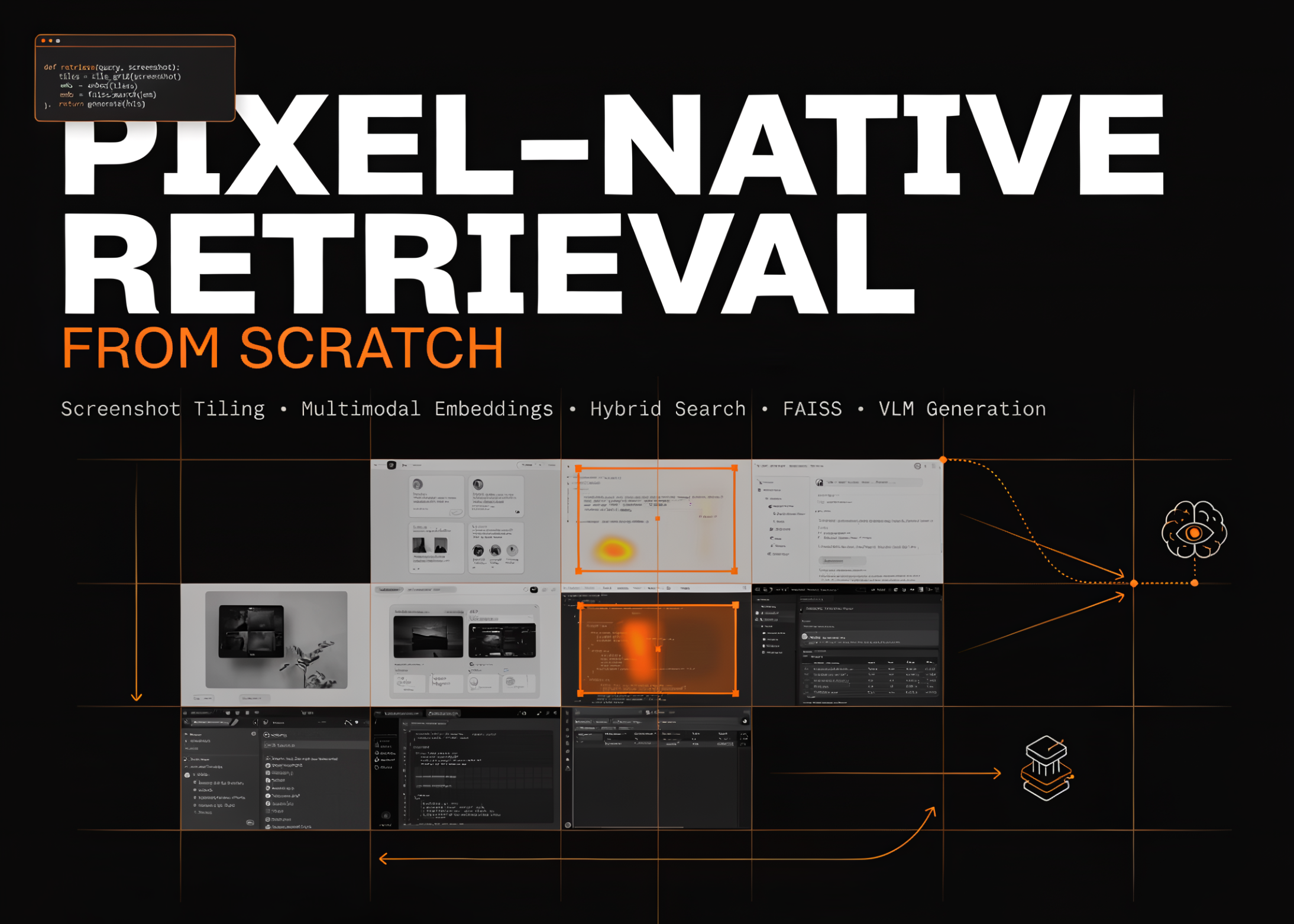
PixelRAG introduces a shift in document retrieval by treating web pages and PDFs as images instead of relying solely on text parsing. This end-to-end system captures documents visually, processing pixels through rendering, tiling, multimodal embedding, and hybrid search to enable retrieval that integrates both visual context and text data. The approach leverages recent advances in image-based retrieval models, replacing brittle text-only pipelines with richer document understanding.
Why builders should care
Traditional text-based document indexing struggles with complex layouts, embedded images, and inconsistent formats within PDFs or web pages. PixelRAG’s pixel-native approach reduces reliance on error-prone text extraction and OCR steps by working directly with rendered document images. This can improve retrieval accuracy for use cases that need spatial, visual, or multimodal reasoning like research, compliance audits, or legal document search. For engineers building search tools, PixelRAG offers a practical blueprint for combining computer vision and NLP in document systems.
The practical takeaway
Implementing PixelRAG involves a pipeline that first renders documents into images, then chops them into tiles for processing by a multimodal embedding model. These embeddings support hybrid search combining text and visual features. While it requires managing image storage and embedding computations, it can handle diverse formats and complex documents better than traditional methods. For startups and enterprises needing reliable document retrieval in complex visual contexts, PixelRAG outlines a feasible system without depending entirely on brittle text extraction tools.
What to watch next
Watch for wider adoption of pixel-native indexing techniques beyond research prototypes into production document platforms. Keep an eye on model improvements that better integrate visual and textual signals for retrieval tasks. Also, monitor how competitive retrieval systems respond—whether they double down on text parsing or start building multimodal pipelines of their own. As document formats grow complex and multimodal embedding models mature, pixel-native RAG could reshape expectations around document search accuracy and robustness.
AI Quick Briefs Editorial Desk