OpenAI Releases GPT-Live and GPT-Live-1 mini: Full-Duplex Voice Models That Delegate Deeper Reasoning to GP…
What it does
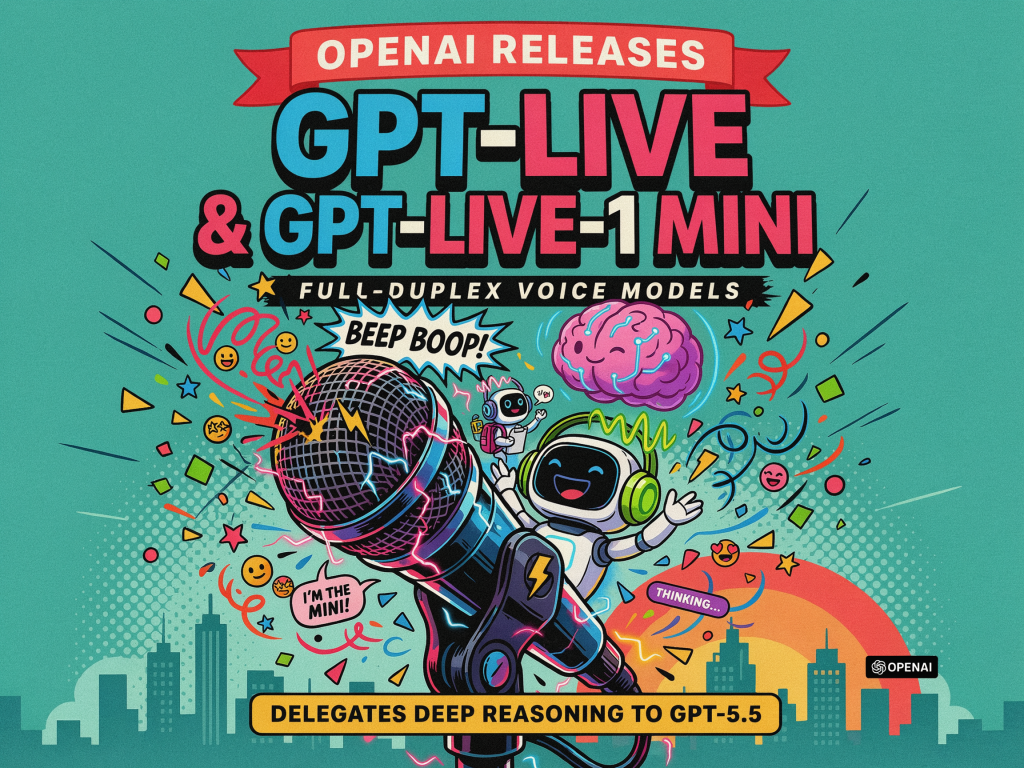
OpenAI has introduced GPT-Live and GPT-Live-1 mini, the latest voice models now powering ChatGPT Voice. These models use a full-duplex architecture, meaning they can listen and talk simultaneously instead of waiting for a user to finish speaking. They do this by handling conversational flow in real time while handing off complex search and reasoning tasks to the new GPT-5.5 model.
Why it matters
Full-duplex voice interaction reduces friction in conversations with AI, enabling smoother, more natural back-and-forth dialogue. This can make voice assistants feel less robotic and interruptive. By offloading deeper reasoning and search queries to GPT-5.5, GPT-Live keeps the voice interaction responsive without sacrificing intelligence or accuracy in complex tasks. This separation also allows for more efficient use of compute, directing heavier work to specialized, powerful models.
Who it is for
Businesses and developers building voice-enabled applications will find GPT-Live valuable for delivering more fluid user experiences. Consumer products using voice AI can become more interactive without added latency. Enterprises that rely on voice interfaces for customer service or hands-free workflows can expect faster, more thoughtful responses. Investors should watch how this tech pressures competitors to improve real-time voice capabilities.
The catch
While GPT-Live handles voice flow, it still depends on GPT-5.5 for deeper reasoning, which could add backend complexity and cost for deployments that require both models running together. Full-duplex means always-on listening, which may raise privacy concerns or require new ways to manage interruptions and errors in noisy environments.
What to watch next
Look for wider integration of GPT-Live in the ChatGPT ecosystem and third-party voice applications. Investors and operators should track how this architecture affects infrastructure costs and voice AI adoption rates. It will be key to see if competitors respond with similar full-duplex voice models and how regulation adapts to continuous listening devices.
AI Quick Briefs Editorial Desk


