NVIDIA names Anthropic and OpenAI among first users of its Vera chip
The business move
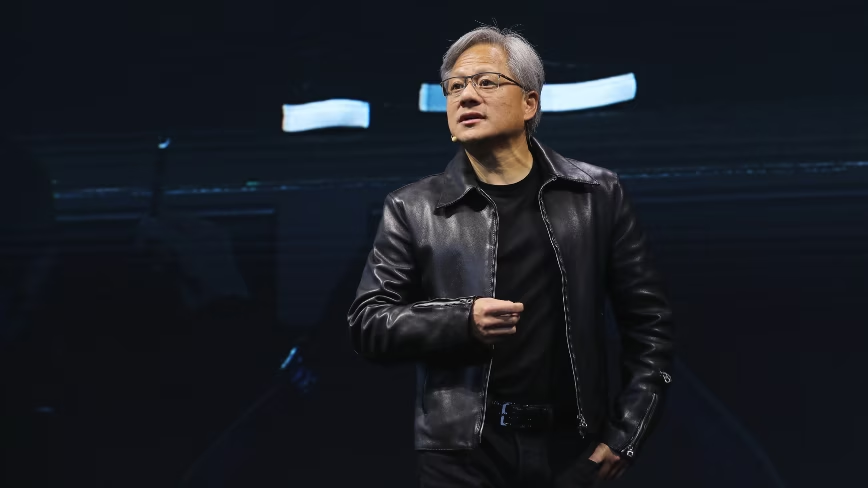
Nvidia CEO Jensen Huang announced at Computex that Anthropic, OpenAI, SpaceX, and Oracle are among the first major users of Nvidia’s new Vera chip. Vera is Nvidia’s own in-house processor built to handle AI workloads more efficiently. The company is moving beyond its traditional focus on graphics chips and accelerating its push into specialized AI computing hardware.
Why it matters
Nvidia is tightening its grip on AI infrastructure by deploying its proprietary chip to power some of the industry’s biggest AI players. The Vera chip is designed specifically for AI training and inference, promising higher performance and better efficiency compared to general-purpose GPUs. This helps Nvidia strengthen its market position by vertically integrating hardware optimized for large-scale AI models. For customers like OpenAI and Anthropic, using Vera could lower AI training costs or improve speed, directly affecting the economics and capabilities of AI models.
Who gains and who gets squeezed
Vera users like OpenAI and Anthropic stand to gain faster, cheaper compute for their AI workloads, which can accelerate development and deployment of new models. Nvidia gains stronger lock-in as customers adopt its custom hardware, making alternatives like AMD or Intel less attractive. This raises the bar for other chipmakers trying to compete in the AI hardware space. At the same time, companies that rely on generic GPUs or cloud-based AI compute without chip customization could see rising pressure on costs and performance. Buyers of AI infrastructure should watch how Vera influences pricing and contract terms in cloud and hardware markets.
What to watch next
Focus on how widely Vera adoption spreads beyond the first users. Nvidia will likely push for more cloud providers and enterprises to switch, which could shift cloud AI compute pricing. Also watch for performance benchmarks comparing Vera to conventional GPUs. Improvements in efficiency or latency could force competitors to accelerate their own chip innovation cycles. Finally, observe how Vera’s deployment impacts the pace and scale of generative AI model releases, as hardware speed and cost remain core bottlenecks.
AI Quick Briefs Editorial Desk