NVIDIA garak Tutorial: Build a Complete Defensive LLM Red-Teaming Workflow with Custom Probes and Detectors
What changed
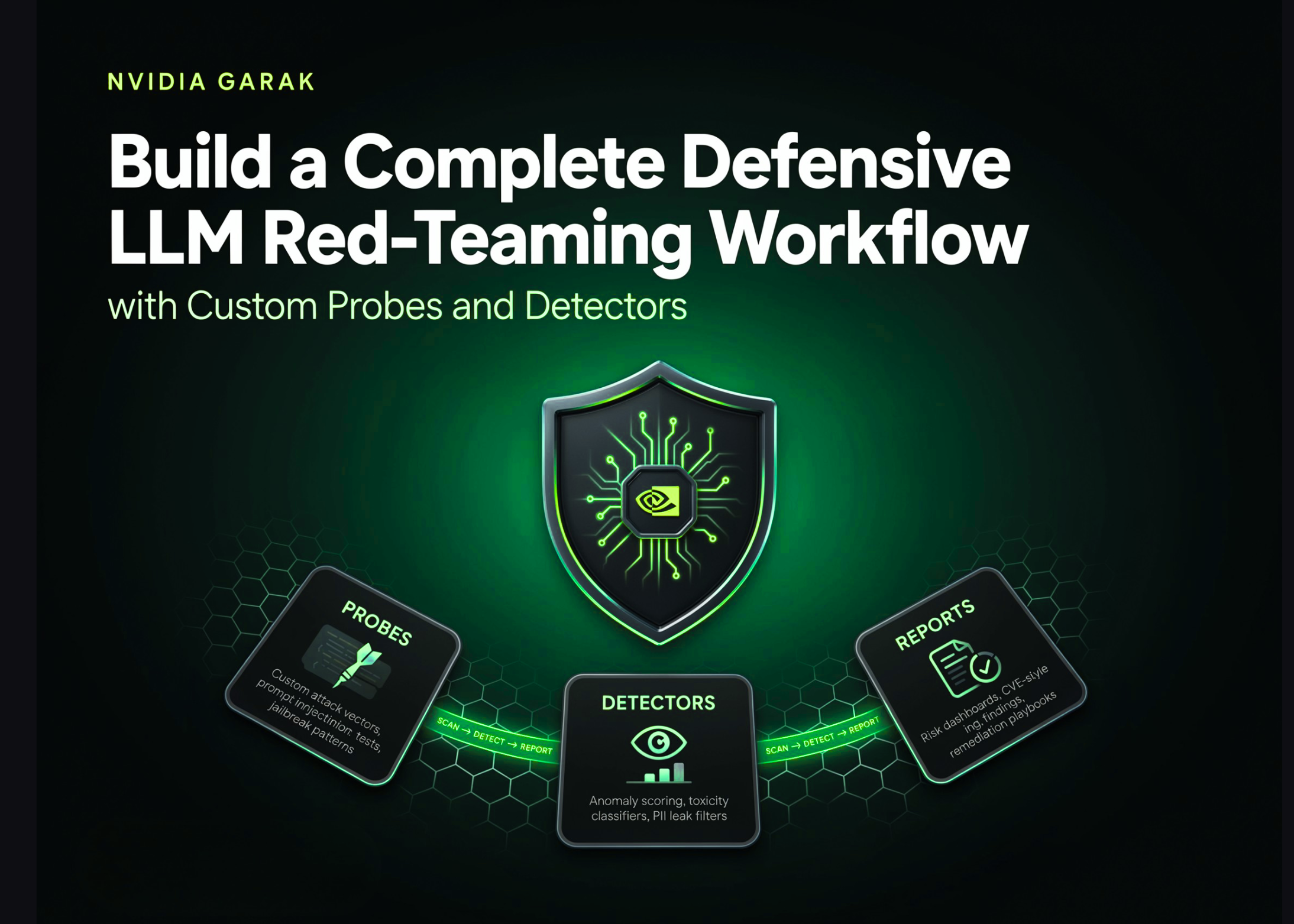
NVIDIA released a detailed tutorial for garak, a defensive framework designed to test large language models (LLMs) against harmful or risky outputs using red-teaming workflows. The tutorial guides users through every step—from setting up garak, discovering existing plugins, and running dry scans, to running real evaluations on models from Hugging Face. It emphasizes multi-probe assessments, analyzing safety scores, and reviewing flagged responses.
Beyond using out-of-the-box probes, the workflow shows how operators can extend garak by creating custom probes and detectors for specific threat vectors. Results can be exported in AVID format to support structured reporting and vulnerability tracking.
Why builders should care
LLM deployments require robust safety and security testing to prevent misuse, inappropriate content, or model failure under adversarial input. Garak provides an end-to-end, practical toolkit focused on the defensive side of red-teaming, which is often under-resourced compared to offensive research. Its modular plugin system lets operators adapt to evolving risks.
The ability to extend garak with custom probes means teams can tailor testing to their use cases rather than relying on generic checks. Exporting results in AVID format also supports incident documentation and regulatory compliance workflows, which are increasingly demanded by customers and regulators.
The practical takeaway
LLM operators with moderate technical skills can build, run, and customize comprehensive red-teaming workflows using garak. This reduces reliance on external audits or generic safety testing services. Garak’s emphasis on both automated scanning and manual output inspection helps reduce missed risks.
Teams can track how safety improves or degrades over model versions or between different model providers by comparing multi-probe safety scores and attack success rates. That transparency forces more accountable LLM deployment and maintenance practices.
What to watch next
Widespread adoption of garak would push more LLM users toward standardized defensive red-teaming workflows. Watch for integrations with major LLM platforms like OpenAI, Anthropic, or Google, as well as third-party safety tools adopting the AVID format for unified vulnerability reporting.
The approach NVIDIA outlines may raise the bar for safety tooling by making customization easier and formalizing red-teaming outputs. This could pressure competing safety frameworks to improve interoperability and automation.
AI Quick Briefs Editorial Desk