Nvidia CEO Jensen Huang says smuggled data centres are a dead end and national security comes first
What happened
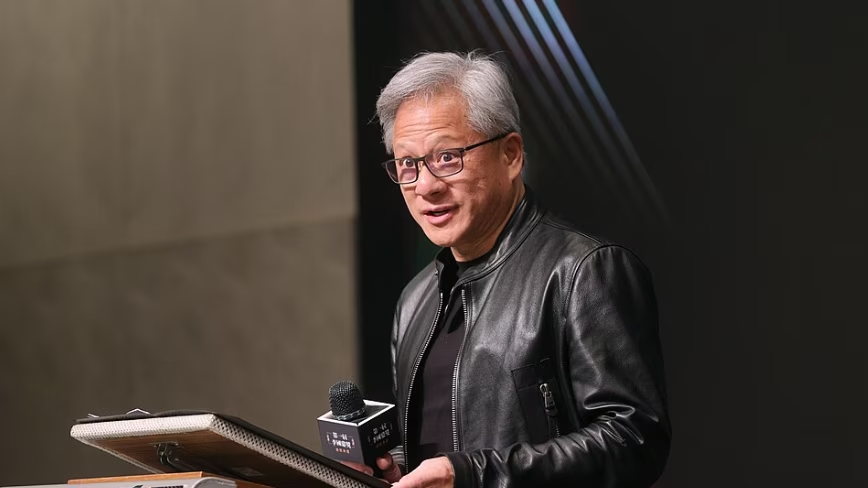
Nvidia CEO Jensen Huang told shareholders the company will prioritize US national security over commercial gains related to AI hardware. Huang emphasized that anyone attempting to smuggle Nvidia chips or set up unauthorized data centers for AI development is pursuing a dead-end strategy. His statement came shortly after Nvidia’s annual stockholder meeting, addressing concerns about chip smuggling and the company’s role in national security.
Why it matters
Nvidia’s chips are central to AI computing power, and the company’s cooperation with US government policy adds a new layer of control over AI infrastructure globally. Huang’s stance signals that Nvidia will not support, directly or indirectly, the unauthorized export or deployment of its hardware in ways that clash with US interests. For AI builders and operators, this means fewer options to acquire cutting-edge chips through unofficial channels, tightening supply chains and compliance requirements.
This stance pressures companies and nations that depend on bypassing export controls or tariffs to access Nvidia hardware. It also raises risks for infrastructure projects that aim to deploy AI workloads with hardware sourced outside formal supply chains. Given Nvidia’s dominant market share in AI chips, the balance between commercial opportunity and national security concerns will increasingly shape where and how AI compute gets deployed.
What to watch next
Watch for how Nvidia enforces this policy in practice, including potential escalations in compliance demands on partners and cloud providers. US export control efforts tied to AI chips will likely accelerate, with Nvidia’s cooperation amplifying the impact. Investors and infrastructure operators outside the US should monitor regulatory developments and Nvidia’s supplier audits to gauge potential disruptions or access restrictions.
Expect geopolitical tensions to influence Nvidia’s commercial strategy as countries seek alternative AI chip suppliers or develop indigenous semiconductor solutions to bypass US-designated controls. How Nvidia balances growth ambitions with security constraints will shape AI hardware availability and the cost structure of AI compute worldwide.
AI Quick Briefs Editorial Desk