NASA’s new rover prototype drove 16 miles in a week, 10 times faster than anything it has on Mars
What happened
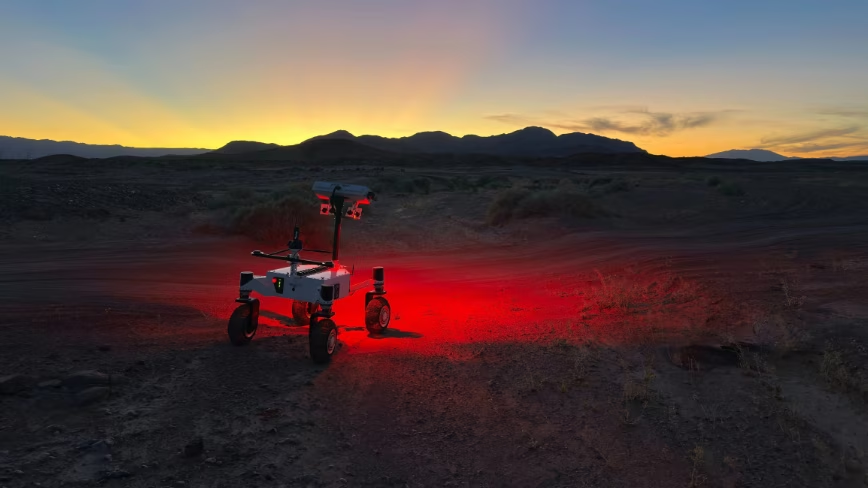
NASA’s Jet Propulsion Laboratory tested a new four-wheeled rover prototype named ERNEST that drove 16 miles in 37 hours during a field trial in California’s Colorado Desert. The prototype reached speeds up to 0.6 miles per hour, approximately 10 times faster than current Mars rovers like Perseverance or Curiosity. This accelerated pace marks a significant step forward in rover mobility for space exploration missions.
Why it matters
Faster rover movement cuts down the time needed to cover terrain for scientific investigation or resource scouting. Currently, Mars rovers average around 0.06 mph, so ERNEST’s pace could shrink mission timelines dramatically or allow missions to cover much larger areas. For operators and mission planners, this means more data and samples collected within the same mission lifespan, reducing costs and increasing mission value. It also lowers risks tied to prolonged exposure of delicate electronics and systems to harsh environments on other planets.
What to watch next
Further testing will clarify if ERNEST’s performance can be sustained on other planetary surfaces, where gravity, terrain, and atmosphere differ. Watch for announcements on whether this prototype’s tech is suited for lunar missions or future Mars deployments. The rover’s navigation systems, energy management, and autonomous features will also be critical to monitor. These parameters will determine how quickly a new generation of planetary rovers can transition from prototype to mission-ready hardware.
AI Quick Briefs Editorial Desk