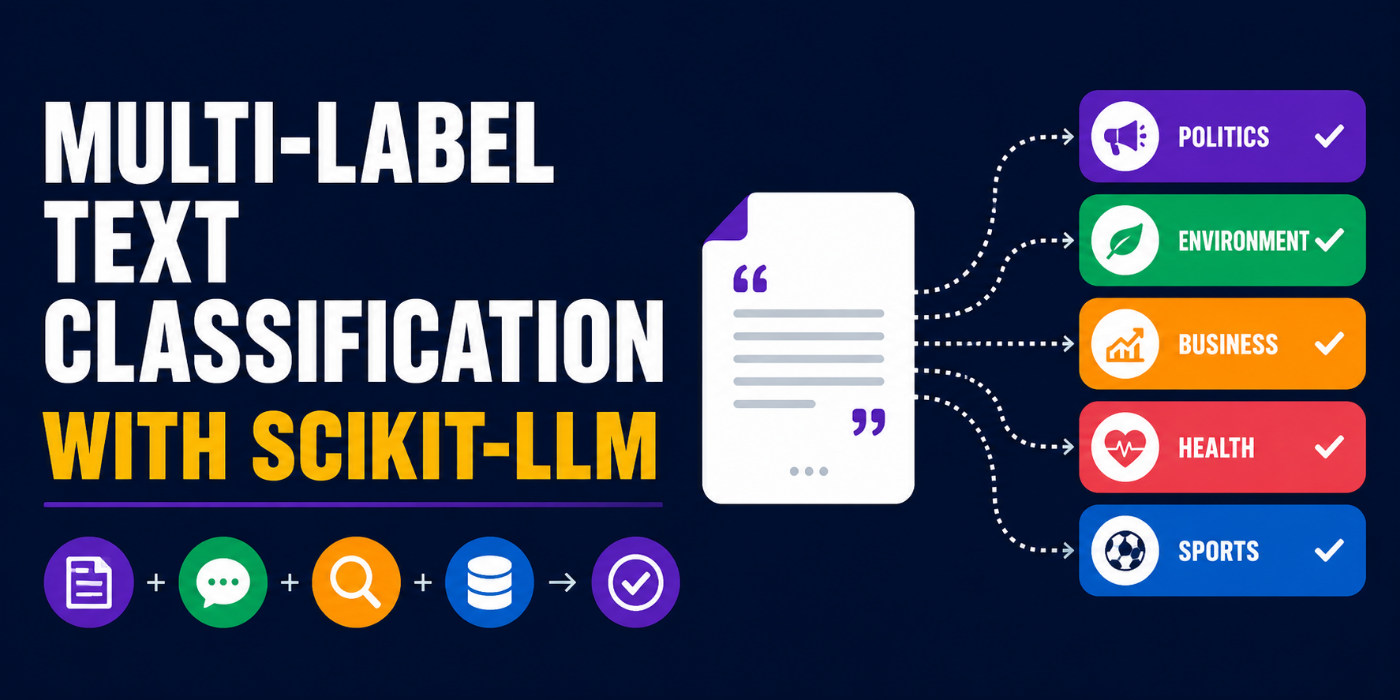
Multi-Label Text Classification with Scikit-LLM
Quick take
Multi-label text classification lets systems assign multiple categories or tags to a single piece of text, unlike traditional classification where one text gets only one label. Scikit-LLM is a Python library that simplifies applying language models to solve multi-label text classification problems. Instead of fighting with complex setups, developers can use Scikit-LLM’s familiar Scikit-learn style to quickly train and test models on real data sets.
The tool opens practical doors for scenarios where text belongs to overlapping groups—for example, labeling customer support tickets with multiple issue types or categorizing product reviews by both sentiment and content topics. By allowing multiple simultaneous labels, Scikit-LLM pushes text classification beyond simple yes/no or single-category outcomes.
Why it matters
Most text classification today still forces one label per input, which doesn’t capture many real-world needs. Customer feedback, inquiries, social media posts, and research papers often belong to several categories at once. Scikit-LLM makes experimenting with multi-label assignments more accessible for data teams and engineers who already know Scikit-learn.
Lowering the barrier to multi-label classification can speed up automation workflows, cut manual tagging costs, and improve AI accuracy in nuanced tasks. Instead of building complex pipelines from scratch, operators can integrate this approach to surface richer intelligence from their text data.
The practical takeaway
For operators, the key gain is more flexible text classification that maps directly to real-world user needs. Scikit-LLM lets builders quickly prototype multi-label classification without deep expertise in prompt engineering or complex model tuning.
Businesses handling customer messages, product feedback, compliance documents, or social media monitoring can boost efficiency by labeling data on multiple dimensions simultaneously. The library’s compatibility with existing Python AI stacks means teams can integrate multi-label workflows into production faster.
What to watch next
The next step is broader adoption and testing of Scikit-LLM on diverse business cases, where multi-label outputs improve decision-making or trigger more precise automation. It will be important to track how scalable and robust the library is for large datasets and realtime applications.
Watch for improvements in model explainability when using multi-label categories—operators need clarity on why certain tags apply together. Also, keep an eye on competing open source and commercial tools that might bake multi-label classification deeper into their AI products, pushing operational standards forward.
AI Quick Briefs Editorial Desk